Crime Scene Investigation – Breakthrough Forensic Camera Used to Detect Blood Invisible to the Naked Eye

To detect bloodstains at a crime scene, forensic technicians use a chemical called luminol.  It is sprayed around the crime scene and reacts to the iron in blood, emitting a bluish glow in the dark.  However, luminol is toxic, can smear blood patterns, and can react to other substances (rust, coffee, fizzy or carbonated drinks, bleach) to give a false positive.

There are many types of advances and technology being tested every day in a variety of fields.  I enjoy finding little tidbits of forensic information to share, especially if it’s something to help solve more cases or shed more light on a case.

A prototype camera developed by Stephen Morgan and Michael Myrick from the University of South Carolina in Columbia can detect bloodstains invisible to the naked eye.  In addition, this camera can distinguish between blood and other substances without interfering with the samples.

The camera takes an image of a crime scene by using beams of pulsing infrared light onto a surface that then detects the infrared reflected back off it.  A transparent, 8 micrometer-thick layer of protein albumin placed in front of the detector acts a s a filter, which makes a diluted blood stain show up against the crime scene surroundings by filtering out wavelengths that aren’t characteristic of blood proteins.     

This new camera would help to expedite crime scene processing for blood stains and not contaminate any critical evidence in the process.  It would immediately tell a story of what happened during a crime.

Posted in Forensic | Tagged , , , , | 1 Comment

An Introduction to Silent Partner’s Psychopathic, Narcissistic Serial Killer – Darrell Brooks

For me, every story I write will not only have a nemesis, villain or an all around bad guy, it will have a serial killer.  My newest thriller, Silent Partner, needed a psychopathic bad guy to round out the storyline. 

When you’re creating the plot, storyline, pacing, it’s quite a challenge to create the perfect killer that fits the story.  It’s also another huge obstacle not to create a replica from previously written stories.  It needs to be fresh, engaging, and definitely scary.  You want readers to really hate the killer, be frightened for the other characters, and then root for the good guy.

I had several ideas on how I wanted to approach the antagonist for my hero Deputy Jack Davis.  I knew that I needed for him to be everything that Jack wasn’t, in other words, a ruthless serial killer. 

Here are three excerpts from Silent Partner, an introduction into Darrell Brook’s mind:

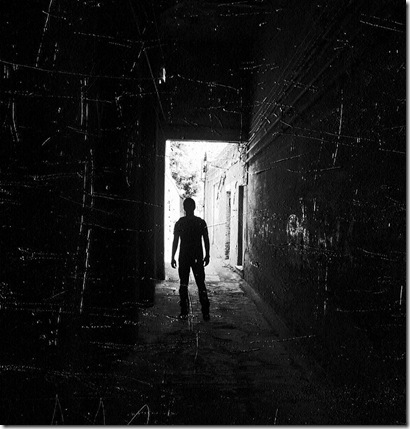
A smoldering ember from the stub of a generic cigarette lit up the alley. 

Within the shadows, a man dressed completely in black, sported a perfectly trimmed goatee and mustache, faced the two men.  He stood up straight from leaning against the graffiti tagged brick wall.  An air of prison experience radiated from him. 

Several amateur, jail tattoos of gothic and satanic symbols inked the side of his neck, crudely running down his arms to the backs of his hands in a ghastly presentation. 

He took one last puff of his almost nonexistent butt and tossed it on the ground.

The heavyset man nodded in recognition and said, “Darrell”.

Letting out a puff of smoke, Darrell discarded the cigarette.  “Don, Johnny, nice to see you boys on time for once.” 

Darrell unzipped his black leather jacket and revealed a 9mm handgun tucked in his waistband.  Commanding respect from the two other men, the distinct impression of alpha male dominated his entire persona.  Obviously in charge, he called all the shots. 

Some rest for the wicked (excerpt 2):

For Darrell, tucked inside room #7, the motel provided a necessary, quiet rest stop.  He purposely chose the lucky number, rested and chilled out for the night. 

He had dumped the supped-up Mustang in Marina and opted for an older, grey Honda with license plates from another abandoned car.  Blending into the surrounding community bought him more time to finish his plans, the new vehicle provided a perfect cover.

It took Darrell a while to unwind and fall asleep.  Tossing and turning, he tried several pillows.  Killing, cops, and high-speed chases sucked up his normal energy like an energy vampire. 

He thrived on taunting the police, sending them on another wild goose chase, giving them a taste of his strong medicine.  He called all the shots, not the cops.  As far as he was concerned, they were stupid, inept, lazy, and it was obvious to Darrell they couldn’t catch him. 

He could do anything.

Take what he wanted.

Anytime.


The hunting serial predator (excerpt 3):

Darrell strolled through the Amtrak train station.  Through the eyes of a well-rehearsed predator, he watched a few midnight stragglers and homeless people.

Immense pressure built up in his veins and he couldn’t stop his compulsive desires, even if he had wanted to. 

He smiled. 

Obsessed with the rush of feelings.   Fixated on the victim’s fear, to see their face as the last gasp of life dwindled from their lungs.  That sensation kept running through his mind. 

It drove him. 

He felt small and insignificant when he was around his brother.  Tonight proved different.  Trolling for fresh victims, he resembled an undeniable force.  He reigned in the world of terror. 

The more Darrell thought about Tad, the more he wanted to kill him.  The next best thing was to find a surrogate to take his place

Calmness washed over him.  Similar to a soothing lullaby that kept his tortured body at bay, while his mind remained sharp and alert, taking in everything around him. 

A young woman, who couldn’t have been more than nineteen, sat in the farthest corner of the station reading a psychology textbook and sipped a cup of coffee.  Her long, dark hair pulled tightly up and clipped away from her face.  She wore very little makeup and seemed to almost disappear into her baggy sweatshirt and jeans. 

Alone.

She was perfect. 
Posted in Silent Partner, Writing | Tagged , , , , , | 1 Comment

Random & Interesting Serial Killer Facts

When I’m researching for my next novel, I like to jot down some things about serial killers that may or may not be widely known that could be used at a later date.  There are always interesting tidbits that pique my interest into the criminal mind and that make me shudder.  I wanted to share some of the intriguing and somewhat disturbing facts with you. 

“I am what you have made me and the mad-dog devil killer fiend leper is a reflection of your society.”  – Charles Manson (at his trial)

  • Serial Killers International – it’s widely known that America seems to lead in the production of serial killers.  Cultural factors seem to drive the force because of the fragmented, highly dysfunctional families along with the anonymity of American life that allows a serial killer to constantly move into communities without attracting much attention.


  • Serial Killer Cops – there have been more than just one or two cops that have stepped into the serial killer phenomenon: Dennis Nilson, Gerard Schaefer, and Craig Peyer.  Many serial killers are often attracted to law enforcement and consider it to be a fantasy occupation.  They study police work, crime scenes, and have actually befriended police officers.  Although, not many actually become police officers, they are familiar with the work.  The most common traits of serial rapists and serial killers are that they exhibit behaviors of domination, manipulation, and control.  This exposes some interesting insight into what drives them and why they are attracted to police professions.


  • Criminal Psychologists – have found that there are three major warning signs for the root causes of a serial killer.  These three red flags are called the “psychological triad” – which incorporates bed-wetting, fire starting, and animal torture.


  • Psychopaths Throughout History – serial killers aren’t just a twentieth century development.  There were plenty of psycho-killers in ancient Rome (Nero, Agrippina), pre-modern age (Gilles de Rais, Tommy Lyn Sells), seventeenth century (Thomas Sherwood aka Country Tom, Elizabeth Evans aka Canterbury Bess), eighteenth century (Sweeny Todd, La Tofania), nineteenth century (Jack the Riper, William Burke, William Hare), World War 1 (Bela Kiss, Ax Man), 1920-1930s (Nathan Jeopold Jr., Richard Loeb, Albert Fish), 1940s-1950s (Harvey Glatman, Ed Gein, Reg Christie), 1950-1960s (Charles Manson, Albert DeSalvo, the Zodiac), 1970s (Ted Bundy, Joel Rifkin, Arthur Shawcross, many more to date.     


  • Serial Killers – suffer from a wide variety of psychological, environmental, and chemical deficits.  There is no one defined recipe that makes up a serial killer.  However, serial killers have triggers that set off their rampage, familiar hunting grounds, look to other human beings as prey, find targets of opportunity, design snares for victims to support their pathological needs, and generally have a signature, ritual, and MO for killing their victims.     


“I can relieve myself of hatred and feel at peach only when I’m killing someone.  I can ease my own pain only when I see others in pain.” – Kobe School Killer (1990s, Japan)

“He is cruel and selfish, and I love him.”  – Myra Hindley (about her partner and co-serial killer)

“Serial killers have a dead conscience.  No morals, no scruples, no conscience.”  – Richard Ramirez (Night Stalker)

Posted in Serial Killers | Tagged , , , , | 4 Comments

The Impact of Impression Evidence

When I was first introduced to crime scene investigation and studied all the aspects of forensic science, I gravitated toward impression evidence.  At first glance, it doesn’t sound exciting.  However, many cases have been solved by the simple, telling clues left behind from impression evidence. 

A tire track left behind from a homicide or burglary. 

A bit mark left on the victim or even on a piece of food.

A toolmark left from a screwdriver around a window opening.

Fingerprint impression left on duct tape found on a victim.

Gum spit out on the ground with a tooth impression left from a suspect. 

Impression evidence is evidence left by anything that leaves a kind of impression at the scene or on an item, such as footprints, tire tracks, tooth impression, fabric indentations, or toolmarks.  I find this type of evidence to be interesting and quite curious.  It definitely tells a story. 

For the forensic scientist, it’s not that they strictly compare the impression evidence to get a match, but rather, they establish individuality.  It simply means that individualization is the uniqueness of a specific item of evidence.  It has been described that no two fingerprints and snowflakes are exactly alike.  The same holds true for gun barrels, show prints, pieces of broken glass, and lip impressions.

The simple principle of “all objects in the universe are unique” best explains impression evidence. Things can be similar of course, but that’s where class and individual characteristics comes onto play.

“No two things that happen by chance ever happen in the exactly the same way.

No two things are ever constructed or manufactured in exactly the same way.

No two things ever wear in exactly the same way.

No two things ever break in exactly the same way.”

Footprints are a valuable piece of impression evidence to any criminal case.  They can be preserved from floors, outdoors, and anything that would adhere the shoe to give an impression on another surface.

Did you know that you can actually take castings of foot or tire impression in the snow?

The snow if first preserved by spraying a thin layer of a product called Snow Print Wax.  Photographs should be taken before and after using this preservative.  Then after this substance is allowed to completely dry, a casting of dental stone is poured into the area of the print.  Dental stone should be made slightly thicker than normal and allowed to set up for at least an hour before removal.

Posted in Forensic | Tagged , , , , , | 1 Comment

You Want to Write a Screenplay – But Now What?

I’ve loved movies for as long as I can remember – all genres, drama, action, thriller, and comedies.  The cinema has been a writing inspiration and a fun escape for me. 

Writing a screenplay is rewarding and fun.  Writing quick, snappy dialogue to bring characters to life, cutting away to high impact, action sequences, and making sure that the ending was satisfying to moviegoers. 

Well, that’s exactly what I did.  I learned to write screenplays.  I’ve written more than ten scripts to my credit and I have taught beginning screenwriting in the online environment.  Now, I’ve incorporated my online class and screenwriting knowledge into an informational e-book called “How to Write a Screenplay”. 

I found that it was difficult to obtain all the information and instruction to write a complete screenplay.  There are many great books available as well as screenwriting classes, but I felt they were incomplete and sometimes expensive.   

I’ve created a ten-step building block process designed to get you motivated, keep you on track, and ultimately create the first draft of your screenplay from beginning to end.  

  • You will read the lesson portion in each step as many times as necessary until you feel comfortable with the concepts.
  • There will be an example to enhance your understanding of the lesson.
  • You can test your comprehension of each step with a self-quiz using true/false, fill in the blank, or multiple choice.  You will then be able to check your answers at the back of the e-book.
  • You will receive an assignment for each lesson. 
  • The process of creating a screenplay is designed to be fun!  There will be movies to watch and web site links of actual screenplays to explore and study.

This e-book is designed to be interactive and will give you results.  I have designed this e-book in sections of screenwriting building blocks that will walk you through the process of writing your screenplay. 

1.                  Getting Started will get your feet wet and help you organize for what’s ahead. 

2.                  Premise & Logline will begin to build the foundation of your screenplay with brief outlines, plot summaries, and assistance of how “high-concept” will affect your script. 

3.                  Format will jump into the format, copyright, and a glossary of terms that will take the guesswork out of the business end of screenwriting. 

4.                  Characters and Dialogue are the fundamental building blocks that will shape your storyline and will definitely be the most fun. 

5.                  Story explores the primary meaning of your script and how everything fits together. 

6.                  The Hook is the first five to seven pages of the screenplay that grabs the reader and movie enthusiast into wanting to see more. 

7-10.       The 1st Act concentrates on the setup, 2nd Act concentrates on the confrontation and conflicts, and the 3rd Act wraps up with the resolution of the story.  Finally, you will write the first draft of your screenplay.   

What do you have to lose?

You can begin writing your screenplay right now with the easy to follow e-book “How to Write a Screenplay” available in ebook and paperback.

Posted in Screenwriting | Tagged , , , , | Leave a comment

Serial Killer Profile – An Inside Look at “The Iceman”

When Richard Kuklinski was asked how he felt about killing people in an in-depth interview.  He only had this to say.

“I don’t.  It doesn’t bother me.  It doesn’t bother me at all…”

In one interview, he explained his killing code of ethics.

“I would never kill a child and most likely wouldn’t kill a woman.”

When you think of serial killers you don’t immediately think of confessions from a mafia hitman.  However, they are serial killers and each of them has a story to tell that begins to sound quite familiar.

Richard Kuklinski “The Iceman” grew up in the projects of New Jersey during the 1930s and 1940s.  His parents were abusive and would beat Richard and his siblings on a regular basis.  Rage began to build in him by the age of 10.  He began to act out by killing and torturing animals, and finally by the age of 18 he committed his first murder.  By the time he was in his early twenties, he had built a reputation as an explosive street hustler that would beat or kill anyone who offended him.  That was when his association with Roy DeMeo, a member of the Gambino crime family, was established.  Ironically years later, Kuklinski claimed that he had been responsible for DeMeo’s murder.

Over a 30-year period according to Kuklinski, he killed numerous people in various ways, by shooting, strangulation, knife, or poison.  His favorite means of killing was using cyanide because it killed the victim quickly and was difficult to detect through toxicology.  He went on to explain matter of fact without emotion that his favorite method of disposing a body was in a 55-gallon oil drum.

Kuklinski easily hid behind a mask of normalcy as he married, had two daughters, and posed as a successful businessman.  His family and neighbors never knew of his murderous activities.  It was estimated that he killed between 100 and 130 people.  However, these numbers were never proven.

He earned the nickname as “The Iceman” because of his experiments of disguising the time of death of his victims by freezing their corpses in a freezer and then disposing of them at a later time.  However, this was going to be his downfall when his method was discovered because he didn’t let one of his victims thaw before disposing the body.  The coroner found pieces of ice in the victim’s heart.

Kuklinski died of natural causes on March 5, 2006 at the age of 70.

What can we learn from Kuklinski?

I strongly feel that there is ALWAYS something to learn from these killers and not just the usual laundry list of serial killer characteristics, such as severely abused as a child, coming from a broken home, unable to control rage, animal mutilator, above average intelligence, and lack of empathy to just name a few.

Strip away the “usual” aspects of this type of criminal and dig deep into the understanding of what makes them tick.  They generally love to give a wealth of information to a captive audience and from there we can then begin to see what’s really underneath that they don’t want the general public to see, but they can’t seem to help themselves once they are in the spotlight.  It could be the way they answer or not answer a question, how they relate to the murders, or the consistency of their stories.  There is always something to be learned, we just need to pay close attention and not take anything for granted when it comes to these serial killers.  Nothing is too trivial.

Kuklinksi was calculating and intelligent with his work, especially as he devised ways to throw off authorities with freezing his victims.  He balanced a double life with a family.  His younger brother (Joseph) was also a criminal and was convicted of raping and murdering a 12-year-old girl.  What connections, traits, and similarities do these brothers share?  And why?

From the surface, it may seem like there are more questions than answers.  The making of a serial killer is a sadistic recipe of psychological, environmental, and behavioral components that drive an individual to kill.  The lack of empathy and impulse control is at the core, but that aspect will ultimately be their downfall.  It’s only a matter of time.  In essence, they are like a ticking time bomb.  There are many insights to answers that serial killers have confessed to authorities that we have most likely have missed.  By studying all of these types of individuals, including all violent offenders, we will then be able to begin to piece together the mind of a serial killer.

Posted in crime, Serial Killers | Tagged , , , , | 4 Comments

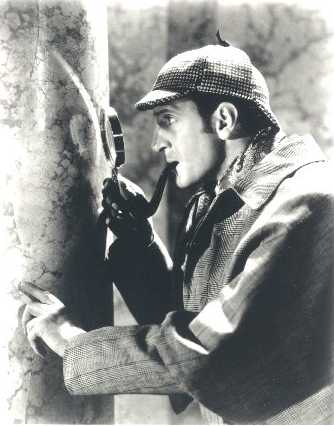
The Innovator of Crime Fiction – Where Would Modern Detective Novels be Today Without the Creation of Sherlock Holmes?

While growing up, I loved to read mysteries with great detective characters that solved the most difficult murders – and still do.  It didn’t take me long to find some of the Sherlock Holmes novels after I read the Nancy Drew mystery series, and books by Agatha Christie and Ellery Queen just to name a few.  The adventures of Sherlock Holmes just seemed like the next logical detective read for me.  All of these books hold a special place for me and I’m know that they helped to encourage my own writing.

Sherlock Holmes’ creator, Arthur Conan Doyle, was an interesting and innovative man who credited his writing influences from well-known writers as Edgar Allan Poe, Jules Vern, and Agatha Christie.  He was not only a novelist that most people know him for, but he was also a short story writer, poet, and doctor of medicine.  I believe that he was the innovator of what we currently know today as “crime fiction”.  No doubt that he has inspired many detective novel writers.

His first Sherlock Holmes novel, A Study in Scarlet, was published in 1887.  The last of nine Holmes novels, The Case-Book of Sherlock Holmes, was published in 1927 just three years before his death.  Doyle died in 1930; he was 71 years old. 

It’s truly amazing that this fictional detective is still well known today after more than a hundred years with many movies starring this idiosyncratic, thought provoking, detective character.  It has even inspired a recent new movie starring Robert Downy Jr. as Sherlock Holmes and Jude Law as Dr. Watson. 

I think one of the most interesting and little known aspects about Doyle was that he was a strong advocate of justice and felt strongly about his political campaigning.  He might have been considered an amateur criminologist today, but I suspect that he studied all the aspects of crime because of his excellent portrayals in his Sherlock Holmes series.  

Doyle was active in the interest of justice and personally investigated two cases that led to two men being exonerated for the crimes.  Oscar Slater was convicted of beating to death an 83-year-old woman during a robbery and George Edalji was convicted of slashing animals and sending threatening letters.  Both men were later found innocent due to the investigative tenacity of Doyle.  

Not only did Doyle assist in correcting these miscarriages of justice, but he helped to establish protocol to other miscarriages of justice as well.  That’s an incredible accomplishment!  We should take a page from Arthur Conan Doyle’s personal notebook on crime and justice today.   

If you have never read a Sherlock Holmes novel before, I would suggest reading this collection of his works.

Check out:

Sherlock Holmes: The Complete Novels and Stories (Bantam Classic) Volume I (Paperback) by Arthur Conan Doyle.

Posted in Writing | Tagged , , , , | 3 Comments