Religious Leaders Advocate for Georgia Man on Death Row

As our forensic scientists continue to develop new technology that will aid in accurately identifying the perpetrators of violent acts, we can hope that the guilty will face the day of justice that they deserve and the innocent will remain free.  However, even with all of the amazing developments over the past decade, there is often a doubt concerning the guilt of an individual and that doubt becomes heightened when the consequence involves life in prison or even death.

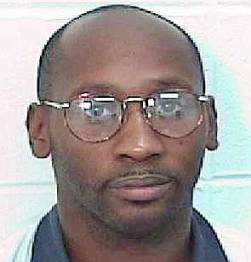
A diverse group of religious leaders are coming together in Georgia to ask for clemency for Troy Davis, a man who has been convicted of shooting and killing an off-duty police officer in Savannah in 1989.  All of Davis’ avenues through the court system have been exhausted, most recently when the U.S. Supreme Court declined to hear his case on March 28 of this year, so the People of Faith Against the Death Penalty are looking to the Georgia Board of Pardons and Paroles for some help.

The group argues that seven of the nine witnesses from the trial have since recanted or changed their testimony and that no physical evidence definitively links Davis to the crime.  Those who support the sentence that Davis has received believe that the evidence clearly demonstrated Davis’ involvement and that the gun belonged to him. 

Troy Davis is scheduled to be executed in two weeks, so activists around the globe who are focused on this case do not have much time left to make their case. 

In instances such as this one, in which the argument established by the prosecution seems to be on shaky ground, what should the proper course of action be?  Do you support the idea of a new and likely lengthy trial?  Or, would you favor continue to search for more grounds for appeal?  Maybe you think the conviction has been handed down and the justice system should move forward with that decision.  Let me know your thoughts.

Posted in crime, Forensic | Tagged , , , , , | 2 Comments

Criminal Profiling – An Important Investigative Tool

In my first crime fiction novel Compulsion, Emily Stone’s love interest Detective Rick Lopez uses a form of profiling called a “Threshold Assessment”.  He carefully weighs the evidence from the serial homicide crime scenes, criminal behavior patterns, and victimology to begin to put together a preliminary profile of the serial killer.

I’m an associate member in the Criminology Section of the Academy of Behavioral Profiling.  I’m intrigued by behavioral evidence analysis and it was the driving force behind completing my criminology degree in 2008. 

People frequently ask me, “What’s profiling and how does it work?” 

Some people think of profiling as some type of psychic or other intuitive paranormal ability and not something that should be used as a practical resource in all types of criminal investigations.  There are two types of effective profiles that can be used in an investigation: threshold assessment and criminal profile. 

Every investigator or detective should know how to incorporate profiling into his or her investigations as an investigative tool.  It should never be done in place of solid investigative work; however, it should be one of the pieces available in the criminal investigation arsenal.  No two crime scenes occur in the same way or are ever exactly alike.  This is where it’s important for the investigator to use his or her analytical and deductive reasoning skills in an objective manner.   

According to criminal profiler and forensic scientist, Brent Turvey, a “Threshold Assessment” refers to a document that reviews the initial evidence of crime behavior, victimology, and crime scene characteristics of a particular case or a series of cases.  This procedure is the evaluation of what is understood to be fact about a particular case or cases and does not render the conclusions or opinions of a full criminal profile report. 

A “Threshold Assessment” should include the following:

1.                  Overview of established facts of the case.

2.                  Overview of established facts relevant to the victimology (thorough study of the victim).

3.                  Overview of established facts relevant to the crime scene.

4.                  Initial hypothesis of motivational behaviors.

5.                  Initial hypothesis of offender characteristics.

6.                  Suggestions of further facts needed to be determined or analyzed.

7.                  Suggestions of further facts needed through victimology.

8.                  Suggestions and potential strategies for suspect development.

All of this information is helpful in creating a complete criminal profile.  A criminal profile refers to a “court-worthy” document that incorporates all of the physical and behavioral evidence relating to the known victimology and crime scene characteristics of the offender responsible for the crime or series of crimes.  This document concludes with the opinions and conclusion of the profiler of the most logical suspect for the case or series of cases.  Criminal profiling shouldn’t be limited to just homicide investigations; it can used for burglary, rape, and arson investigations as well.

Posted in Criminology | Tagged , , , , | 2 Comments

Photography Sunday — Happy Mother’s Day

In honor of Mother’s Day today, I thought roses were appropriate.  I enjoy going to various nurseries around my area and I don’t forget my camera.  This particular garden has a wonderful area with a variety of roses growing on a large arbor with welcoming benches all around.  I couldn’t resist these beautiful pinkish flowers.  I took several shots with different aperture settings to get the final result I wanted.

Happy Mother’s Day to all moms out there today!

Posted in Photography | Tagged , , , | Leave a comment

Out & About Magazine — May Issue

Out & About Magazine – In the Valley & on the Coast – The South Bay’s Premiere Entertainment Guide.  You will find what’s going on around the Monterey Bay, South Bay, and inland areas.  Check it out, there’s something to do for everyone in the family!

Book Reviews and Crime Tips by Local Award Winning Author and Criminologist Jennifer ChaseHer book review of Jeffery Deaver’s The Burning Wire can be found on Page 40 of this month’s issue.

Out & About Magazine can be viewed online or downloaded to a PDF file.

The Magazine can be accessed here:

Posted in Uncategorized | Tagged , , , , | Leave a comment

Spending a Day in the Garden

Today, I’m one of the featured artists in the garden for the Aromas Hills Artisans Country Garden Tour.  It’s a wonderful annual event that showcases all of the wonderful local artists (painters, photographers, sculptors, weavers, woodworkers, writers, etc.) in a beautiful garden setting.  No two gardens are alike and they are definitely like a work of art – Mother Nature style.  It’s a wonderful way to spend an afternoon.

I like to call the garden my second favorite place to sit and write – an organic office.  I can’t think of a better place to stay inspired and jot down my story ideas.  The tranquility helps me to recharge my creative energy and take a much-needed breather from everyday stresses.   

If you’re in California and in the Monterey, Santa Cruz, or San Jose areas, take some time to appreciate the Aromas Country Garden Tour and support local art.

I will be in one of the gardens signing my books and answering questions.  I hope to see you there.

Here’s all the information:

Aromas Country Garden Tour 2011

Tickets $10 (for individual or group)

Begin your tour at the Aromas Grange

Located at the corners of Rose & Bardue Streets, Aromas

Date: Saturday, May 7th, 2011

Time: 10:00am – 4:00pm

More Information

Posted in Uncategorized | Tagged , , , | Leave a comment

DNA Links Murders from Thirty Years Ago to Serial Killer

The men and women who work in the field of forensic science are always discovering new ways to use available evidence and piece together clues that will bring criminals to justice.  What we are able to learn using DNA samples was unheard of a generation ago, and is allowing us to revisit some cases that have gone unsolved for decades.  This is certainly true with developments that were just revealed concerning a 1981 case out of Santa Barbara County, California.

Cheri Domingo and Gregory Sanchez were killed in Goleta, California thirty years ago and their killer has never been found.  However, a string of other crimes that fit the same pattern were assumed to be done by the same person, dubbed first the East Area Rapist and then the Original Night Stalker when he started killing his victims, over the course of several years.  DNA samples recently taken from evidence collected from the Domingo and Sanchez crime scene, which could not have been tested during the 1980s because the technology was not available yet, have now been linked to four other cases.  Members of law enforcement believe, though, that he may be linked to as many as fifty victims.

The last attack fitting the chosen method of the Original Night Stalker was done in 1986, so it is unclear whether or not this person is still alive.  I do hope that if he is still walking this earth, that our wonderful new advancements in the pursuits of criminals will bring him to justice.

Even if he remains elusive, this guy has already helped solve many other cold cases as his crimes led to the California legislature passing a law that established the state’s DNA database, which is now considered to be one of the most extensive and valuable in the country.

Posted in Forensic, Serial Killers | Tagged , , , , , | Leave a comment

Police Ride-Alongs Jump Started My Research for Writing Crime Fiction

One of the most exciting and rewarding experiences that I’ve had as a crime fiction writer was the opportunity to participate in a police ride-along.  I have observed patrol, K9, and detective investigative duties for various police agencies throughout the state of California.   

For those of you that aren’t familiar with a police ride-along, it’s a program through city and county law enforcement agencies that allow adult citizens to accompany and observe police officers out on patrol. 

The main purpose of a Ride-Along Program is to improve police and public relations by familiarizing citizens with the complex and unpredictable nature of police work. It can also be a great introduction to daily life on the police force and it will enlighten most participants on local crime activity.  Most people who participate in the program are generally interested in becoming a law enforcement officer, concerned local citizens, students, and of course writers. It you have viewed the popular television show “Cops”, it’s quite similar to that in regard to the type of calls police handle on a daily basis.   

I feel that this program is important to help bridge the gap between citizens and the police.  It helps to dispel the typical stereotypes that are sometimes taken as fact.  I can honestly say it was a great experience for me.  I felt very honored to be able talk and ride with some of our finest.  My appreciation goes out to these men and women of law enforcement.  They do a great job.

I just have a few important points that I want to convey if you do decide to go on a police ride-along.  It will ensure the best possible experience for you.

1.                  Be professional and reserved.

2.                  Wear appropriate clothing.

3.                  Be respectful of your host police officer and your surrounding situations.

4.                  Take plenty of notes.

5.                  Bring a bottle of water and some type of energy bar just in case.

6.                  Be observant, relax, and have a great time!

The police ride-along has been an invaluable tool for me in my writing experience.  It has helped me to give realism to my novels by being able to observe police procedures, listen to actual radio codes, and experience all types calls for service.  Check out Compulsion, Dead Game, and Silent Partner to see how I’ve incorporated my experiences into the story.

If you’re interested in participating in a Ride-Along Program contact your local police agency and find out the details.  Every police department varies slightly on the requirements, procedures, days available, and length of ride.  

Jennifer Chase
Award Winning Author & Criminologist
 
Posted in Police, Writing | Tagged , , , , , | 1 Comment