Behind the Scenes with Serial Killers – Q & A with Emily Stone

Photo Credit: Getty Images

Emily Stone is a woman with three independent novel adventures and a growing list of captured serial killers to prove it.   Every case, every missing child, and every serial killer stalking victims on the west coast is scrutinized by this woman.

It’s her life calling and she wears the badge of honor as a phantom detective and angel of justice.  With each new case, she hones her investigative skills and continues to compile a growing list of serial killer profiles.

I have managed to corner my heroine character Emily Stone again, and that’s difficult to do with her schedule, to ask her some questions that have been posed recently by readers.

***

JC: Why do you hunt serial killers?

Emily Stone:  Why not?  I conduct my crime scene investigation and criminal profile, anonymously and covertly of course, and email my entire investigation to the detective in charge of the case.  I know how the investigations typically go with local police departments.  There’s generally a lack of training for these complex cases, too much media interference when the case is deemed a “serial killer case”, and the lack of qualified work force to conduct these types of investigations with dogged integrity.  So many times the F.B.I. must intervene, but don’t get me started on that topic.

Jennifer, I think the better question is… What can we do to stop these predators before they become serial killers and shatter lives?

JC: How do you make a living?

Emily Stone: Do I ask you about your bank account and how you spend your money?  Well, I can put the readers at ease and not to worry about how I pay for monthly expenses and a few nice computer gadgets to help with my cases.  In Compulsion, it was first disclosed that my uncle who looked after me when my parents were murdered made some solid investments, along with family money, and his royalties from awesome patents keep me hunting serial killers. My finances are lightly touched upon in Dead Game and Dark Mind.  In addition, the love of my life Rick Lopez retired from a police department to take up my quest and has a pension with a comfortable savings.

JC: Will you ever go back to being a police officer or maybe become a FBI agent?

Emily Stone:  No, never.  That’s all I’m going to say on the subject.

JC: What’s the toughest part of being a serial killer hunter?

Emily Stone:  The physical and mental challenges of conducting the investigations after the police have finished with their process pushes me to my limits.  Some days I even question my own abilities.  It’s grueling and dangerous, and you never know what or who is around the next corner.  You never know if it’s going to be the day you lose your life.  Every serial case and every child abduction takes a piece of my soul with it.  Even with my 90% solve rate, it still does not factor in what it has taken from my life.  Nevertheless, if I had it all to do over again, I wouldn’t change a thing.

JC: What scares you?

Emily Stone:  I cannot answer that question in all honesty because I would be giving away some of my secrets, not to mention my creator’s secrets too.  What I can say is that I hate feeling vulnerable and sometimes very alone in my quest.

***

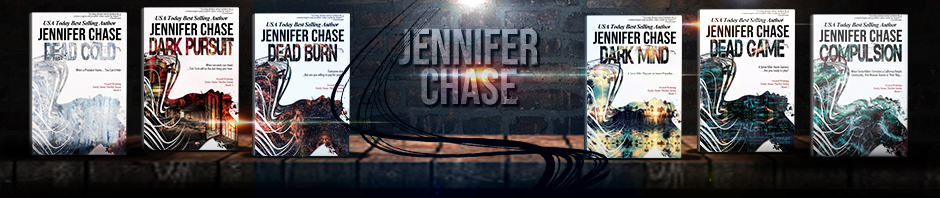
Emily Stone Thriller Series:

COMPULSION (2009 Evvy Award Nominee)

DEAD GAME (2010 Thriller Award Winner at Readers Favorite)

DARK MIND (2012 Action Award Winner at Readers Favorite)

***

Now, here is a rare chance to ask Emily Stone any question that has been nagging at you.  Please feel free to post your question and I will forward it on to Emily and post her response.


* * *
Author Blog: https://authorjenniferchase.com/
Crime Watch Blog: http://emilystonecrimewatch.wordpress.com/
Book & Crime Talk:  http://blogtalkradio.com/jennifer-chase
Books: Compulsion  Dead Game  Dark Mind  Silent Partner  Screenwriting
Posted in Dark Mind, Writing | Tagged , , , , , , , , , , , , , | 2 Comments

Sister’s DNA Solves Missing Persons Case After 37 Years

The men and women of our nation’s police departments are amazing public servants who work passionately to seek justice for the criminals in our society and their victims.  I am sure that every violent crime that goes unsolved and every missing person who cannot be found have an effect on our officers.  However, the demands of the job understandably require that some cold cases receive less attention over time.  When the person whose face is tied to that case, though, is your sister, the desire for answers never fades.  And, in this amazing age of forensic technology, some questions that have stood for decades are being resolved.

Priscilla Ann Blevins disappeared from her home in North Carolina in July 1975.  Her parents led the efforts to find her until their own deaths a little more than a decade ago.  And in 2000, Priscilla’s sister Cathy Blevins Howe decided to step up her investigation into the disappearance.  While she assumed after all these years that her sister likely was dead, Cathy wanted the opportunity to bring her home for a proper goodbye.  That wish came true just a couple of weeks ago when the state medical examiner’s office in Chapel Hill called to let Cathy know that the body of a Jane Doe who could be her sister had been in its possession for more than twenty years.

This revelation came about when DNA testing was refined as a powerful tool in criminal investigations.  Cathy submitted her mitochondrial DNA and hoped some records out there would provide a match.  Years later, as North Carolina got around to entering the long unknown Jane Doe’s DNA into the system, one sister no longer had to wonder where her older sibling had gone.

Cathy Howe now plans to bring her sister’s remains home for a memorial homecoming and enjoy some bittersweet closure to a lifetime of wondering.

This story offers (at least) two important lessons.  First, never underestimate the power and the length of a sister’s love.  And second, forensics is a fascinating field that is changing lives every day.  Howe has shared that anyone who is grieving a missing loved one should get that person on the DNA database.  This story of sibling love and welcome closure could be theirs as well.

* * *

Author Blog: https://authorjenniferchase.com/
Crime Watch Blog: http://emilystonecrimewatch.wordpress.com/
Book & Crime Talk:  http://blogtalkradio.com/jennifer-chase
Books: Compulsion  Dead Game  Dark Mind  Silent Partner  Screenwriting
Posted in crime, Forensic | Tagged , , , , , , , , , , , , , , , | 3 Comments

6 Mistakes to Avoid at a Crime Scene Straight From a Cold Case Detective

Photo: Courtesy of coldcasesquad.com

Crime scenes aren’t as cut and dry as one might think.  There are many variables and each one should be carefully identified, searched, documented, and processed correctly.  The process doesn’t flow like the television shows or movies would like us to think.

Here’s a great article I wanted to share on “6 Mistakes to Avoid at Crime Scene” from a retired NYPD police detective and cold case expert, Joe Giacalone.  It doesn’t get any better than learning it straight from the source.

***

6 Mistakes to Avoid at a Crime Scene

Crime Scene Mishaps:

By: Joseph L. Giacalone

You don’t get a chance to scream, “Do over!” like we did in the playground when it comes to criminal investigation. You only get one chance at it, so you have to do it right. Sometimes, doing something right is about learning what not to do. Crime scenes are so fragile that just about anything you do can cause crime scene contamination. The moment that the first uniformed officer enters the scene, it is contaminated.

Investigators must be ready for that question on the stand, “Was the crime scene contaminated before you arrived?” The answer to this question is always an unequivocal, “Yes, it was counselor, ” followed with an explanation if allowed. Crime scene contamination is unavoidable in law enforcement’s quest to render aid to the victim or obtain evidence. However, law enforcement can mitigate contamination by avoiding these six (6) deadly crime scene mistakes:

1.  Not Controlling Police Personnel

The biggest problem in any crime scene are your fellow officers and therefore the most important appointment is to choose a “Gatekeeper.” The Gatekeeper’s job is to maintain the integrity of the scene, keep a list of who entered the scene and to prevent unauthorized personnel from gaining access. Some officers inadvertently contaminate the crime scene when they were assigned “the job,” while others like to show up to gawk. These officers pose the most difficult aspect of maintaining the crime scene for the gatekeeper.

2. Not Identifying Evidence

When processing a crime scene you have to have an open mind. If you are only looking for certain items, that is all you will find. Don’t miss the forest for the trees. If you think it has the potential to be probative evidence, then take it with you. There is nothing worse that finding out hours later that you left an important piece of evidence behind.

3. Not Documenting Interviews / Evidence / Etc.

If the investigator doesn’t take the time to document parts of the case then the entire case could be jeopardized. If the reports aren’t filled out, then that information will be lost forever. Worst yet, a poorly documented case opens it up to rightful criticism by the defense counsel. They will point out that certain things weren’t documented because they were exculpatory – meaning they would eliminate his / her client as a possible suspect. If it wasn’t recorded, it never occurred.

4. Not Taking Enough Photographs

The old mantra of a crime scene techs that I used to work with was, “Film is free.” The case investigator is the one that will be explaining themselves in a courtroom, so they need to learn how to take charge. You can never have enough photographs. More is better, for sure. Photographs play an important role as demonstrative evidence in a courtroom, a memory aid for investigators, a reference for cold case detectives and the opportunity to identify something that was originally missed.

5. Not identifying Secondary or tertiary crime scenes

The primary crime scene is always where the initial incident took place, unless it is a homicide, then it is where the body was found. Once again, the investigator cannot operate with blinders on. For instance, if the location is a “dump site” (murdered elsewhere and left the body in another location) then you have to think that a vehicle was probably used, therefore another potential crime scene. Other areas to think about are points of entry and egress, alleys, rooftops, elevator landings, staircases, etc. An investigator should always think of potential secondary and even tertiary crime scenes in every case.

6. Taking crime scene photos with people standing in the background

Nothing screams crime scene contamination or mismanagement more than rolls of film with both uniformed and investigators standing in the midst of the scene-some for no apparent reason. Crime scene photos should be taken when the scene is as pristine as possible. The proper way a crime scene should be documented is: Photo, Sketch, Search and Collect.

By no means is this an all and inclusive list of what could go wrong at a crime scene, however, these are the six (6) most likely scenarios. In addition, I have one more tip to share and it has to do with EMTs. Always ask the EMTs to clean their stuff up before leaving the scene. If not, you run the risk of having blue gloves, plastic wrappings, bandage wrappings, etc. flying around your crime scene. Also, if possible, ask them not to cut through the bullet / knife holes in the victim’s shirt when they are removing  his / her clothes.

By the way EMT stands for: Evidence Mangling Technician

Related Articles:

Crime Scene Contamination and the Amanda Knox Case
3 Ways the Police Lawfully Obtain DNA Exemplars
911 Tapes: Cold Case Artifacts
Detectives Love Blue Star Blood Identifying Agent
Cause of Death vs. Manner of Death

(Re-posted by permission from http://www.coldcasesquad.com)

***

Joseph L. Giacalone

Criminal Investigation and Cold Case Expert

Author, Speaker, Trainer and Blogger

Joseph L. Giacalone is a retired NYPD Detective Sergeant who held many prestigious positions during his more than 20 year career. Most of his career was dedicated to conducting and supervising major criminal investigations. Joe was the Executive Officer of the 110th Precinct Detective Squad in Queens and the Commanding Officer of the Bronx Cold Case Squad. He was responsible for managing thousands of cold case homicides and missing persons cases. While working, Joe found the time to obtain a Master of Arts in Criminal Justice with a Specialty in Crime and Deviance from John Jay College of Criminal Justice in 2005.

For more information or to contact Joe :

Phone: 516-557-9591

Blog: http://www.coldcasesquad.com/

Email: joe@joegwrites.com / coldcasesquad@gmail.com
Author page: http://www.joegwrites.com
Twitter: @JoeGiacalone / @ColdCaseSquad

Posted in Forensic, Police | Tagged , , , , , , , , , , , , , | 10 Comments

Two Murders and Two Mothers Who Must Turn in Their Sons

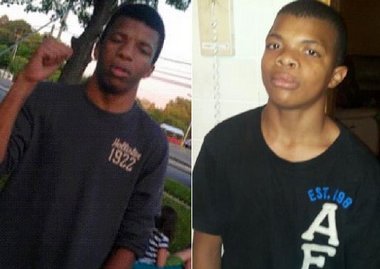
There have been two horrible stories in the news recently about young girls who were murdered in their own neighborhoods.  Ten-year-old Jessica Ridgeway was abducted in Colorado as she walked just a few blocks to meet up with friends and walk to school.  Twelve-year-old Autumn Pasquale was killed in New Jersey by two neighbors who were interested in parts from her BMX bike, her body dumped in a curbside recycling bin.

The murders of children are always disturbing enough, but these two cases share additional details that make them even more horrific.

First, both girls were strangled by teenage boys.  Jessica was killed by seventeen-year-old Austin Sigg and Autumn met her violent death at the hands of brothers Justin and Dante Robinson, ages fifteen and seventeen, respectively.

Second, these accused murderers were turned into authorities by their own mothers.  Austin Sigg’s mother called police after her son confessed to killing and dismembering young Jessica, and apparently there soon was the gruesome discovery that Siggs had buried some body parts under their home.  The mom to the Robinson boys tipped off police after seeing Facebook posts that made her suspicious.

All three of these boys likely will be tried as adults, although they still are recognized as children in many other respects.  We must offer some solemn pause to consideration of what contributes to such cold-hearted pathology in such young men.  And, we also must commend these two mothers for making what must have been devastating phone calls and probably saving others who would have fallen victim to these violent predators in the future.

Can you imagine having a moment when you realize that you son is likely guilty of murder?  I have to think the guilt, the sadness, and the second guessing must be overwhelming.

What are your thoughts about these cases and such violence among teens?

* * *

Author Blog: https://authorjenniferchase.com/
Crime Watch Blog: http://emilystonecrimewatch.wordpress.com/
Book & Crime Talk:  http://blogtalkradio.com/jennifer-chase
Books: Compulsion  Dead Game  Dark Mind  Silent Partner  Screenwriting
Posted in crime, Police | Tagged , , , , , , , , , , | 3 Comments

Thriller Thursday Guest — Author Gary Starta

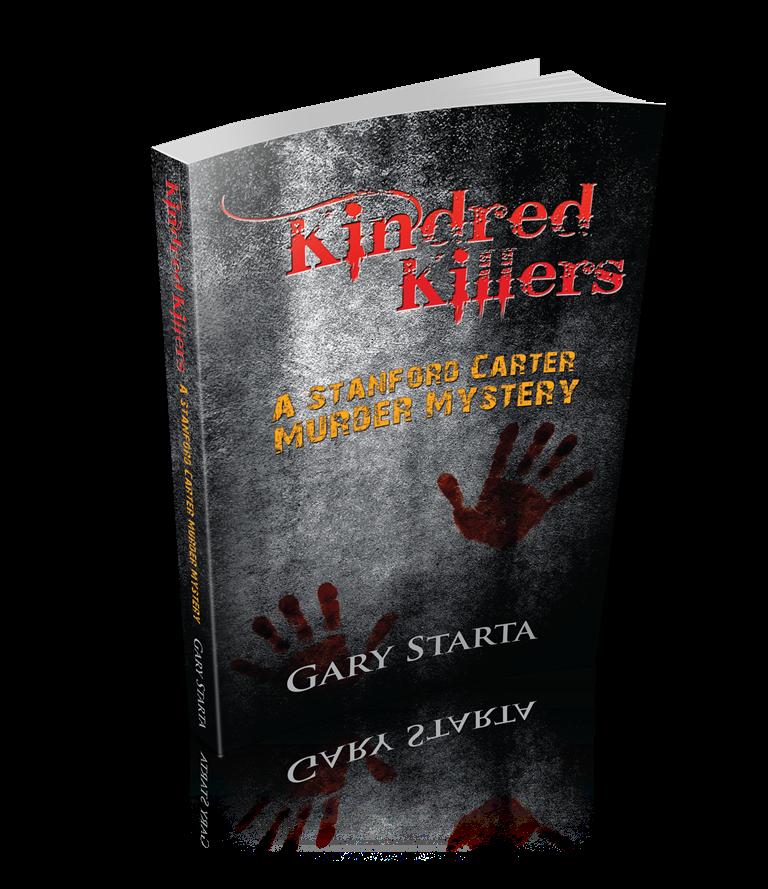
It’s that thriller time of the week again!  I’ve had the privilege to read the works of my next guest and it’s made me discover all over again the genre of sci/fi.  But today is all about crime thrillers! Please welcome Author Gary Starta with his latest release: Kindred Killers.

***

Synopsis:

Homicide Detective Stanford Carter uses Zen meditation to deal with the gruesome crimes of humanity. But his composure is severely tested when an unfaithful husband and stripper are not only murdered but showcased for their immoral lives. To test his mettle further, department policy is jeopardizing his romance with his CSI colleague Jill Seacrest. Marrying colleagues is prohibited and Carter must either end his romance or have Jill put in for transfer. The private detective hired by the family of the victims becomes the only suspect. Carter theorizes someone with knowledge in law enforcement is responsible for leaving clean but disturbing crime scenes. Further investigation leads him to believe a pair of killers might be working as serials. As Jill goes undercover to investigate the PI’s social life, Carter fears he might not only fail to stop the vigilante killings but lose the love of his life.

Purchase Kindred Killers

***

Jennifer Chase:  If Detective Carter was trapped in an elevator with three other people, how would he devise a plan to escape? Would he take any of the people with them?

Gary Starta: If Stanford Carter homicide detective was trapped with others he would certainly have to rescue all of them. He would leave by himself only if he could come back for the others. He is a humanitarian and his conscience weighs heavily on him. He would definitely reject the philosophy of the needs of the many outweighing the needs of the few.

Jennifer Chase: I’m liking him already.  How do you get inside his head when writing?

Gary Starta: I think it’s all about hearing their actual voice in your head. Once you tune into their channel, you are in essence recording them as if they exist.

Jennifer Chase: I know exactly what you mean! So what’s your specific genre? If you could write in any other genre, what would it be and why?

Gary Starta: This book Kindred Killers is one of my few attempts at pure mystery/crime, meaning I didn’t stick in any science fiction which is what I predominantly write. I guess Kindred Killers is my breakout novel when it comes to genre stretching.

Jennifer Chase: So why should readers pick up Kindred Killers?

Gary Starta: I believe I have a story which everyone can relate to: The psychological stress of life on any one individual. How much can one take before they are compromised? What are our boundaries when it comes to our brain? It’s fascinating and terrifying to consider whose voice is really in your head. I think this applies to all writers who hear their characters speak to them. Lol. Regarding Kindred Killers, the people of law enforcement obviously experience their share of stress. How do they cope and stay sane? How can they prevent from becoming what they chase?

Jennifer Chase: Very well put.  And what types of emotions will readers experience when they read Kindred Killers?

Gary Starta: The murders may frighten one of course. Maybe some readers will empathize with the less than reputable characters of this book; on the other hand, they may feel disgust much like the killer(s). I believe the protagonist Stanford Carter’s steadfast resolve to never compromise his integrity, his good name, will evoke admiration. His partner Jill Seacrest might also elicit admiration although she is not the rock Carter is. I hope it’s a rollercoaster of emotions.

Jennifer Chase: Excellent! My kind of story! Now, please bear with me (drum roll please), it’s time to play word association with your main character. Please respond with one word that comes to mind (in your main character’s voice) to the words listed below.

Gary Starta:

Plot           devious     
2012          resolve      
Predator   scum     
Giggles     freedom    
Rural        opportunity   
Omnipresence   companion   

Thank you Gary for stopping by and chatting about your latest book.  I have Kindred Killers locked and loaded on my Kindle.

Author Bio:

Gary Starta has been writing fiction for nearly a decade after taking a detour from non-fiction. He has a BA in Journalistic Studies/English from UMASS Amherst and previously worked as a reporter. His latest novel, Kindred Killers, is a departure from Starta’s science fiction works. He bases it in Boston, the city just north of where he grew up.

Please visit his website: http://www.garystarta.net/ or

Kindred Killers Facebook page https://www.facebook.com/KindredKillers?fref=ts

Posted in Thriller Thursday | Tagged , , , , , , , , , , , , | Leave a comment

A Spooky Tale Indeed…

The blustery wind hammered the sides of the house and across the windows, but the rain refused to fall before darkness descended.  High-pitched tunes of the winter season squeezed through the age cracks in between the old weather-stripping and electrical outlets.

Nothing seemed the same anymore.  What began as a comfortable home in a new town and a new state gradually turned to dread.

The unexplained incidents never entered into everyday conversations, but the uncomfortable feeling was obvious by the subtle reactions from guests that fidgeted and made excuses to leave early.  Something definitely wasn’t right about the house.

The icy fingers slowly crawled up her spine as the instant shivers and cold sweats rattled her bones.  The normal ambient temperature fluctuated from comfortable to the bitter depths from beyond.  It wasn’t just the usual miseries of the drop in temperature from the time of year; it was something much more sinister.

Deep, guttural voices and heavy footsteps from one of the upstairs bedrooms amped up the imagination and sent her heart racing against an unknown entity.  A constant presence pressed down in her personal space, a breath on her neck or heaviness against her arm.  Annoying games of hide-and-seek with everyday items around the house further proved a solid case for the paranormal.

The wind blew harder outside and the tree branches reached out like the tentacles of the undead.

Alone in the house again, the teenage girl stood at the threshold with her hand steady on the doorknob, she turned it slowly, and the door burst open.  The rush of winter air slapped her face and chilled her body.

Leaving the door wide open, she jogged down the driveway to retrieve the mail and pushed her mind to think of something else besides the house.

Before she reached halfway to the street, the front door slammed shut and the deadbolt slide into place with an incredible force.  A gesture demanding some type of final recognition made it almost unbearable to grasp.

She glanced up at the window above.  A distorted, shadowy face stared back at her with monstrous eyes too terrifying to describe but it was impossible to look away…

HAPPY HALLOWEEN!

Do you think this is a work of fiction?  Or, do you think there are some actual events to this story? You be the judge…

* * *

Author Blog: https://authorjenniferchase.com/
Crime Watch Blog: http://emilystonecrimewatch.wordpress.com/
Book & Crime Talk:  http://blogtalkradio.com/jennifer-chase
Books: Compulsion  Dead Game  Dark Mind  Silent Partner  Screenwriting
Posted in Flash Fiction, Writing | Tagged , , , , , , , , , , , | 1 Comment

What’s This I Hear About Type A Personalities?

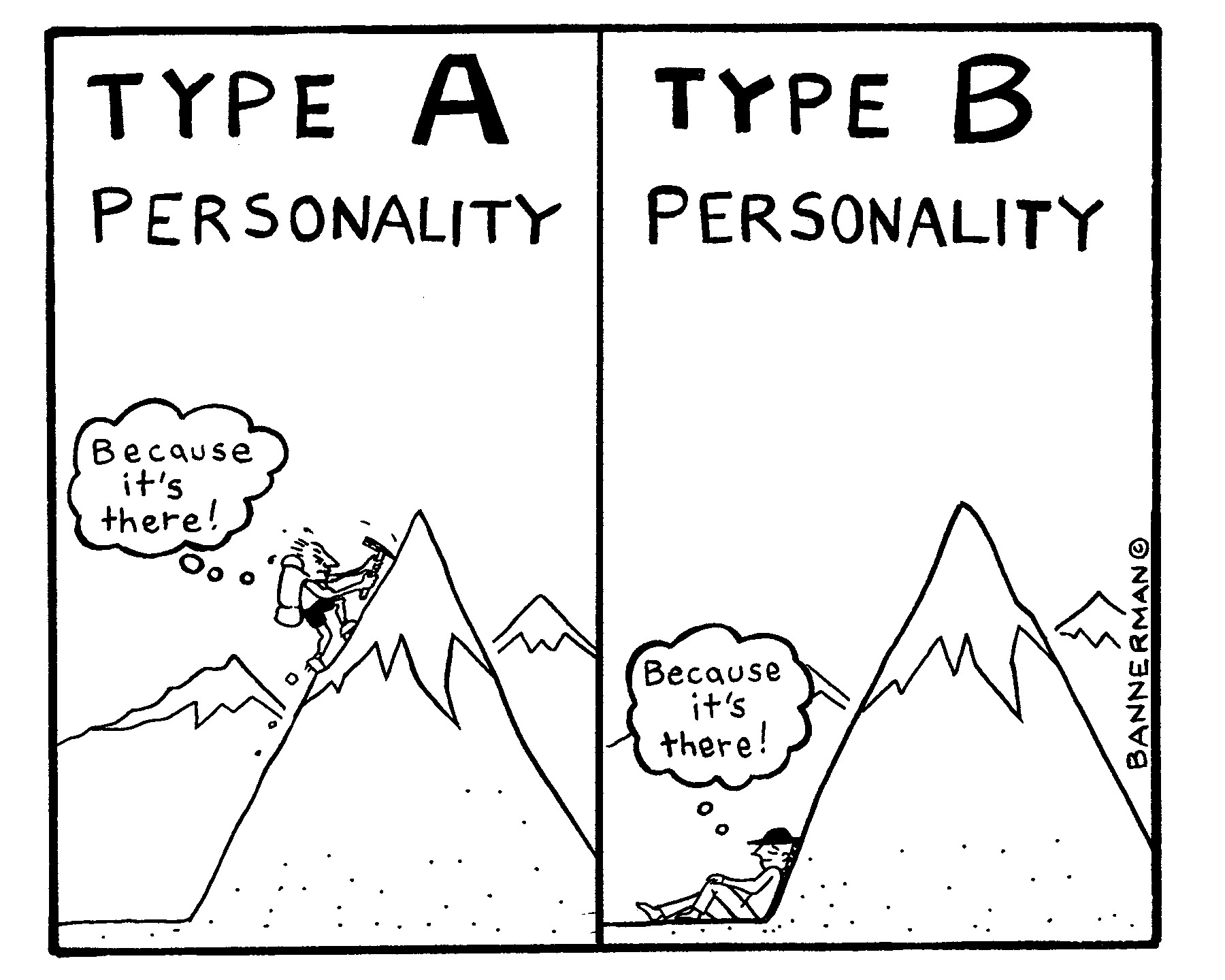
Photo Credit: CartoonStock.com

I don’t think anyone has not heard someone described as a Type A Personality in movies, a family member, or someone you work with on a regular basis.  Okay, I’m not immune to this personality type label.  I admit it, I’m driven, focused and I have goals for both my personal and business ventures, and…. I can be intense at times.

So is this a good or bad thing?

Well, I wanted to dig a little bit further to find out where this Type A Personality Type originated because it seems to be a given these days and a part of our everyday vocabulary.

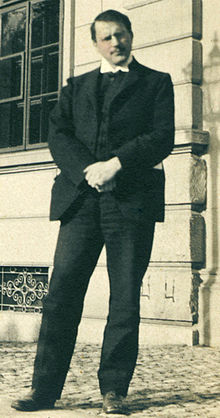
Photo: Wikipedia, C.G. Jung 1910

I decided to start with someone who could answer this for me, Carl Jung (1875-1961), who started out with an interest (or rather fascination) with medicine and spiritual phenomenon, and then of course moved into psychiatry.  He struck up a friendship with Sigmund Freud (1856-1939), which greatly influenced his later theories and the study of the human mind through dreams, myths, art and philosophy.

From the website MBTI Type Today, it explains, “The essence of Jung’s theory of psychological types is simple; when our minds are active and we are awake, we are alternating between taking in information and making decisions in our internal and external worlds. Jung identified eight different patterns for how we carry out these mental activities (now referred to as mental processes, functions-in-attitude, mental functions or cognitive processes). He created these patterns through combining his opposite pairs of attitudes and functions.”

Jung’s theory of the psychological types was that we approach the world with an attitude of either introverted or extroverted.  Then our perceptions (sensing or intuitive) and judgments (thinking or feeling) drive us, which in turn make up his eight mental processes.

Fascinating stuff!  This is a great way to analyze yourself or use to create a fictional character in a story.  It adds depth and understanding into personality types and what makes an individual unique.

Definitions for Personality Types are typically described as:

Type A Personality:

Characterized by excessive ambition, competitiveness, drive, impatience, need for control, focuses on quantity over quality, and also has been described as aggressive.

Type B Personality:

Characterized by moderate ambition and drive, attitude cooperativeness, focuses on quality not quantity, and generally has an easy-going approach to life.

Type C Personality:

Characterized as having a lack of emotion, when in fact, they are frustrated and angry.  They may seem quiet and thoughtful, but there’s some unresolved feelings lurking below the surface.

So… I’m guessing that you’re seeing a clearer picture of yourself and some of the people you know.  I dislike labels, but it’s interesting to take a closer look and my take is that most people are a combination of personality types.  There is a nice balance of personality types that would make life easier, and make you a calmer and more focused person.

The next time someone calls you a Type A Personality, you can reply by saying you’re more of a Type B Personality with drive, ambition, and easygoing attitude.

Do you agree? 

So what’s your personality type?

  * * *

Author Blog: https://authorjenniferchase.com/
Crime Watch Blog: http://emilystonecrimewatch.wordpress.com/
Book & Crime Talk:  http://blogtalkradio.com/jennifer-chase
Books: Compulsion  Dead Game  Dark Mind  Silent Partner  Screenwriting
Posted in Criminology, Dark Mind | Tagged , , , , , , , , , , , | 3 Comments