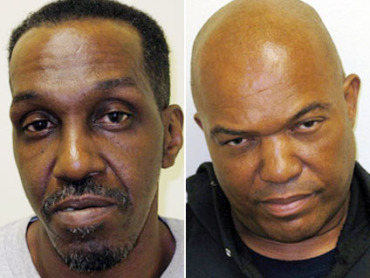
Guilty Plea After More Than Thirty Years

It takes a special level of dedication to work on cold cases as a member of law enforcement.  You are often dealing with evidence that is outdated and deteriorating, witnesses may be difficult to find if they are even still alive, and the statute of limitations regarding many crimes makes the desires of many families to have closure unlikely in the face of budget and personnel limitations.  But, the desire to keep working the case can result in peace when the right man or woman is finally brought to justice.  There are several families in New Jersey that can sleep with the sense that their loved ones haven’t been forgotten as a cold case has been solved after thirty-three years.

Philander Hampton pleaded guilty to five felony counts of murder this week in the deaths of five Newark teenagers in 1978.  He admitted that he and his cousin Lee Evans lured the five boys into an abandoned building and then set the place on fire.  Human remains have never been recovered from the scene, as the structure was essentially burned to the ground.   Officials believe the murders were in retaliation for some stolen drugs.

The two men were arrested last year following a tip Evans still maintains his innocence, but Hampton has reached a deal to serve only ten years in exchange for testifying against his cousin.  Under New Jersey guidelines, he could be eligible for parole after two years. 

I have unyielding respect for all members of our law enforcement and the effort they make every day to bring those responsible for criminal activity to justice, whether the arrest takes two days or thirty years.  This story should serve as a lesson to those who inflict harm on others—the moment hopefully will come when you are held accountable for your actions, even if it takes decades.

* * *

Blog: www.authorjenniferchase.com/
Website: www.jenniferchase.vpweb.com/
Crime Watch Blog: www.emilystonecrimewatch.wordpress.com/
Book & Crime Talk: www.blogtalkradio.com/jennifer-chase/
Books: Compulsion = Dead Game = Silent Partner = Screenwriting


Posted in crime | Tagged , , , , , , | Leave a comment

Silent Partner Took Home the Silver!

I’m very honored that SILENT PARTNER won the 2011 SILVER AWARD for BEST in SUSPENSE at Reader’s Favorite.  Thank you!  Congratulations to all winning authors!

This story was a very special project and close to my heart.

Here’s a recent blog post about this book: The Story Behind the Novel

SILENT PARTNER was also 2011 FINALIST in the Thriller Category with a 5 STAR rating!

Blog: www.authorjenniferchase.com/
Website: www.jenniferchase.vpweb.com/
Crime Watch Blog: www.emilystonecrimewatch.wordpress.com/
Book & Crime Talk: www.blogtalkradio.com/jennifer-chase/
Books: Compulsion = Dead Game = Silent Partner = Screenwriting

Posted in K9, Silent Partner, Writing | Tagged , , , , , | 1 Comment

How Many Characters Do You Kill in a Thriller Novel?

I’ve had this question posed to me recently and I actually had to stop and really think about it. 

How many characters are too many to kill off in a thriller novel? 

Is there a minimum number of murders to a thriller novel?

My first answer was… I’m not really sure.  I don’t think there is a special number of appropriate deaths for thriller or suspense novels.

For thriller novels, it’s just part of the creative process to kill off characters, likeable or detestable, and even just a planted “victim” character; otherwise, it’s just another type of fiction story and not a thriller. 

I spend a fair amount of time outlining my novels, which includes the progression of the main plot, character analysis, settings, research, subplots, conflicts, and the thriller pacing.  In the end, my outline consists of one to two pages for each chapter of what’s supposed to happen. 

At this point, I can see what is needed to be included or deleted before I ever approached the freestyle, creative writing aspect of my story.  And yes, I can figure out if my serial killer victims were enough, too many, or if they were an integral part of the entire storyline that helped to drive the story forward. 

Another important question that writers have to answer is…

What main characters live or die? 

Ah, do I dare be devious or do I let a particular character live another day, or rather in another book?  There are a million questions that you must answer when writing a novel, but that’s what makes it the most fun and definitely the most difficult.              

For the question of murder or murders in a thriller, I ask myself these basic three questions as I plot the storyline:

1. Does this murder just add gratuitous violence and doesn’t really serve a purpose, but to add shock value?

2. Does this murder drive the story forward and heighten the suspense?

3. Does this murder cause conflict and struggle with the main character(s)?

To finally answer the question…

How many characters do you kill of in a thriller novel? 

Kill off as many as it takes in order to tell the story to the best of your ability.  Try to strike an appropriate balance that won’t take away from your main storyline or the struggles of your protagonist. 

Most of all…

Have fun and keep your audience on the edge of their seat because they don’t know what’s going to happen next. That’s my favorite kind of thriller where you your ticket for that thrill ride and you’re not disappointed in the outcome.

* * *

Blog: www.authorjenniferchase.com/
Website: www.jenniferchase.vpweb.com/
Crime Watch Blog: www.emilystonecrimewatch.wordpress.com/
Book & Crime Talk: www.blogtalkradio.com/jennifer-chase/
Books: Compulsion = Dead Game = Silent Partner = Screenwriting
Posted in Writing | Tagged , , , , , , , | 1 Comment

It’s a Match!

From any crime show that we’ve viewed on television or in the movies, there is that moment where the evidence matches and the suspect is then brought to justice.  They make it seem so easy and it only take a few moments.  It’s definitely much more complicated than it looks and the forensic professionals who make that positive distinction are nothing less than exemplary in their work. 

The microscope is the key piece of equipment in any forensic lab.  It’s an optical instrument that uses a lens or a combination of lenses to magnify and resolve the fine details of a particular object of interest. 

The earliest and most simple microscope with a single lens was the magnifying glass.  Can you imagine trying to make sense out of a single hair or carpet fiber with just a magnifying glass?

Today, there are five main types of microscopes that are used most frequently in examining forensic evidence in crime scene investigations:

Compound Microscope 

This microscope consists of a mechanical system that supports both the microscope and optical system.  It illuminates the object and passes light through a series of lenses to form an image of the specific specimen as seen by the eye.  There are a number of magnifying powers, such as 10x, 20x, 200x, or 450x.

Comparison Microscope

This is a common microscope used in forensic labs because it offers a side-by-side comparison of specimens.  It’s basically two compound microscopes combined into one unit.  The unique feature allows it to use a bridge incorporating a series of mirrors and lenses to join two independent objective lenses into a singe unit.  This microscope is effective in comparing bullets, hair, and fibers. 

Stereoscopic Microscope 

This type of microscope is used to characterize the structures of physical evidence that do not necessarily need a high magnification.  It’s generally in the magnification range of 10x to 125x.  It gives a distinctive three-dimensional image of the object.  It is no doubt the most commonly used microscope in the forensic lab.

Polarizing Microscope

This type of microscope uses the polarizer by transmitting light vibrating in the vertical plane only.  It’s similar to Polaroid sunglasses and it appears no different to the eye from ordinary light.  The result makes the specimen readily distinguishable by allowing the polarized light to pass through the analyzer.  It will then produce vivid colors and intensity in the contrasts, such as with soils and crystalline substances. 

Microspectrophotometer

This microscope device is essentially combining and linking a new dimension of the computer to the microscope.  It assists with visual comparison by enhancing color as with specimens such as paint, fiber, and ink evidence. 

The next time you watch CSI, NCIS or any other crime dramas, see if you can pick out these types of microscopes that are used in the lab.

* * *

 Blog: www.authorjenniferchase.com/
Website: www.jenniferchase.vpweb.com/
Crime Watch Blog: www.emilystonecrimewatch.wordpress.com/
Book & Crime Talk: www.blogtalkradio.com/jennifer-chase/
Books: Compulsion = Dead Game = Silent Partner = Screenwriting

Posted in Criminology, Forensic | Tagged , , , , , | 1 Comment

Navy Seal’s Dog Pays a Final Tribute

If you are a dog owner, you probably can share at least one example of a time that your pet offered you comfort after a tragic event or maybe simply at the end of a hard day at work.  Dogs are intimately in touch with the emotions that their human companions experience, and they often respond in a way that surprises people who have not experienced that special relationship between dog and man for themselves. 

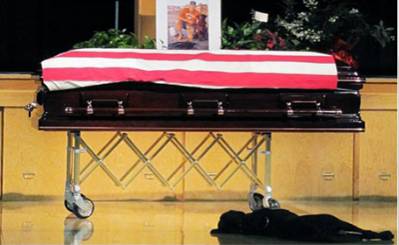
Many of you likely have seen that moving photo taken at the funeral for Navy SEAL Jon Tumilson, one of the occupants of the Chinook helicopter that was shot down by Afghan insurgents recently, in which his loyal dog Hawkeye laid down on the floor by his owner’s coffin.  Hawkeye led Tumilson’s family into the gymnasium in which the memorial service was being held, and then promptly walked over to spend one last moment with his beloved friend. 

These stories always leave me with a wide range of emotions.  On one hand, I ache for Tumilson’s entire family, as I know that the grief that Hawkeye demonstrates in this photograph represents what so many others are feeling for this fallen hero.  But, I also love the important and touching reminder of the amazing bond that exists between dogs and humans.  These relationships are real and I have no doubt that Hawkeye was considered nothing less than a child to his owner.

In my latest novel, Silent Partner, I share the special relationship that exists between Deputy Jack Davis and his dog Keno as they work to capture some of the most dangerous criminals in their city and look out for one another in the process.  While my writing does not offer the succinct emotions of a single moment captured in the photo above, I hope that my passion for animals is clear.

Posted in K9, Silent Partner | Tagged , , , , , | Leave a comment

How Important are Character Names?

Names are interesting because there is a history to them and how they have evolved over the years.  Some names are newer than others like Haley, Riley, Tanner, and Hunter compared to Mary, Emily, John, and David.

I find that I don’t think about character’s names specifically before I begin writing a story, unless a name just fits a character.  Then it’s one of those wonderful light bulb moments.  I spend my time developing my characters first and then the name seems to follow.  I think that when I try too hard to find that “perfect” character name, then I get stuck. 

In my Emily Stone series, I had a little bit of trouble picking a name that would fit my heroine.  I went through a list of names and they just didn’t seem to fit.  I tried more hip and popular names you hear today and they didn’t work either.  The name “Emily” conjured up an image of a wholesome, girl next-door image, but obviously I put a twist on that because she can kick butt when she needs to and does it often.  Not to mention, she carries not one but two hidden firearms most of the time. 

I thought it would be fun to find out what my name means, not using the urban dictionary.  “Jennifer” is derived from “Guinevere” meaning “white ghost”, “white phantom” or “white wave”. 

How cool is that? 

I think all of those meanings would make great book titles.  My last name “Chase” has been referred to as meaning “hunter”.  So… Jennifer Chase is the White Wave Hunter or White Ghost Hunter?  That sounds like a story about a surfer who’s hunting down the perfect wave or searching for a new reality show. 

The name Jennifer hasn’t been around that long, basically since the late 1880s.  Jennifer became very popular in the early 1970s after the novel and then the movie Love Story came out with Ryan O’Neil and Ali McGraw.  Now there are many talented and beautiful actresses that have the name “Jennifer”:  Jennifer Aniston, Jennifer Love Hewitt, Jennifer Lopez, Jennifer Garner, Jennifer Jason Leigh, and Jennifer Connelly.

It’s fun and interesting to find out what’s in a name.  Take some time when you’re plotting out characters to find out what the names you’ve chosen really mean.  You might be surprised what you come up with in the process.

Please share some of your character’s names and why you chose them.

* * *

Blog: www.authorjenniferchase.com/
Website: www.jenniferchase.vpweb.com/
Crime Watch Blog: www.emilystonecrimewatch.wordpress.com/
Book & Crime Talk: www.blogtalkradio.com/jennifer-chase/
Books: Compulsion = Dead Game = Silent Partner = Screenwriting

Posted in Writing | Tagged , , , , , | 5 Comments

“Flash Robs” Are Becoming Dangerous New Trend

I often discuss technology on this blog and the fight to bring violent criminals to justice throughout the pages of my novels is aided by the latest surveillance equipment and communication devices.  But recently, the technology that has become so indispensable for most of us as we go through our daily routine appears to have become a tool for violence and theft.

Many of you probably have seen the video footage of a “flash rob” that took place recently at a Germantown, MD convenience store.  The large group of teens somehow made plans, possibly through social media, to gather in the middle of the night and then overwhelm the employees as they looted the store.  Police are now using the video captured from the store cameras to track down those who participated in the criminal event.

Flash mobs became a popular movement over the past year that originally seemed to have harmless consequences.  Messages would be sent out through Facebook or Twitter to meet at a designated location for a huge pillow fight or coordinated chorus of holiday cheer.  But, maybe it was only a matter of time before those with less-innocent intentions found a use for the public outreach.

The use of social media as a call to criminal activity is something that most police departments admit they are not prepared to counter.  Right now, the primary efforts seem to be focused on establishing curfews on those under eighteen and finding ways to get on the invite lists to these events in an attempt to have their defense s ready.

What do you think is driving these young people to organize such brazen attacks? 

Is it lack of parental supervision, boredom, lack of employment, something else? 

I would love to hear your thoughts on this unfortunate new trend.

* * *

Blog: www.authorjenniferchase.com/
Website: www.jenniferchase.vpweb.com/
Crime Watch Blog: www.emilystonecrimewatch.wordpress.com/
Book & Crime Talk: www.blogtalkradio.com/jennifer-chase/
Books: Compulsion = Dead Game = Silent Partner = Screenwriting
Posted in crime, Police | Tagged , , , , , , | 2 Comments