Are There Similarities Between Serial Killers and Serial Rapists?

I believe that law enforcement, criminal profilers, and private investigators can learn more about the dynamics of serial killers and their crimes by studying cases of serial rapists.  It has been determined by the way that victims are chosen, plan of attacks, and the fantasy internalization of the specific crime, have some close similarities between serial killers and serial rapists.

Who are these individuals who commit serial rape? 

It has been determined that as many as 34% to 39% of rapists have some type of sexual dysfunction during the actual rape.  Many investigative reports have concluded that the cause of the dysfunction can lead to valuable information about the unidentified rapist.  Alcohol and drug use has also been commonly associated with rapists prior to the attacks. 

Rapists are generally repeat offenders and will continue to rape until law enforcement intervenes to stop the cycle of violence.  This type of criminal makes it difficult for investigations if the crime hasn’t been recognized as a serial rape.   Serial rapes are categorized by the facts that are more than two rapes by one offender on different dates.     

For the serial rapist, they have developed a method for approaching, selecting, and subduing their victims.  Generally, the rape crimes are premeditated and the method will be used again and improved upon to obtain the desired result.  It will depend upon the social skills of the rapist which method of approach will be used.  There are three different approaches that rapists commonly use: the con, the blitz, and the surprise. 

John Douglas, expert criminal profiler, has categorized that serial rapists are similar in some ways to other serial violent offenders, such as serial arsonists as well as serial killers.  They exhibit low self-esteem and internalize their fantasies about their crimes.  This fantasy, fueled by the compulsive need, can keep building over time until it’s time to act.  This type of individual puts emotional and physical distance between him and everyone else, which makes any type of relationships doomed from the start.  A serial rapist may be that of an individual who would be quick to blame others and would have interest in rough style pornography that would have to do with bondage and control.            

There have been indications that sexual abuse as a child may contribute to the need to control or humiliate women or a part of the women’s anatomy as the victim of earlier abuse becomes an adult.

The early development through teen years of personality confusion of an individual can be a psychological indicator of what experiences, family dysfunction, substance abuse, physical and emotional abuse will contribute to the mind of a serial rapist, just as possible for a serial killer, later on in their life.  It is important that signs of emotional distress and violence towards others, especially women, be interpreted and understood.  Perhaps early medical and psychological help would deter these fantasies of control over women.     

Are all serial rapists going to become serial killers?

This is not known to any certainty and there have been cases that have escalated to serial murder. Serial rape and the pattern of behavior reflected in this type of crime is worthy of more study to begin to fully understand the mind of a serial killer.

Jennifer Chase
Award Winning Author & Criminologist

Blog: www.authorjenniferchase.com/
Website: www.jenniferchase.vpweb.com/
Crime Watch Blog: www.emilystonecrimewatch.wordpress.com/
Book & Crime Talk: www.blogtalkradio.com/jennifer-chase/
Books: Compulsion = Dead Game = Silent Partner = Screenwriting

Posted in Criminology, Serial Killers | Tagged , , , , | 3 Comments

Early Innovators of Forensic Science

I find everything about the science of forensics to be extremely interesting.  I can’t seem to shake my curious mind about how and why the various crime scene puzzles interlock and ultimately reveal the identity of the criminal.  Descriptions like “CSI” and “ criminal profiling” are the words that are commonplace in our language today.  

What was the inspiration and scientific premise to our modern day crime scene investigation?

The modern technology today has definitely influenced how crimes are processed and solved.  However, the foundation of what we know as forensics was formed more than a hundred years ago.  It is amazing that these men were ahead of their time and have really contributed to how we catch criminals today.

Here are three examples of forensic pioneers:

Dr. Edmond Locard (1872-1966)

Locard was born in France and became a doctor of medicine and managed to have a master of law.  The important works of Hans Gross and Conan Doyle inspired him.  Locard traveled the world to study police agencies in major cities and ultimately incorporated the scientific method and trace evidence analysis for crime scene investigation and reconstruction of a crime. 

Locard is most famous for the forensic theory “Locard’s Exchange Principle” and it has been interpreted several different ways over the years, but holds a solid foundation in the world of forensics.  Basically, this principle is applied to crime scenes in which the perpetrator(s) of a crime comes into contact with the scene, which in turn tranlates that the perpetrator(s) will both bring something into the scene and leave with something from the scene.

Dr. Hans Gross (1847-1925)

Gross was born in Austria and he studied criminology and law.  He became the Examining Magistrate of the Criminal Court at Czernovitz.  It was by observing the failings of criminal investigators, criminal identifications, and biased eyewitness accounts that inspired him to develop a methodical and systematic way of determining facts. 

Gross most notable accomplishment was the book, Criminal Investigations: A Practical Textbook for Magistrates, Police Officers, and Lawyers (1906).  This textbook described a systematic approach to crime scene reconstruction with the emphasis on objectivity.  The success of this groundbreaking book literally changed the way criminal investigations were conducted. 

Francois Vidocq (1775-1857)

Vidocq was a French criminal and later became a prominent criminalist.  He was a former criminal who subsequently became the founder and first director of the crime-fighting Sûreté Nationale as well as the head of the first known private detective agency.  He is today considered by historians to be the father of modern criminologyand of the French police.

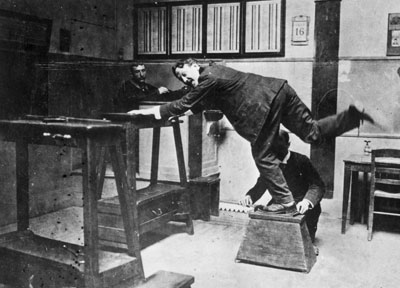
Vidocq was a fascinating man and contributed and implemented undercover police work, ballistics, criminology, and the modern filing system into the police investigations.  He made some of the first impression evidence of plaster footprints for evidence comparison. 

 * * *

These are just three of the most prominent and influential men that have helped to shape forensic history.  I find it worthy of note to ponder what our criminal investigations and crime scene reconstructions would be like today with out these founding fathers of forensic science.


Blog: www.authorjenniferchase.com/
Website: www.jenniferchase.vpweb.com/
Crime Watch Blog: www.emilystonecrimewatch.wordpress.com/
Book & Crime Talk: www.blogtalkradio.com/jennifer-chase/
Books: Compulsion = Dead Game = Silent Partner = Screenwriting

Posted in Criminology, Forensic | Tagged , , , , | 4 Comments

Photography Sunday — Maze of Clouds

This photo was taken by a nearby harbor and beach.  A storm was brewing and approaching fast, but the light through all the clouds was amazing.  I felt it was more dramatic with black and white.

Have a wonderful weekend!

Posted in Uncategorized | Tagged , , , | Leave a comment

The Beginning of Criminal Profiling…

I’ve received many questions about profiling from readers.  It seems that many people are interested in this technique and how it actually works.  I can’t blame them because it’s an intriguing concept and that’s why I studied it along with my criminology.

In my books Compulsion and Dead Game, Emily Stone and her partner Rick Lopez use a technique of criminal profiling to catch their child murderers and pedophiles.

Many years back, before television’s CSI and most weekly forensic shows, I was home with the flu watching daytime television.  I came across a talk show that was interviewing FBI profiler, John Douglas.  The show was mainly talking about missing and abducted children, but it was extremely fascinating.  It was the first time that I had been exposed to the concept of criminal profiling and what it actually entailed.  

We seem to hear the word “profiling” used in many different contexts.  For the most part criminal profiling is a behavioral science and an investigative tool that helps law enforcement to find a direction for the investigation and to outline the behaviors and motivations of a particular type of suspect.  It is a technique that is inferred from offender traits that include physical and/or behavioral evidence.  A criminal profile is complied from the physical evidence at the crime scene, victimology, and behavioral evidence. 

There are five important traits that a good criminal profiler must ALWAYS possess:

1.      Analytical & Critical Thinking

2.      Objectivity

3.      Deductive Reasoning

4.      Patience

5.      Tenacity 

John Douglas began working on the FBI’s Behavioral Science Unit (BSU) in 1977 and there he taught hostage negotiation and applied criminal psychology at the FBI Academy.  He created and managed the FBI’s Criminal Profiling Program.  This was literally a new method of discipline, a useful tool for the capture of serial criminals. 

Douglas is most known for working with his colleague Robert Ressler as they began interviewing serial killers and other violent sex offenders at various prisons.  The fictional character of Jack Crawford in the book/movie Silence of the Lambs was based on Douglas.

Criminal profiling has proved to be an effective tool when tracking down serial criminals.  There has been some debate on the accuracy of this discipline.  If investigators use this application to keep their investigation working in the forward direction, it will keep the integrity of the investigation intact.  Sometimes law enforcement can be plagued with dead ends and lack of leads, but a criminal profile will help keep the motivation and attention in the spotlight where a new lead may be possible.  

Here are some great books by John Douglas I have in my own research library that are worth checking out:

Mindhunter

Obsession

The Cases That Haunt Us

Crime Classification Manual

The Anatomy of Motive

Blog: www.authorjenniferchase.com/
Website: www.jenniferchase.vpweb.com/
Crime Watch Blog: www.emilystonecrimewatch.wordpress.com/
Book & Crime Talk: www.blogtalkradio.com/jennifer-chase/
Books: Compulsion = Dead Game = Silent Partner = Screenwriting

Posted in Criminology | Tagged , , , , , , | Leave a comment

How Long Does it Take to Write a Novel?

This is a good question.  It’s a solid, straight to the point question about writing.   It’s a question I’ve been asked quite a bit lately. 

 How long does it take to write a novel? 

I’ve heard answers from it takes a lifetime to however long it takes you to read a book times a five hundred.  These responses make me laugh and are honest, but sometimes the length of writing a novel basically depends on what the writer really wants to do and the type of story. 

Does the writer really want to write and finish a novel or not?

For me, I like to think about the story I’m going to write for a while and make just some general notes to get those creative juices flowing.  It helps me to see if there’s a story worth developing or not.  I make notes on the basic storyline, characters, suspense, and research needed.  In fact, I have several stories simmering in this process right now.  Sometimes I pick up articles, magazines, books, and miscellaneous pieces of information off the Internet to add to my research files. 

I write a fairly extensive outline for all my novels.  This is a process that works well for me and I’ve fine-tuned it with my last two books.  When I decide which story I’m going to write, I begin the outline process.  This becomes my choppy first draft of my book.  After this process, I begin the actual chapter writing.  This part of my writing process is fun and it’s a breeze for me because I’ve already run my story backwards and forwards with my outline to make sure that the story progresses, as it should.  Sometimes there is some tweaking of the story or a particular character, but everything goes along smoothly for me by this time.         

For example with my novel Dead Game, the writing process went basically like the list below writing 6 days a week approximately 8 hours a day, sometimes more or less.  Keep in mind, I did take some breaks in between some of the writing process and allowed the manuscript to sit and my mind to clear.

Extensive Outline – 4 to 6 weeks

Additional Research and/or Interviews – 1-2 weeks

Actual Chapter Writing – 2 months

Revisions – 1 month

Sent out manuscript to an editor – 3 weeks

Changes to manuscript (updated to changes) – 1 to 2 weeks

Final proof edit to an editor – 1 week

Final read through – 1 to 2 weeks

The rest is history!  That’s how I was able to write and complete Dead Game.  Every writing project is a little bit different and it will take more or less time based on how well I prepared the outline and how much research is needed.

A writer needs to find what works for them and then organize the time to fit their lifestyle and schedule.  First and foremost, you need to write something everyday and you’ll be well on your way to complete that novel.     

Blog: www.authorjenniferchase.com/
Website: www.jenniferchase.vpweb.com/
Crime Watch Blog: www.emilystonecrimewatch.wordpress.com/
Book & Crime Talk: www.blogtalkradio.com/jennifer-chase/
Books: Compulsion = Dead Game = Silent Partner = Screenwriting

Posted in Writing | Tagged , , , , , | Leave a comment

Computer Thief Unknowingly Creates His Own Mug Shot

We all have been made aware through cable news stories, magazine articles, and our own friends about the crimes that can be committed using a computer.  There is the growing menace of cyberbullying, through which (mostly) young people leave cruel remarks on Facebook or post embarrassing videos on YouTube.  Viruses can infect your computer and steal personal information such as your credit card numbers, driver’s license, or any other details you have ever submitted to a website and suddenly your identity is no longer your own.  The laws and the court system are struggling to keep up with the new ways in which criminals are finding to use technology to commit acts that harm our sense of security and sometimes our very lives.

What about the possibility of your computer being used actually to catch a criminal in the act?  That’s exactly what happened this week in Oakland, California when a taxi driver who had stolen an Apple MacBook was arrested after being caught on camera using that very item.

The owner of the MacBook had installed software called “Hidden” which took photographs of the thief using the computer on his sofa, in bed, and even while driving.  The man unknowingly created his own crystal clear mug shot every time he looked at the screen.   The program also captured screenshots of the thief changing accounts and logging into his Facebook account.

Joshua Kaufman, the rightful owner of the MacBook, created a blog entitled “This Guy Has My MacBook” and posted the photos he received online for the entire online audience to see.  With the help of the Oakland Police Department after two months of going it alone with his blog, the thief was apprehended.

In my second novel, Dead Game, I feature a character who uses the virtual world to lure his victims to their deaths.  This work of fiction shows the dark side of technology, while Mr. Kaufman’s smart thinking shows us one way in which our computers can help us find justice.

Posted in crime, Dead Game | Tagged , , , , | Leave a comment

Back to Forensic Basics with the Body Farm

Today’s post is not for the squeamish or faint of heart. 

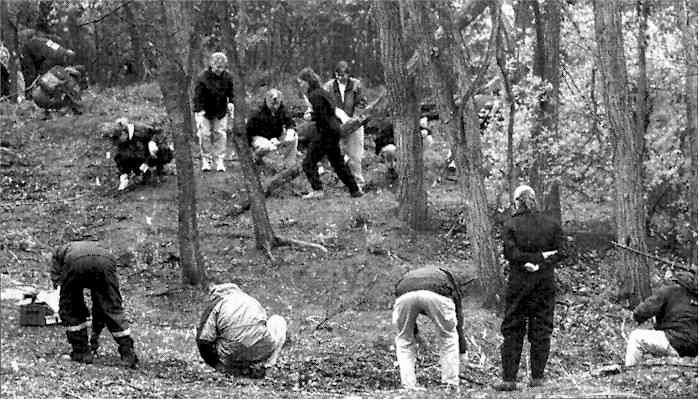
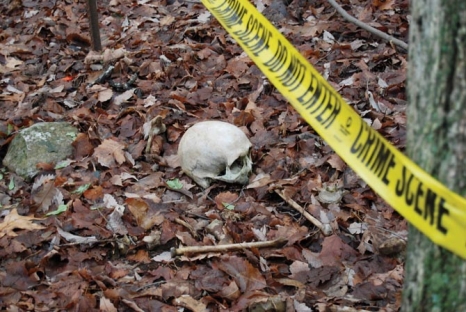
The body farm refers to a research facility where human decomposition is studied in different settings, conditions, and environments.  The invaluable research gains a more accurate understanding of the human decomposition process. 

As ghoulish as it sounds, learning to properly develop techniques to extract information from decomposition remains, such as the time and circumstances of death, prepares investigators, law enforcement and forensic anthropologists to pinpoint and reconstruct the chain of events of a crime. 

It’s a fascinating scientific process.  Bodies are studied out in the open, buried in debris and brush, inside small structures, inside cars, and various other conditions.  This can help to facilitate investigations in order to locate and capture the perpetrator.  The more forensic professionals know about human decomposition, the more cases that can be solved in the process.   


There are five basic decomposition stages; all depend upon the environmental conditions and temperatures:

1.                  Fresh

2.                  Putrefaction

3.                  Black putrefaction

4.                  Butyric fermentation

5.                  Dry decay

For example, the body begins to lose heat from the average core temperature of 98.6 degrees F.  It falls to the surrounding environment, indoors or outdoors.  As a general rule under normal conditions, the body will lose approximately 1.5 degrees every hour after death.

There are five known body farm facilities in the Unites States:

University of Tennessee at Knoxville

The original “body farm” is the University of Tennessee Anthropological Research Facility.  In 1971, Anthropologist Dr. William M. Bass was the official state anthropologist for Tennessee and consulted on many cases involving human remains.

It consists of a 2 ½ acre wooded plot surrounded by razor wire fences.  At any time, there are number of bodies placed in different settings left to decompose, varying conditions and environments.  Bodies are obtained from various sources from unclaimed bodies from the morgue to individuals who have voluntarily donated their bodies for research.  Approximately, 120 bodies are donated to the facility every year.  

Western Carolina University

This facility is part of the Western Carolina Human Identification Laboratory.  The research “body farm” area is the size of a garage and can accommodate approximately six bodies at a time.  In addition, they also train cadaver dogs at this facility.   

California University of Pennsylvania

This is a remote facility located 45 miles southeast of the city of Pittsburgh.  It has access to over 200 acres generously donated.  This facility also conducts crime scene investigation training and other related activates. 

Sam Houston State University

This is a state-of-the-art research and training facility designed to advance academic and technical knowledge in the application of forensic science disciplines to crime scenes.  Bodies are willed and donated.  This facility is a 247 acre of land that is adjacent to the Sam Houston National Forest.  It is a contained outdoor facility with a variety of environmental conditions, including fluvial environment.  Webcams are located at various locations of the outdoor facility to monitor timing of post-mortem activities on and off campus.

Texas State University

The Forensic Anthropology Center at Texas State is a human decomposition research laboratory where questions related to outdoor crime scenes and decomposition rates are investigated.  Most of the facility is around 7 acres, but the Freeman working ranch as approximately 4,200 acres available for research practices.  They accept body donations.  The overall research is to assist law enforcement and the medico-legal community in their investigations. 

Jennifer Chase
Award Winning Author & Criminologist


Blog: www.authorjenniferchase.com/
Website: www.jenniferchase.vpweb.com/
Book & Crime Talk: www.blogtalkradio.com/jennifer-chase/
Books: Compulsion = Dead Game = Silent Partner = Screenwriting
Posted in Forensic | Tagged , , , , , , | 1 Comment