Abductors of Jaycee Dugard Plead Guilty

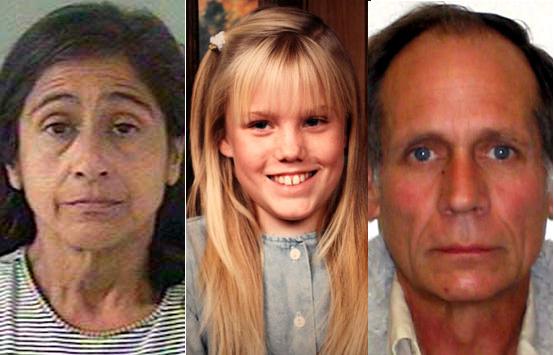
Today, in a courtroom in California, Phillip and Nancy Garrido plead guilty to the abduction of Jaycee Dugard and other related charges and finally brought some closure to a nightmare situation that began twenty years ago.  The couple will now spend the rest of their lives in prison, a sentence they will officially receive from the court in June, and Jaycee and her daughters will be spared the emotional trauma of having to sit in front of a jury, a judge, and their abductors to testify about the years of abuse they endured.

I am sure all of you are familiar with this case, and I have written several posts about this amazing story on the blog previously.  Everyone was stunned when Jaycee Dugard was found alive in 2009 after being kidnapped from her own neighborhood back in 1991, and then felt even more shock as details of her time imprisoned at the will of the Garridos came to light, including the two children fathered by Phillip Garrido (now both teenagers and older than their mom when she was abducted). 

Since reuniting with her family almost two years ago, Jaycee has successfully stayed out of the public eye despite international interest in how she is doing and what her emotional and mental state must be in light of her years spent as a captive.  Even today, she just released a brief statement expressing her happiness at the decision by the Garridos to admit to the crimes they had committed.  I am glad that she has been able to move through what is certain to be a lifelong healing process with some sense of privacy. 

I am thankful that the Garridos decided to enter guilty pleas, as it previously seemed that at least Phillip Garrido would not admit to the charges against him, and that this chapter of Jaycee Dugard’s life story can be closed.


Posted in crime | Tagged , , , , | Leave a comment

Writing in the Moment…

I recently discovered a new term “mindfulness” in my everyday life.  It basically means what it implies.  On one level it means paying attention to details of what’s going on around you at any given time, but on a much deeper level it brings your conscious awareness to a “moment-by-moment” basis.  It’s where you pay attention to what’s happening right now, but in a non-judgmental way and allowing things to be what they are to you.   

Writing is a demanding, but absolutely fulfilling profession.  I’ve found myself taking part in standard Yoga stretches to ground myself and begin my day.  I’ve recently taken it a step further by using the meditation technique to mindfulness to de-stress and balance my mind and body.  It’s been quite effective and I look forward to it everyday.  I highly suggest checking out Mindful Yoga on a CD or DVD.

I wanted to take the “in the moment” or “mindfulness” into my writing.  I’m currently working on my third Emily Stone Novel, where the term “thriller” is taken to new levels as she chases after serial killers and she sometimes gets too close to them almost feeling their breath or touch.  By taking an experience along with emotion and observation, you can build a thrilling scene.

As I’ve briefly outlined my chapters and scenes, I’ve found myself creating the suspense and tension of the storyline.  I take a moment to view from Emily Stone’s perspective of “in the moment”. 

For example, she’s found a new clue that can track down the killer.  What does she do?  How will she move forward in a moment-by-moment way?  I break down the scene into action/reaction from beginning to end.  The beginning is when she finds the clue and the end is the result I want her to accomplish.  What are some of the observations, emotions, and details she can accomplish in this particular task?

Take this writing task a step further into your own day.  Write the “in the moment” observations of a typical day for you.  Create a scene when you run errands, watch your favorite movie, or take a lunch break with a friend.  Write everything down that you observe.  What are the moment-by-moment actions that happen?

I’ve found that by writing in the moment, you discover not only things about yourself but also about your characters in your stories.  The next time you feel that little procrastination bug nipping at you, pull back, and write in the moment.

Posted in Writing | Tagged , , , | Leave a comment

Police Helicopter Shot in Los Angeles

Those who read this blog or know me personally are hopefully well aware of the deep respect I have for the members of our law enforcement agencies.  They do amazing work every day to keep our communities safe, often putting their own lives on the line to protect us.  I have been honored to spend time with them and to try to bring justice to their work through my writing.

When you think of the danger in which police officers place themselves, perhaps you are like me and walking into a home in which an armed and dangerous criminal is known to be hiding or chasing a fugitive at dangerous speeds down a highway are the situations that come to mind.  But, what about the officers who patrol our streets from the skies?  An incident that took place in Los Angeles over the weekend shows that our men and women keeping guard from police helicopters are risking their lives as well.

Early on Sunday morning, a helicopter belonging to the Los Angeles Police Department had to make an emergency landing after being shot at while responding to a call about gunfire on the ground.  Fortunately, the pilot and other passenger on board were not injured and the chopper landed safely.

The alleged shooter was restrained by his own family members until authorities could arrest him and a semi-automatic rifle was recovered from the scene.

If you have ever witnessed a police helicopter circling in your neighborhood, you realize that they are not too far from the ground.   They are susceptible to criminals who want to cause them harm just like the brave officers in cars and on foot patrol.  Let’s hope that stories such as this one are rare and that the shooter in this case gets the justice he deserves in court.

Posted in Police | Tagged , , | Leave a comment

Break Out of Writer’s Block or Stubborn Procrastination

We’ve all been there.  I’ve never really experienced writer’s block, but procrastination isn’t far away for me on some of my writing days.  At times, it’s difficult to stay focused on my story because my mind wanders to other things or I’m distracted because it’s beautiful outside.  Then I seem to be preoccupied on what I’m NOT doing instead of what I want to do.

I’ve learned a few tricks that have helped me to stay centered on my writing projects.  Getting outside for a brisk walk or taking the time for a good aerobic workout helps me to refocus.  Sometimes listening to my favorite music (even turning up the volume and signing) or drinking a tasty beverage (iced tea, fruit smoothie) helps too.

Here are five helpful tips to remember if you’re suffering from writer’s block or that stubborn procrastination bug:

1.      Find a comfortable writing space & set a writing schedule that best suits your needs.

You’re not going to feel comfortable writing if you don’t like where your workspace is located.  Maybe it’s time to change it up?  If you’ve been writing in an extra room in your house, maybe change your space to the kitchen table or even at a local coffee shop.  Make sure your writing schedule is attainable.  Don’t put time aside late at night and you know that you’re too tired and stressed to do any writing.  Make adjustments that fit your lifestyle and writing needs.  

2.      Set writing deadlines and stick to them.

It’s important to set deadlines for yourself.  Be sure to set deadlines that are realistic.  Not finish your novel in four weeks.  A great way to set short term goals is to set a number of pages or words you would like to accomplish every day, like 3 – 5 typed pages or 2,000 words.  If you don’t happen to meet your goal on a particular day – remember it’s okay.  Reward yourself for writing.  Writing is supposed to be fun!

3.      Work on more than one project at a time.

Writing on more than one book may seem overwhelming, but it’s actually a good way to focus your attention on something else if you’re having a block with one book.  For example, if you’ve been bitten with the procrastination bug, then work on some research for another project.  It helps to inspire you and to look at your other projects from a different perspective.   

4.      Take time off and reward yourself after a project.

This is a must!  Take some time for yourself and celebrate your finished project.  A good way to benefit from this reward is to break it up in sections.  For example, reward yourself when you’ve finished your first draft, completed all of your edits, designed your book cover, and final draft.  It will help to keep you motivated and fresh with ideas.

5.      Try some fun writing exercises.

This is actually something new for me, but I find it very effective.  Again, it helps to refocus your mind on something else momentarily.  Try writing one of your chapters from a different character’s point of view, a different narrative (first person or present tense), or write an evaluation of one of your characters for a pretend job interview.  One of my favorite writing exercises is to make a list of all the descriptive words I like to use and then write out 20 alternative words for each one.

The bottom line… don’t despair if you’re feeling a little cranky because of writer’s block or procrastination.  It happens to all of us at one time or another.  Writing is a demanding and difficult job, but well worth it.  Take a breath… give yourself a break… and refocus.

Posted in Writing | Tagged , , , , | Leave a comment

Interesting Serial Killer Facts – Part Two

I’ve received the most interest and visits from my blog article on 13 Interesting Serial Killer Facts that was first posted last year and then again last month.  An interesting fact that many people forget about is that the United States isn’t the only country in the world with prolific, hideous serial killers.  In fact, the top ten list of countries shows that the U.S. is ranked #10 by victims.

However, law enforcement and historians estimate some of these serial killer victims, which may not be one hundred percent accurate due to a variety of circumstances.  It gives an interesting facet to the phenomenon of serial crime and a strong foundation for debate and conversation. 

What can we learn from these cases?  Are there any psychological triggers, indicators, chemical, environmental or biological clues to these senseless killings?

1.      Luis Garavito, 138-300+ victims, Columbia, 1990s

Garavito was called the child murderer, torture killer, and rapist known as “The Beast”.  He was convicted of 30 murders, which was later reduced to 22 for his in aiding investigators.

2.      Pedro Lopez, 110-300+ victims, Columbia, Peru, Ecuador, 1980s

Lopez was convicted of killing 110 young girls, but confessed to killing 300.  He was known as the “Monster of the Andes”.

3.      Amelia Dyer, 274+ victims, Bristol England, 1860s – 1896

This is a very interesting case.  Dyer was only convicted of only one murder.  After her death, it was confirmed that she killed 274 babies, which were recovered from the River Thames.  She was dubbed the “Baby Farm Murderess”.   

4.      Harold Shipman, 250+ victims, United Kingdom, 1990s

Shipman was known as “Doctor Death”.  He was convicted of 15 murders and responsible for the deaths of 218 patients.  He would inject diamorphone into his patients, falsify medical records, and report the patient was in poor health.

5.      Elizabeth Bathory, 100-200+ victims, Kindom of Hungary, 1500s

Bathory was known as the “Blood Countess” or “Blood Queen”.  It is not known actually how many people she killed.  There is even some speculation that she was possibly the victim of conspiracy and may have been innocent.

6.      Darya Saltykova, 38-138 victims, Russian Empire, 1800s

Saltykova was a noblewoman show was found guilty of 38 murders.

7.      Thug Behram, 125 victims, India, 1790-1840

Thug was a cult leader and confessed to killing more than 125 victims and present during 931 murders by his cult.  He was never convicted of any of the murders.  There was speculation that he was responsible for 50,000 to 1,000,000 murders.

8.      Miyuki Ishikawa, 103+ victims, Tokyo, Japan, 1940s

Ishikawa was a nurse and euthanized more than 103 newborn babies to parents unwilling to care for them during prohibition of abortion in Japan.  She was sentenced to 4 years in prison.

9.      Javed Iqbal, 100 victims, Pakistan, 1990s

Iqbal was a child murderer and confessed to killing 100 children.  He was convicted on all counts.  He was later found dead in his prison cell, possibly tortured and murdered, but ruled a suicide.

10.  Gary Ridgeway, 90+ victims, Green River Valley, Washington, United States, 1982-2000

This case has been called the United States most prolific serial killer, also known as the Green River Killer.  He mostly targeted prostitues from the Seattle area.  After strangling his victims, he would then dump the body near the water.  He was convicted of 49 murders, confessed to 71 murders and was suspected of more than 90.

Posted in Serial Killers | Tagged , , , | 1 Comment

Life on the Beat as a K9 Officer

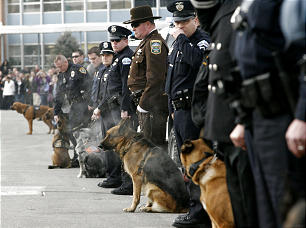
As I researched the inner workings of K9 units for my latest novel Silent Partner, I realized that every police K9 officer I met (both active duty and retired) couldn’t express enough how rewarding the job was for them.  I find myself taking a second glance whenever I would see a police car that has the imprinted words, K9 Unit – Stay Back, next the back window.  I wondered if they were on a call to find a bad guy that tried to slip away, sniff out some drugs, or offer some back up for a fellow officer.

I’ve always loved dogs, but I’ve never been given the opportunity to see working dogs up close and personal.  I learned about the strong bond of dog and handler.  I watched officers paired with dogs by the master dog trainers.  It was interesting to see the different personalities of both dogs and police officers and how they worked into a strong team.  Police protection and scent detection dogs can vary in breeds from German shepherds and Belgian Malinois to Labrador retrievers and Rottweilers.   

Upon successful completion of training and certification, K9 officers are given their new assignments. Most departments have the dogs live with their assigned handlers and they are required to train approximately four hours a week. Training consists of tracking, building search, field search, handler protection, and physical apprehension according to USPCA (United States Police Canine Association) standards.

K9 units serve patrol functions and scent detection (narcotics, bomb, cadaver, or accelerant) – sometimes dogs are cross-trained. Most common calls for K9 units are crimes in progress, burglary and robbery alarm calls, prowler calls, street fights, and narcotic detection.  These specialized law enforcement units work for city police, county sheriffs, state police, and with federal law enforcement agencies patrolling airports, seaports, and our borders with Mexico and Canada. Officers and dogs alike receive specialized law enforcement training. 

Check out my latest crime fiction thriller, Silent Partner, and meet Deputy K9 Jack Davis and his trusted four-legged partner Keno.  I take readers into the working life of a K9 officer who’s caught in the middle of a web of lies and on the trail of a serial killer.  Get to know the cops who are backed up by their silent partners and find out their stories.  Please feel free to leave comments and reviews.   

Silent Partner is available both in paperback and eBook formats.

Posted in K9, Writing | Tagged , , , , , , | 2 Comments

Psychological Triggers and Obsessions of the Serial Killer Mind

“We’ve all got the power in our hands to kill, but most people are afraid to use it. The ones who aren’t afraid control life itself.”  –Richard Ramirez (The Night Stalker, Los Angeles, CA)

We hear about serial killers crossing that dangerous psychological line into the act of murder.  There is a big leap from the fantasy phase to the actual criminal act.  It’s the impulse control mechanism that is instilled in human beings.  Basically, we know it’s wrong to kill another human for personal reasons or motivations.  When you combine the traits of psychopaths with the lack of impulse control, it can be the formula for disaster.

What triggers these individuals to kill?  According to Joel Norris author of Serial Killers, he outlined seven stages (phases) of the serial killer: aura, trolling, wooing, capture, murder, totem, and depression.  This is an interesting theory and definitely has merit from what we know to date.  I would like to see more study in this area based on his observations in input.  I would also like to see other cases of serial killers that aren’t the same “high profile” cases that are reexamined frequently, i.e. Jack the Ripper, Jeffrey Dahmer, Zodiac, John Wayne Gacy.  Every serial case has merit and something to be learned for law enforcement, criminal psychologists, and profilers, but every year there are many new cases in every country that should be scrutinized.

The first phase Norris describes in his book is “the aura phase”.  This is the first step that the potential killer takes and it occurs when he begins to withdrawal from reality and enters into his/her own private world of perverted fantasy. Friends, family and those who encounter this person may not be able to detect this person’s change in personality. Time can slow down in his/her mind, colors tend to become vivid, sounds more intense and the person becomes completely cut-off from any normal stimuli. When in this phase, a killer becomes antisocial and life no longer has meaning to him/her.  They are pushed to fulfill their fantasy.  It’s the insatiable need to fulfill their own purpose and motivations.

Fantasies of serial killers have been studied and documented over time.  Such triggers have been described from various serial killers as when they see a woman that reminds them of someone that has abused them, ridiculed them, or even infatuated them.  Other descriptions of this behavior pattern of the “triggering factor” is the “thing” that sets serial killers off in which their fantasies have been lying dormant: specific type of physical victim, victim behavior, lust, unforeseen opportunity, trust from a child or adult, desire to maim, control, or take a life away, etc.

“We serial killers are your sons, we are your husbands, we are everywhere. And there will be more of your children dead tomorrow.”  – Ted Bundy (rapist, kidnapper, necrophile, and American serial killer)

***

Be sure to sign up for my BOOK & CRIME NEWSLETTER to stay updated on exclusive content and updates not posted anywhere else.

***

Posted in Serial Killers | Tagged , , , , , | 4 Comments