From the Archives of Serial Killers… Innocent Victims

From the personal diary of convicted killer Frederick Baker on August 26, 1867, “Killed a young girl.  It was fine and hot.”

As I’ve been reading through true crime books and looking up serial cases for research, both for my novels and articles on criminology, I’ve found that there have been some hideous cases in the 1800s.  Many times we forget that serial killers have been around as long as there have been people. 

In my Emily Stone Series, she takes her anonymous job seriously and hunts down child abductors and serial killers with a vengeance.  Her hope is to find the child alive and be able to return them to their families, but that isn’t always the case.  I couldn’t help but think of Emily Stone when I read about a particular case in 1867.  

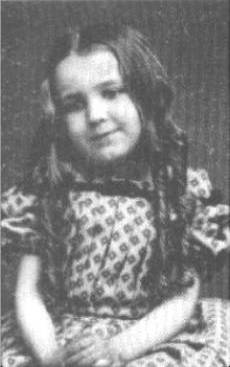
It was a summer afternoon in Alton, Hampshire when seven-year-old Fanny Adams, her sister and friend decided to go outside and play.  Frederick Baker, a twenty-nine year old solicitor’s clerk, met up with the girls and gave them candy and three half pence to run races with him.  He then took Fanny Adams into the hop fields. 

Baker then proceeded to murder and mutilate the little girl.  When family and neighbors later found Fanny Adams, her bloody head had been stuck on a hop-pole with eyes gouged out and one ear torn off.  Her chest had been severed at the diaphragm with the heart scooped out.  It was beyond gruesome by any standards.

According to accounts of the investigation, it appeared that Fanny was battered in the head with a stone and then cut apart with a small pen knife.  Baker was arrested and still had blood on his shirt and trousers that he couldn’t explain.  He protested his innocence throughout the trial.  However, later he did write a letter to the family to express his sorrow for what he had done “in an unguarded hour” and was seeking their forgiveness. 

A jury found Frederick Baker guilty of willful murder in only fifteen minutes.  On December 24, 1867, Baker was hanged.

I can’t help but speculate that this was a psychopathic fantasy for Frederick Baker and wonder how long he lived the gruesome events in his mind before he acted upon them.  He worked as a solicitor’s clerk, but we will never know what horrific thoughts went through his mind until that fateful day on his tea break that he decided to take young Fanny Adam’s life. 

Were there any warning signs?  Did he exhibit any outcast type of behavior or aggressiveness?  What was his family life like growing up?  What did “unguarded hour” mean?  What if they didn’t catch him for Fanny Adam’s murder?  Would he have gone a rampage?   

Your thoughts?

Posted in Serial Killers | Tagged , , , , , | Leave a comment

Screenwriting Top Ten Check List

Screenwriting is one of the most fun writing formats you can venture into with your creative voice.  It’s difficult not be enthusiastic when it comes to movies and screenwriting extends that passion.  To put action and dialogue to the ultimate test is both challenging and extremely enjoyable. 

Whether you’ve already written a screenplay or you’re in the process of creating one, I’ve put together a top ten list of things to keep you on track.  It’s my quick checklist that I keep in the back of mind at all times.  It’s important to take an honest assessment of your working screenplay from time to time. 

Ask yourself these questions: 

  1. Is there a hook or incident that makes the audience interested in your story?
  2. Does the protagonist have conflicts?  And, does the audience struggle with them?
  3. Does the protagonist change in some way?
  4. Does the antagonist have a particular interest in the protagonist?
  5. Does each of the scenes have an action and reaction?  Does it drive the storyline?
  6. Is there a solid plot point at the end of the first and second acts?
  7. Does the resolution make sense? 
  8. Have the subplots been set up appropriately and have resolutions?
  9. Have you conducted enough research for the storyline?
  10. Have you allotted enough time for rewrites.

Keep writing… keep creating… and keep reaching for your dreams…

If you want to kick your screenwriting skills into high gear and finish that first draft, check out my book: How to Write a Screenplay.

Posted in Screenwriting, Writing | Tagged , , , , , | Leave a comment

Fine Line between Thriller and Horror Genres

I have been told my books are scary and that there is a horror quality to them because of the serial killers.  I never really thought about how thriller and horror genres sometimes blend their boundaries.  Traditionally, when I think of horror, I think of a crazed ax murderer, vampire, or zombie.  Serial killers stalking their victims are pretty scary too!

The thriller genre has always been my favorite and it was a no brainer for me when I began writing my first novel, Compulsion, in 2008.  I continued with my Emily Stone thriller Series with Dead Game.   

We hear “thriller” referring to so many books and movies these days.  You have to ask yourself if the “thriller” description has been a little lenient.

A “thriller” is described as depicting crime, mystery, or espionage in an atmosphere of excitement and suspense.  A “horror” is described as the strong feeling caused by something frightful or shocking; shuddering fear and disgust; terror and repugnance.  I can see some similarities and where the genre lines might be blurred in the process. In recent years, it seems that thrillers have been influenced by the horror genre, which has more gore/sadistic violence, brutality, terror, and body counts.

What I love about a genuine, standalone thriller is that it provides thrills and keeps the audience hanging off the “edge of their seats” as the plot builds towards a climax.  The tension usually arises when the character(s) is placed in a menacing situation, a mystery, or a trap from which escaping seems impossible. Life is threatened, usually because the principal character is unsuspectingly or unknowingly involved in a dangerous or potentially deadly situation.  That’s what I strived for Emily Stone in her two books. 

Thrillers mostly take place in ordinary suburbs/cities. Though sometimes, they may take place wholly or partly in exotic settings such as foreign cities, deserts, polar regions, or the high seas. The heroes in most thrillers are frequently ordinary citizens unaccustomed to danger. However, more common in crime thrillers, they may also be “hard men” accustomed to danger, like police officers and detectives. While such heroes have traditionally been men, women lead characters have become increasingly common.

What do you think about thrillers versus horror?  Do you think the genre boundaries are often blurred?

Posted in Writing | Tagged , , , , , | Leave a comment

What Does it Take to be a K9 Cop like Hero Deputy Jack Davis in Silent Partner?

My newest cop thriller, Silent Partner, highlights hero K9 cop Deputy Jack Davis with his trusted four-legged partner Keno.  He’s a cop that you want on your side.  He quickly faces several unsettling dilemmas of whether to trust his estranged girlfriend with a questionable past or his brothers in blue.  Thrown into a cat and mouse game with a serial killer causes this K9 cop to test even his most proven skills.  It’s twist ending that I guarantee you won’t see coming!

What is the reality of being a K9 police officer? 

As with any law enforcement position, there are requirements and training.  Every police department has their own specific requirements, but I’ve outlined some basic requirements.  If you are interested in becoming a police K9 officer, it is best to visit the police department you are interested in either in person or on the web to find out all the information.

Officers assigned to the K9 Unit are on a voluntary basis.  To become a police K9 officer, you must already be a sworn officer, have at least 2-3 years experience as a law enforcement officer, complete an application, assessment, physical requirements, and interview procedure. 

What happens next?  After you are selected to become a handler, you will receive training in a Basic Handler School and be paired with your four-legged partner.  K9 handlers learn K9 law, record keeping, K9 maintenance and emergency first aid, basic handling skills, and K9 officer survival.

K9 units serve patrol functions and narcotics detection.  Most common calls for K9 units are crimes in progress, burglary and robbery alarm calls, prowler calls, street fights, and narcotic detection. 

Upon successful completion of training and certification, K9 officers are given their new assignments.  Most departments have the dogs live with their assigned handlers and they are required to train approximately four hours a week.  Training consists of tracking, building search, field search, handler protection, and physical apprehension according to USPCA (United States Police Canine Association) standards.

Posted in K9 | Tagged , , , , , , | Leave a comment

One of Time Magazine’s Best Inventions in 2008 – Enhanced Fingerprints


There are so many really cool things that make Time Magazine’s top 50 inventions every year.  For example in 2010, there was the solar shingle, bladeless fan, wooden bones, and the world’s fastest (steam powered) car. 

An amazing fingerprint enhancement technique was listed in Time Magazine’s Top 50 Best Inventions for 2008.  A physicist, John Bond, developed a new technique for analyzing fingerprints on a gun after they have been wiped clean.  Basically, sweat corrodes metal, so Bond was able to apply an electrical charge and a fine carbon powder to a gun’s corroded part, and revealed a fingerprint pattern.  Now you see it!  Police have already been using this technology to reopen some of their unsolved cases. 

Fingerprints are one of the most crucial pieces of evidence in crime scene investigations.  And, they are the most fragile piece of evidence.  They can be easily contaminated or destroyed due to many reasons.  In the crime scene investigator’s handbook, it is highly recommended any potential fingerprints be searched, documented, and collected first. 

As with any new technology, it seems that there are more than one purpose for inventive ingenuity.  This new fingerprint enhancement also works by way of measuring the extent of corrosion on copper and copper-based alloys.  Basically, discovering how much metal has corroded.  This is a cheap, easy process (works off a 9 volt battery in the field) to measure corrosion on machinery making sure that there aren’t any safety issues.  It can be used for measuring corrosion on water pipes, various machinery piping, and anything that has copper pieces.

John Bond’s new fingerprint enhancement has been sited as one of the technologies “most likely to change the world” by a penal of experts for BBC Focus Magazine.  That’s quite an impressive statement.  Here again, forensic technology has been used for other important tasks.

Posted in Forensic | Tagged , , , , | Leave a comment

New Forensic Discovery — Identifying Bullet Trajectories More Efficiently

There are many new discoveries lately that will help investigators solve cases with scientific forensic techniques.  Here is another example of different fields working together for multiple purposes of investigation.  According to an issue of Radiology, multidetector computed tomography (MDCT) provides an efficient, effective way to analyze wounds from bullets and other explosive devices.   This technique will help to give police and FBI investigators some answers during crimes involving multiple shootings and explosions.   

Multidetector computed tomography (MDCT) is a form of computed tomography (CT) technology for diagnostic imaging. In MDCT, a two-dimensional array of detector elements replaces the linear array of detector elements used in typical conventional and helical CT scanners.  The two-dimensional detector array permits CT scanners to acquire multiple slices or sections simultaneously and greatly increase the speed of CT image acquisition. Image reconstruction in MDCT is more complicated than that in single section CT.

Pervious reports of wounds from bullets and bomb fragment don’t include the progression of the trajectory (curved path of something hurtling through space) angles or the direction of the wound path.  This new process works by scanning a 64-channel MDCT images that records the entrance and exit sites for the bullet trajectories.  This technology allows more analysis of thousands of penetrating injuries and correlates them with external ballistics.    

According to Dr. Folio, D.O., M.P.H. from the Uniformed Services University in Bethesda, Maryland, “MDCT-based calculations of wound paths and angles of trajectory have other potential benefits including assistance in crime scene analysis and the triage and treatment of patients.  The work can also be applied to records from the Joint Theater Trauma Registry, A U.S. Department of Defense database of penetrating injuries in fatally and catastrophically wounded soldiers.”

Additional MDCT research has been scheduled to analyze bullet trajectories and wound paths in other areas of the body that include the head, chest, and abdomen.  Dr. Folio is leading the study on automated trajectory analysis in Vietnam veterans with traumatic brain injuries.   

Jennifer Chase
Award Winning Author & Criminologist
 
Posted in Forensic | Tagged , , , , | Leave a comment

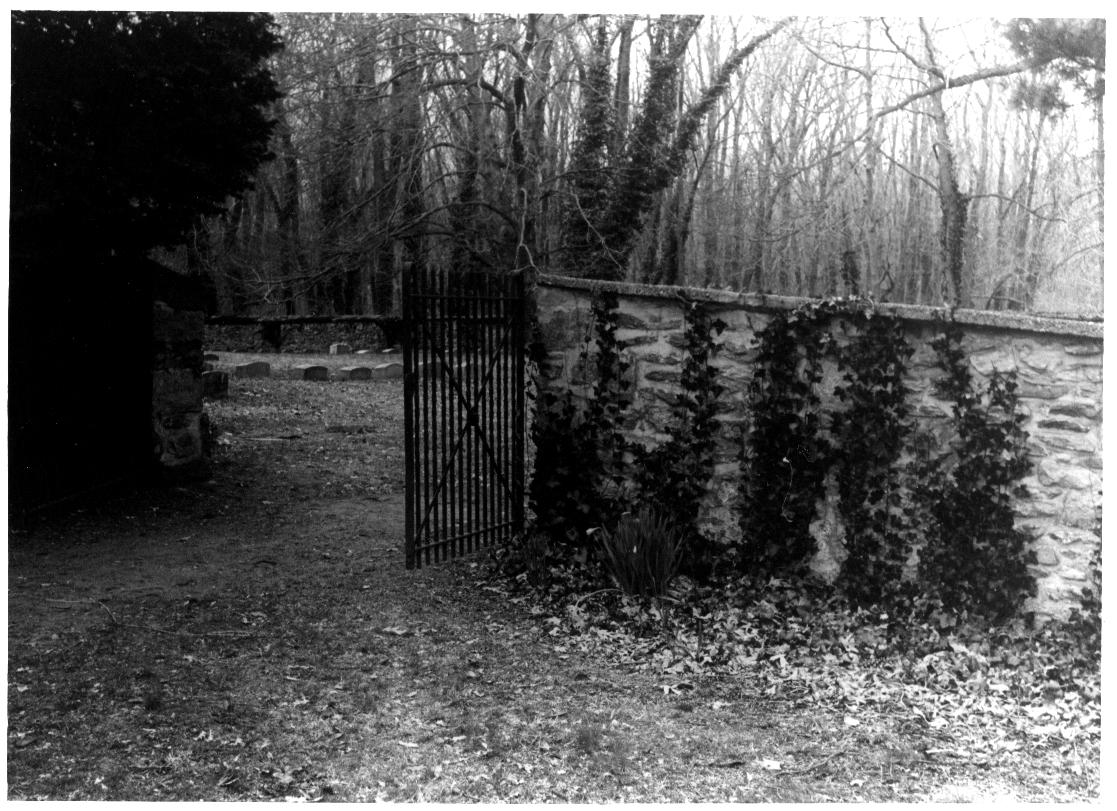
Would You Walk Through This Gate at Night by Yourself?

How much would it take for you to walk through this gate at night – alone? 

As I mentioned in previous articles, I’m a very visual person and many things can actually trigger storylines and chapters.  I can be driving in my car and see an old abandoned house or a creepy gate and think… Who lived there?  What happened?  What’s their story?  Why is it abandoned now? 

Everyone and everything has a story.  That’s what is so wonderful about being a writer.  You can create a storyline from practically anything.  It’s true that a picture is worth a thousand words – probably more.  I love to read and write stories that make you think twice before moving forward.  Weighing thoughts of what you have to loose.  To me, that’s what a thriller is all about.

My heroine Emily Stone in Compulsion had some quick decisions to make…

Emily eases her body closer to the farmhouse in a crouching position down the steep hillside, but she still can’t get a visual on the pedophile.  There are thick bushes and sharp thorns on some of the undergrowth catching on her jeans and scratching the inside of her forearms. 

She loses her footing and tumbles a few feet, but a stout bush abruptly stops her descent.  Her Glock sticks in the bush and she hastily recovers the weapon.  She’s covered in thick dust and has skinned her left palm trying to stop the fall.  Blood begins to seep through the wounds.  She stops and listens attentively, but she is stumped as to where the man went.  He couldn’t have gone far because he wouldn’t have left the little girl alone. 

Emily decides to climb back up to her car and get another vantage position.  A bad feeling begins to creep into her body that she can’t seem to shake.  It’s not anxiety, but rather a real feeling of danger.  Her throat becomes dry and constricted, and her pulse elevates.  She climbs faster; it’s only another few feet to the top. 

In Award Winning Dead Game, Emily Stone has even more quick decisions to make with wisecracking, sometimes annoying Jordan Smith.

The gunfire sprayed across the conference room and more windows blasted out of the office building.  The glass showered down and crackled with intensity for several seconds.  Emily wouldn’t be able to hold the assassins off much longer with the few bullets she had left.  She knew that she had to make a difficult choice, if she wanted to live.

Jordan pleaded with her.  “Trust me.  We can do this.”

Emily looked at Jordan and her dark eyes conveyed a look that there had to be another choice. 

Any choice. 

Anything at all.

 “We have to go now Emily.”  Jordan looked at the window opening and estimated how far it was to the sculpture from the windowsill, it couldn’t have been more than six feet.  “It’s now or never.”  He stated as matter of fact. 

In Silent Partner, K9 Deputy Jack Davis had to make split second decisions to get the bad guys.

Diligently, Jack searched the cluttered and partially dilapidated top floor with Keno. 

Flashlight beams bounced throughout the fourth floor in every filthy corner, extended gap, and potential hiding spot. 

The second suspect remained at large. 

Jack’s gut tightened.  His internal, suspicious voice whispered to him the suspect was close.  That familiar headache tension squeezed his temples in a vice.  His minor cut from an hour ago throbbed in perfect timing with his elevated heart rate.     

Quick decisions.  Heightened tension.  Plot pacing help to drive a thrilling story forward.  My characters had to make some fast decisions. 

What quick decisions would you make?  Do you agree with the heroes in my thrillers in their decisions?

Posted in Compulsion, Dead Game, Silent Partner | Tagged , , , , , , | Leave a comment