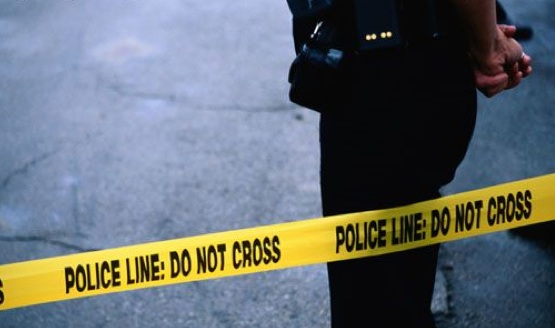
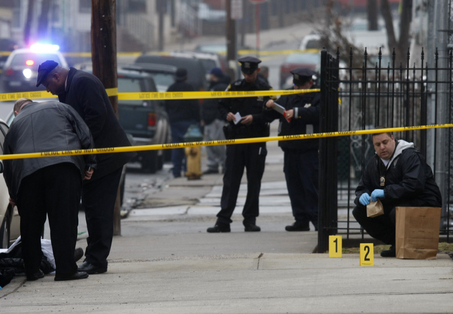
What Does it Take to Search a Major Case Crime Scene?

Cooperation.  Dedication.  Experience.  Crime scene examination must be done in a careful and methodical manner.  A crime scene is three-dimensional, it’s imperative that it be looked at it from that perspective. 

Pay close attention to the located evidence, even use a flashlight at the ground at an oblique level to capture light in a different way.  Take an overall look of the scene, and then step-by-step from different angles, making notes and sketches.   

BODY

Never move the body or position the body prior to the investigation.   Each investigator should approach the body one at a time, not in a group.  This helps to determine if it has been moved, altered, or staged.  Take detailed notes of everything.  Sketch what you see.  Describe the clothing, condition, new or old wounds, defense wounds, position, signs of struggle, evidence, etc. 

PHOTOGRAPHS

  • Keep a detailed photo log
  • Photos should be taken from far, medium, and close range.
  • Photograph the scene from a clockwise pattern, make sure that all four corners of the area are the vantage point.
  • Photograph around the body and even from the highest perspective of the body. This can show things missed from eye level.

FINGERPRINT EVIDENCE

Fingerprint evidence is the most delicate evidence and should be searched, documented, and collected first.  Weather and other environmental factors play an important role. 

  • Latent, visible, and molded or plastic prints can be found at or around the crime scene area. 
  • Photograph the prints before lifting them. 
  • Prints from other sources can also be found at the crime scene, such as wrist, palm, foot, and lip or ear prints.

EXPANDING THE SEARCH

Once the body has been removed from the crime scene, investigators should begin to systematically check the remainder of the area, whether it’s a house, business, vehicles, etc.

CURIOUS ONLOOKERS AT THE SCENE

  • Keep onlookers away from the scene in order to prevent contamination.
  • Keep detailed notes of evidence, make sure that outside onlookers didn’t leave anything that might be misconstrued as crime scene evidence.
  • Keep other officers out of the scene that aren’t working the area. 
  • In large common areas, such as streets and walkways, cordoned off several areas for searches.

Make sure there is only one way in and out of the crime scene to make sure that it can’t be contaminated.

Jennifer Chase
Award Winning Author & Criminologist
Posted in crime, Forensic | Tagged , , , , , | Leave a comment

Life of a Military Combat Tracker

I’m amazed by the stories of dogs in the military, even today.  The combat tracker teams in Vietnam inspired me to write a prologue in my newest thriller, Silent Partner.   The book is about a modern day police K9 officer who tracks down a serial killer.  I wanted to begin the book with one of the supporting characters back in Vietnam and the feeling of what it was like for combat trackers.

 An “actual” Vietnam combat tracker, Ed Wheeler and his four-legged tracker Sam, who just happens to be a black Labrador retriever, has graciously lent me the photo for this article.  This photo was taken just after they landed by helicopter in Vietnam.  Thank you Ed!

Excerpt from Silent Partner:

1969

The rain stopped abruptly on the thirty-sixth consecutive day of torrential downpours.  An intense humidity reeked from the undergrowth of the dense, twisted jungle foliage and saturated earth. 

Sticky uniforms clung to the bodies of the weary soldiers and it reflected a constant reminder of the unbearable weather. Fond memories of living at home in the United States kept them company on their forward journey.     

 Each difficult breath compressed heavily inward.  Exhalation helped to alleviate some of the anxiety and fatigue.      

The men trudged onward.          

The U.S. Army Platoon of the 26th Infantry found themselves deep inside the harsh world of Vietnam fighting a war they didn’t completely understand.  Many of the men, barely eighteen years old, had lived at home with their parents.  Drafted from small towns in places like Iowa, Delaware, and Georgia.  They hiked with a moderate amount of stealth through the wild, overgrown vegetation.

Carrying his military weapon, poised, and eyeing every possible moving shadow around him that might resemble the enemy, Alec Weaver walked his point position as a combat tracker that assisted the platoon.  His nineteenth birthday neared, almost two weeks away.   

The soldiers hunted rogue, enemy assassins.  It wasn’t the choice spot for anyone in the military, but Alec thrived on it.  His eyes dropped downward, the strength and skill of his teammate instilled security. 

A regal German shepherd dutifully guided the men with his ears perked and alert, head low, with keen canine senses picking up everything around them as he led.  A thick tail fell against a lean ninety-five pound body, an unwavering navigation system.  The mugginess didn’t bother him in the least as it did most of the men.  Oblivious to the discomforts of the jungle, he had a job to do and did it well.

Alec’s combat tracking squad consisted of five men, including himself as the dog handler. 

Butch reigned as the leader and had most of the combat experience in the group.  Only two years older, it made a significant difference in battle maneuvers.  From a tiny town in Indiana, one that most had never heard of in casual conversation, had unknowingly thrust Butch into the middle of a complicated war. 

Tom acted as coverman with a clear-cut expertise in weapons.  He never wasted any words, but always had your back. 

Brett controlled the intense and essential job of visual tracker.  Always the jokester of the group, he gave the entire platoon some much-needed comic relief from time to time.

Terry manned the RTO, radio-telephone operator.  The most educated member with three semesters of college under his belt, and yet he was the most conservative of the group.  He aspired to become a lawyer and if he survived the war, there’s no doubt that he would succeed.         

Alec had spent several months training with Max in obedience class and then went on to the combat tracker dog handler course.  Hand picked from a list of volunteers, he soon graduated with a sharp set of tracking skills…

Posted in K9, Silent Partner | Tagged , , , , | Leave a comment

High Tech Alert: Twitter Helps Law Enforcement

The Modesto Police Department in California has stepped up into the evolving age of technology.  They have implemented the social network Twitter for updates on major investigations, traffic accidents, and news releases about investigations.  There are over 3,400 followers who receive these updates.

Twitter is another tool used to find out what’s going on in your city.  The police scanner was used to find out where sirens were heading and why there were so many patrol cars parked at a specific location.  Now, Twitter can update followers on many handheld devices instantly and discreetly. 

As with any form of technology, there are good points and some bad ones. 

Pros:

  • Warns neighborhoods of suspects at large and to stay inside. 
  • Let’s motorists know to steer clear of major accident areas.
  • Helps with child abduction and missing person cases.  Keeps everyone informed – both law enforcement and the public.
  • Contributes to more eyes on the street.
  • Tool to help get the message out to large amount of people quickly.
  • Can send out information immediately and with little effort.
  • It’s like an Online Neighborhood Watch.

Cons:

  • Can hamper police work due to rapidly changing incidents or unverified information.
  • Due to such quick information being distributed, there isn’t a procedure to check facts first before posting.
  •  Some details could put officers at risk, especially during a manhunt.
  • It’s raw information, and may not be what has actually occurred.
Posted in crime | Tagged , , , , , | Leave a comment

Importance of First Officer at the Crime Scene

The first police officer that arrives at a crime scene is the often the driving force behind a successful crime scene investigation.  The crime scene locale is where most of the physical evidence associated with the crime is obtained.  Evidence is located, documented, and collected. 

The MOST important task for the police officer first at a scene is to prevent the destruction or diminished value of potential evidence.  This evidence will (hopefully) lead to the apprehension of the criminal responsible for the crime.  Police departments should have policies and procedures for their officers. 

 I can’t stress the importance of the first officer at any crime scene.  The officer should record the time and enter the crime scene properly.  They should quickly assess the overall scene and proceed with extreme caution.  The officer’s notes should include anything about doors, windows, lights, shades, odors, signs of activity, and anything that quickly depicts the scene. 

The most important task for the first officer on the scene is to protect the integrity at the scene.  That means ANYONE not directly related to the investigation should not be allowed to enter the area.  Ever.  The perimeter should be cordoned off with crime scene tape, rope, or barricades.  Anyone coming or going should be documented on a list.  Evidence should be untouched and left for crime scene technicians or investigators.

While waiting for the investigating team to arrive, the first officer should always:

  • Write down names of witnesses and anyone else at the scene.
  • Note who was at the scene when the officer arrived.
  • Establish the basic facts.
  • Keep ALL suspects and witnesses separated.
  • Instruct the witnesses not to discuss the events or compare notes.
  • Do not discuss the crime scene with witnesses or bystanders.
  • Listen – sometimes an officer can pick up subtle clues by being a good listener.

Protect evidence that might be in danger of being destroyed (weather poses a big problem for crime scenes).  Sometimes, it’s important to expand the crime scene area as an added precaution.

Posted in crime, Forensic | Tagged , , , , , , , | Leave a comment

You Can Join the Growing List of Authors on Amazon Kindle

Amazon Kindle has broken records and expectations last year with whooping sales in the millions.  Jeff Bezos, Amazon.com founder and CEO, stated that millions of avid readers own an Amazon Kindle.  Currently, there are more than 410,000 book titles listed in the Kindle bookstore.  The president also confirmed that there is 6 Kindles sold for every 10 physical books.  That’s amazing!

There are estimates for 2011 that Amazon Kindle sales could reach 8 million, or even as high as 12 million in sales.  Wow!  The Kindle store has made their royalty option for the author at 70%.  That’s more than a fair deal.  It has been a wonderful source for me to sell my own books and I would like to see more authors benefiting from this great opportunity.  You can join the growing list of successful authors on Amazon Kindle and begin selling your book today.

I have a few tips to help you get your book ready for Amazon Kindle:

  • Make sure that your book manuscript is in top shape, free from grammatical errors and has been revised.  It’s best to have a professional editor proof your manuscript.  You want to make a great first impression on Amazon Kindle.
  • Convert your manuscript to a .pdf file and then proof it again.  Sometimes in the conversion process things can slightly change.  Take your time and don’t rush your book.
  • Have a good cover photo.  If you don’t have a cover designed yet, and you don’t want to do it yourself, have a professional design a compelling, appropriate cover for you.
  • Create a compelling, but brief synopsis of your book to grab readers.
  • Take your time and think about what “tags” you want for your book.

I wish you much success with your writing ventures!  Happy Writing!

Posted in Writing | Tagged , , , , | Leave a comment

How Can We Prevent Wrongful Convictions?

Crime and justice is the standard that establishes our civilized society.  Justice should be swift and efficient.  In other words, the punishment should fit the crime.  There are so many heated discussions about crime, punishment, and the death penalty.  It’s an area that should be discussed and given solid theories, facts, and working examples.   

But what happens when someone gets wrongfully convicted?  How can we learn from this process?  And, keep it from happening again?

There are a variety of reasons that can cause wrongful convictions: 

  • Eyewitness Identification

This is the most consistent factor in wrongful conviction cases.  Eyewitness misidentification is common and should be taken as one of the pieces of evidence in a case, instead of “the only” piece of evidence in a case.  Juries are usually receptive to eyewitness testimony of someone who saw the defendant commit the crime.  There are many contributing factors than can effect the positive identification of a defendant, such as stress effect, weapons effect, manner in which the lineup was conducted, and procedural problems. 

  • Errors in Forensic Science & Fabricated Evidence

Forensic science has amazing and very credible evidence to offer any case.  As with anything, there can be “human errors” and purposeful errors and fabrications.  To add to the problems, there is usually a large backlog, poor standards, of evidence that needs to be examined.

  • False Confessions and Guilty Pleas

Confessions and guilty pleas are the damaging evidence that can be presented in court.  It makes the juries believe that it’s an open and shut case.  It’s imperative that confessions and guilty pleas are backed up by facts and evidence.

  • Informants
  • Government Misconduct
  • Inexperienced Lawyers

The criminal justice system carries a heavy burden to convict the guilty, seek justice for the innocent, and to protect the innocent from wrongful imprisonment.  That’s why it’s so important to identify, study, and learn from wrongful convictions.  Checks and balances, along with Innocence Projects will help to begin to eliminate these potential problems.

What does this mean for criminologists? 

Criminologists are both behavioral and social scientists.  They serve as a valuable asset in case examination and research into wrongful convictions.  Aside from studying the social, psychological, economic, and biological aspects that produce crime, criminologists can study with great success and research how wrongful convictions occur and what polices or laws can help to minimize the problem.          

Posted in crime, Criminology | Tagged , , , , , | Comments Off on How Can We Prevent Wrongful Convictions?

Outlining Characters and Summary For a New Novel Project

As a writer, author, and criminologist, I find that I wear a variety of hats throughout my working day.  Writing, editing, promotion, researcher, and expert are just to name a few.  One of my favorite hats is when I’m beginning a new book – that particular hat is outliner and researcher merged together.  I get really excited all over again, just like it’s my first novel.

The BIG question I hear more than most, “How long does it take to write a novel?”  I can confidently say on average it takes eight months to a year for a feature, full-length book project – at least for me. 

I’m at the beginning stages of my third Emily Stone novel, Dark Mind.  I thought it would be fun to share some of my writing procedures as I move through this project.  I’ve been bouncing around the storyline for some time and creating new characters to round out the cast in my head.  I’ve also written out free style paragraphs of the beginning, middle, and ending for this story. 

Keep in mind that sometimes the storyline can take an unsuspected turn or a minor character may decide to be more to the story.  It depends upon which way my creative muse will take me.  I’ve ironed out subplots and most of the story evolution.   

Basically, I have a preliminary outline (before a complete outline) that consists of:

  • Character backgrounds and profiles in as much detail as possible.  It’s almost like I’m writing a full profile of all of the information included for each character – even the minor characters.
  • Settings and research areas; making lists of what I need to research and how I will go about it.  Research is a funny thing because there are always those little, nagging things that you need to research that you didn’t originally note.
  • Basic plot outline in paragraph format.
  • Summary outline that includes, beginning, middle, and ending of the story.  I begin to see if I have a story that will support my main theme and subplots.  At this point, sometimes I have to rework if I need to or I can go full steam ahead.
  • Miscellaneous notes that include crime timelines (motive, clues, etc.), fact sheets, character background timelines, and subplots.

Once I feel satisfied with the above areas, I move into my plot evolution.  This is where I examine the pacing and begin to think about individual chapters.  Sometimes, I make changes if something in the storyline bothers me or it doesn’t seem to fit right.  I keep moving forward and fine tuning my outline that will eventually become my choppy first draft.

Posted in Writing | Tagged , , , , , , | 2 Comments