Central Park Rape Suspect Photographed by His Victim

An elderly woman relaxes in Central Park on a late summer day to enjoy an afternoon of bird watching.  This should be an enjoyable activity; one that perhaps gives this woman a brief respite from the noise and the crowds of New York City.  Instead, she was raped.  And it turns out that the predator who attacked her has a long and scary criminal history.

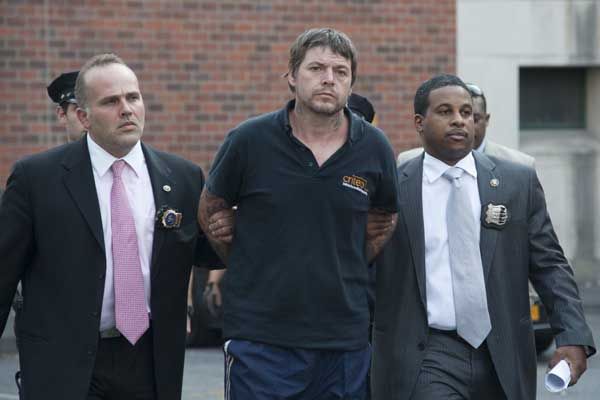
David Albert Mitchell was arrested last week and charged with predatory sexual assault, rape, a criminal sex act, and robbery assault.  He attacked his victim during daylight hours in an area of the park known as Strawberry Fields.  The fact that this horrible event was not their first encounter helped the woman identify Mitchell as her attacker.  She had photographed Mitchell a little more than a week earlier when she spotted him fondling himself in that same area of the park.  Mitchell caught her documenting his act and confronted her, demanding unsuccessfully that she delete the photo.  She did not, and was able to hand over the evidence to police following her assault.

Once arrested, authorities learned that Mitchell had a violent past in both Virginia and West Virginia.  He was infamous in his small West Virginia town, so much so that when he was released from prison after an eight-year sentence he served for abducting his girlfriend, the local residents bought guns for protection.  He was known particularly for his tendency to harass and assault older woman, and actually was acquitted of a brutal rape and murder of an 83-year-old woman more than two decades ago.  That violent habit followed him to New York, where he lived as a homeless drifter.

That is one brave woman for documenting a wrong and standing up to a frightening criminal.  Her courage in that one instance proved invaluable when she had to identify him a few days later.  Another instance of the important and amazing role that technology can play in bringing a perpetrator to justice!

  * * *

Author Blog: https://authorjenniferchase.com/
Crime Watch Blog: http://emilystonecrimewatch.wordpress.com/
Book & Crime Talk:  http://blogtalkradio.com/jennifer-chase
Books: Compulsion  Dead Game  Dark Mind  Silent Partner  Screenwriting

Award Winning Emily Stone Thriller Series

AMAZON

AMAZON UK

Posted in crime | Tagged , , , , , , , , | 1 Comment

New Forensic Technologies Could Improve How Crime Scenes are Processed

With all of the technology and scientific breakthroughs implemented today, forensic science works industriously with new ways to help identify pieces of crime scene evidence, victims and suspects in order to solve cases.

I’ve highlighted three different scientific practices that could impact how crime scenes are processed and how perpetrators are identified.  These techniques have been individually posted previously on my blog, but I thought it was worth reposting because of the significant importance.

BIOMETRIC DATA

Biometric data is the digital or analog representation of the physical attributes used to uniquely identify all types of characteristics in humans (ultimately identifying a specific human), which includes many types of forensic evidence.

In November of 2011, The National Institute of Standards and Technology (NIST) published a revised biometric standard that improves the type and amount of information that forensic scientists can share across international networks.  This would further assist in the identification of a victim(s) and/or solve crime(s).

Brad Wing, a NIST Biometrics Standard Coordinator, stated, “The additions to this version of the standard represent a great leap forward.  The capabilities of the system have been greatly expanded from that of matching a fingerprint, facial image or iris sample collected directly from a live person and comparing to the samples previously stored in a database.”

Here are some areas that this new standard improves:

  • Exchange of DNA data.  For example, DNA can be used in a criminal case for identification in a rape case, identifying victims in disasters or plan crashes, and any investigation that needs to compare a sample from a suspect to a particular case.
  • Improved markers for latent prints: fingerprints, palm prints, and footprints.
  • Share geo-positioning coordinates of biometric sample collection.  For example, photos of items found around a crime scene as well as audio and video clips.

All of these examples can be shared with scientists and law enforcement agencies across the globe.

VISUALIZING FINGERPRINTS FROM FABRICS

A ground-breaking technique has emerged on recovering fingerprints off of fabrics from Scottish Police and forensics experts from the University of Abertay Dundee.  This new technique has focused on revealing fingerprint ridge detail and comparisons from various fabrics – such as cotton, silk, nylon, and polyester.

This could mean new, verifiable clues with criminal investigations.  It could tell investigators if a victim was pushed or grabbed from a particular area of their clothing.  Fabric will become a silent witness to an investigation.

The technique used is called vacuum metal deposition (VMD) and it uses gold and zinc to recover a fingerprint mark.  VMD is a highly sensitive technique that is already used in identifying and recovering fingerprints from smooth surfaces as plastic and glass as early as the 1970s.

According to forensic scientists and researchers, the fabric is placed in the vacuum chamber, gold is heated, and then the fine film is spread over the fabric.  The next step is to heat up the zinc, which attaches to the gold where there is no fingerprint residue.  This process will reveal where a fingerprint contact has been made on the fabric.

This new forensic process used to establish fingerprints and impression evidence from various fabrics will not necessarily convict a criminal, but used alongside other evidence will present a stronger case.

UNDETECTABLE BLOODSTAINS

A picture is said to be worth a thousand words.  What about a camera that can actually have the ability to see the invisible, and more?  Chemists from the University of South Carolina are developing a camera that will reveal what the naked eye can’t see.

This new technique is called multimode imaging in the thermal infrared.  This technology uses photographic images in several different ways.  It captures hundreds of invisible images in just a few seconds, while illuminating the subjects with pulses of invisible infrared light waves.  In addition, some of these images are taken with special filters that can block out certain wavelengths making it possible to block out certain objects in the background.  It can actually detect blood that has been diluted to as little as one part blood to 100 parts water.  That’s quite impressive.

Michael Mynick, Stephen Morgan and their graduate student colleagues explain that the luminol (chemical used for detecting blood stains and other substances at a crime scene) test has disadvantages for being potentially toxic, can’t detect certain diluted substances, and provide false positives.

One of the most impressive aspects of this type of photo imaging is that it can detect the difference between blood, household bleach, soda, coffee, and invisible fabric watermarks.

It’s very encouraging to read about new and less toxic techniques to help investigators and forensic scientists identify a suspect from the crime scene.

  * * *

Author Blog: https://authorjenniferchase.com/
Crime Watch Blog: http://emilystonecrimewatch.wordpress.com/
Book & Crime Talk:  http://blogtalkradio.com/jennifer-chase
Books: Compulsion  Dead Game  Dark Mind  Silent Partner  Screenwriting
Posted in Forensic | Tagged , , , , , , , , , | 6 Comments

Predicting Drew Peterson’s Social Life in Prison

Let’s begin with the premise that police officers are probably not the favorite people of most men who are locked up our prison system.  A man with a badge likely helped those convicted criminals meet the justice that they are now experiencing.  So, what happens when a cop ends up on the same side of the bars as those serving time? And, more specifically, how is that cop going to get along with others when he is an apparent narcissist with a loud mouth who has been found guilty of killing his wife?

Drew Peterson is going to find out.

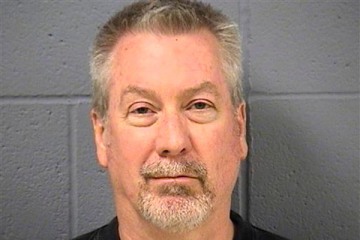
I’m sure that all of you know this story.  The former officer with the Bolingbrook Police Department was recently found guilty in the murder of his third wife, Kathleen Salvio. She was found dead in her empty bathtub in 2004 in a case that was first ruled an accident.  When Peterson’s fourth wife, Stacy, went missing in 2007, the circumstances surrounding Salvio’s death were reexamined and led Peterson to the outcome he now faces.

While Stacy never has been found, Drew Peterson remains the primary suspect in her disappearance as well, at least in the eyes of public opinion. His antics in front of the television cameras that continued for weeks after she was last seen certainly did not help his cause.

Peterson is awaiting his sentencing to learn how long he will spend as a guest of Illinois Department of Corrections, but it is certain that his stay will be one of significant length.  Will his cocky attitude offer him some protection, as he portrays a man who will not be intimidated?  Will his familiarity with the culture of the prison population help him to integrate?  Or, will his labels of police officer and wife killer make Peterson’s time in prison dangerous and lonely?

  * * *

Author Blog: https://authorjenniferchase.com/
Crime Watch Blog: http://emilystonecrimewatch.wordpress.com/
Book & Crime Talk:  http://blogtalkradio.com/jennifer-chase
Books: Compulsion  Dead Game  Dark Mind  Silent Partner  Screenwriting
Posted in crime | Tagged , , , , , , , , | 3 Comments

When It’s Time to Dream…

One of the most common questions I have received lately has to do with writing serial killer scenes.  Is it difficult to write these types of scenes?  Well the simple answer is yes, it can be very difficult.  It can be difficult for a variety of reasons: balancing accuracy and creative input, how much detail, making sure it adds to the story, no unnecessary violence, etc.

In all honesty, because of my outlining process and book organization, I know when I have to write a stressful scene and I do so at the best possible time for me.  There’s a delicate balance to writing crime fiction and not adding to the already stressful real world of crime and bad guys.  I keep in mind that I want to tell an exciting story with some insight into the criminal mind and crime scene investigation.   I want to engage the reader with suspense and mystery, not stress them out.

When I sit down to write I make sure that my time is efficient with approximately four to five solid hours of work.  Although, some days turn out to be unproductive no matter what I try to do — such as life.  I’m not the type of writer that can sit at my desk for ten to twelve hours a day pounding away at a keyboard.  I think I would turn into the infamous “Jack” from the movie The Shining if I did.  I commend all you writers out there that can accomplish a long writing day.  I guess I’m a bit wimpy in that regard.  I may sound a bit like a delicate flower (or a fussy hothouse orchid), but it’s how I manage to keep my energy high and enthusiasm intact to write a suspenseful story.

With every story project, I’ve managed to learn a few things about myself and about my level of stress when writing. Being able to detach from a story in progress is so important – at least for my Type A personality type.  Sounds simple, but it’s often very difficult.  Once I’ve set the story in motion, it’s in my mind  at every moment of the day even when I’m eating, sleeping, and relaxing.  Yikes!

I started to become prone to anxiety issues, so I’ve added to my day what I like to call my dream time.  I take a couple of breaks throughout the day for about 5-10 minutes to become aware of what’s happening at that exact moment.  No worrying about what I didn’t get done or what I need to get done, I just sit comfortably and breathe, completely absorbed in the here and now.  I put myself in a comfortable place that makes me feel relaxed.  I tend to gravitate to quiet outdoor places, especially at the beach, to hear the sounds and feel the breeze on my face.  All of these photos were taken from places I love to visit regularly.

It’s amazing, I feel refreshed and energized after my mini dream escape.  For me, it’s how I can keep writing about stressful situations, heinous killers, and delve inside the criminal mind.

What’s your dream place to relax in your mind?

  * * *

Author Blog: https://authorjenniferchase.com/
Crime Watch Blog: http://emilystonecrimewatch.wordpress.com/
Book & Crime Talk:  http://blogtalkradio.com/jennifer-chase
Books: Compulsion  Dead Game  Dark Mind  Silent Partner  Screenwriting
Posted in Writing | Tagged , , , , , , , , , , , , , | 4 Comments

Serial Killer on Death Row Leads Authorities to More Victims

When a convict is sitting on death row, isolated from all other humans for almost every minute of the day, and waiting for his moment to die, he might as well be helpful to the authorities that are holding him.  That, at least, is the belief of California State Assembly member Cathleen Galgiani, who has advocated for one of the state’s confined serial killers to be allowed out of prison walls to assist detectives in finding more of his victims.

Wesley Shermantine and his buddy Loren Herzog were known as the Speed Freak Killers.  The men earned this horrible nickname due to their drug-fueled murders in the 1980s and 1990s.  They finally were arrested in 1999 and two years later Shermantine was convicted of four murders and Herzog of three, the latter being released on parole in 2010 after it was determined that his confession was coerced.

Herzog did not enjoy his freedom for long, though.  When he learned at the beginning of this year that his partner in crime was offering to lead authorities to more bodies, he hung himself in his trailer.

Just a few days ago, in the darkness of night, Shermantine directed law enforcement to wells in which he said several victims had been dumped.  He also eluded to another bone yard in which other dozen bodies could be found.

I wonder what Shermantine’s motives are in revealing the location of his victims.  Does he want attention?  Reports are that he received more than $30,000 to provide a bounty hunter with maps of the makeshift graves, which he used to pay owed restitution and headstones for his parents.  So is money the motivator?  Or, perhaps there is a genuine sense of remorse and desire to provide some closure for families.

  * * *

Author Blog: https://authorjenniferchase.com/
Crime Watch Blog: http://emilystonecrimewatch.wordpress.com/
Book & Crime Talk:  http://blogtalkradio.com/jennifer-chase
Books: Compulsion  Dead Game  Dark Mind  Silent Partner  Screenwriting
Posted in Serial Killers | Tagged , , , , , , , , , | 1 Comment

Eat Junk Food, Commit a Crime, and Leave Visible Fingerprints for Cops

Consuming processed foods on a regular basis has contributed to a higher level of salt excreted through fingerprints.  Many processed and junk foods possess a high level of sodium (generally used as a perseverative), which in turn allows fingerprints to become more visible on metal surfaces leaving behind a corrosive chemistry, even after the print has been wiped away.

***

“This would be particularly helpful for terrorist type crimes where the nature of the incident would tend to obliterate forensic evidence.  So a sweat mark on a piece of metal or bomb fragment that might be recovered from an incident might be able to provide a clue to the type of person who perpetuated the incident.”

***

Dr. John Bond, a researcher at the University of Leicester and scientific support officer at Northamptonshire Police, has invented a new forensic fingerprinting technique by claiming that criminals who eat processed foods are more likely to be discovered by police through their fingerprint sweat.  The fingerprint substance left corrodes the metal leaving a visible print behind.  In simplest terms, the higher salt intake the better the corrosion on the metal.

At a conference for forensic sciences, Dr. Bond explained that a sweaty fingerprint left at a crime scene could be analyzed for a specific “sweat profile” about the type of person who left the evidence.

***

“We would describe the study of sweat as a process of intelligent fingerprinting – using the fingerprint to tell us more about the individual rather than the simple identification.”

***

There are many advances being theorized, studied and applied into the world of forensic science to help solve more cases.  This is especially imperative for serial and cold cases.  Anything that would expedite the investigation process to identify the perpetrator(s) is a win-win situation for everyone involved.

Criminals can leave fingerprint evidence on such metal surfaces such as soda cans, bullets, guns, appliances, technology devices, bomb fragments, assorted hardware, and weapons.  Further research is being conducted into this forensic procedure and it will be interesting to find out what happens with Dr. Bond’s fingerprinting technique in the near future.

  * * *

Author Blog: https://authorjenniferchase.com/
Crime Watch Blog: http://emilystonecrimewatch.wordpress.com/
Book & Crime Talk:  http://blogtalkradio.com/jennifer-chase
Books: Compulsion  Dead Game  Dark Mind  Silent Partner  Screenwriting
Posted in Forensic | Tagged , , , , , , , , , , , , , , | 7 Comments

Vigilante Detective Emily Stone Wins Bronze

I received some very exciting news on Saturday that Dark Mind received a 2012 Bronze Award for Action at Readers Favorite.  I’m very honored to be a part of such an amazing group of authors.  Thank you to all of the judges at Readers Favorite!

When I wrote my first novel Compulsion four years ago, I never thought about writing a series at that time.  I had a story I wanted to tell and I never looked back.  One of the writing aspects I truly enjoy is writing action.  It means so much me to be given an award for something I love to do.

Thanks to all of you who have supported my Emily Stone Series!

***

DARK MIND

An Emily Stone Thriller

“An intriguing alpha-female heroine… impressive action scenes and taut suspense.”  -Kirkus Reviews

“The writing is impeccable and the story is fresh and tight.” – Best Selling Author Gary Ponzo

Dark Mind is a strongly recommended pick for those who enjoy fast paced thrillers.” – The Midwest Book Review

***

A Serial Killer Plagues an Island Paradise

Vigilante detective Emily Stone continues her covert pursuits to find serial killers and child abductors, all under the radar while shadowing police investigations.

Emily searches for an abducted nine-year-old girl taken by ruthless and enterprising slave brokers.  Following the clues from California to the garden island of Kauai, she begins to piece together the evidence and ventures deep into the jungle.

It doesn’t take long before Emily is thrown into the middle of murder, mayhem, and conspiracy.  Locals aren’t talking as a serial killer now stalks the island, taking women in a brutal frenzy of ancient superstitions and folklore.  Local cops are unprepared for what lies ahead. In a race against the clock, Emily and her team must identify the killer before time runs out.

***

 DARK MIND is available at these e-book and book retailers, and anywhere paperbacks are sold:

Amazon 
Barnes & Noble
Kobo
Sony
Powell’s Books
Smashwords
Booktopia
The Book Depository
Diesel e-books

  * * *

Author Blog: https://authorjenniferchase.com/
Crime Watch Blog: http://emilystonecrimewatch.wordpress.com/
Book & Crime Talk:  http://blogtalkradio.com/jennifer-chase
Books: Compulsion  Dead Game  Dark Mind  Silent Partner  Screenwriting
Posted in Dark Mind, Writing | Tagged , , , , , , , , , | 6 Comments