How Reliable are Those Sniff Alerts?

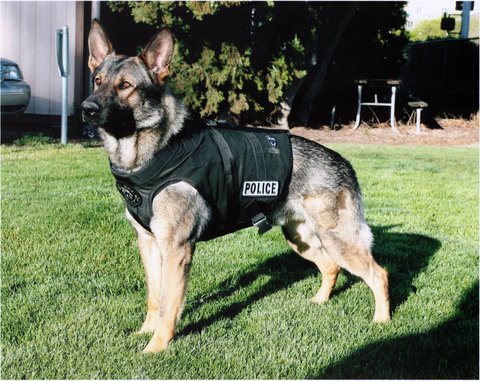
It is no secret that I have a great love for dogs.  I think they are animals with amazing insight and compassion.  I have had the pleasure of observing first-hand the important role that dogs play in law enforcement and the special relationship that occurs between officer and canine.  I even had the incredible opportunity to train my own dog in scent detection and tracking.  I admire that dynamic so much that I featured it in one of my novels, Silent Partner.  It was interesting to read a different take on the role of K-9 units in a recent blog post.  Are our police dogs as well-trained and accurate as we would like to believe?

On the blog Grits for Breakfast, which features articles about current events in the Texas justice system, there is a post which details the frequent false alarms that dogs offer when sniffing for contraband material.  Some argue that an insistent bark from a trained dog can lead to a thorough search of a car or a home when it’s quite possible that nothing may be found.  The dog may be drawn to residue of a drug that was there a long time ago, or simply be attracted to one of many other items that often get a dog’s attention.  The use of dogs to initiate searches, when the training is so unregulated, is controversial enough that a case out of Florida is being heard before the Supreme Court this fall.

The post also focuses on the desire of dogs to please their handlers, which it mentions is as old as the relationship between dog and man itself.  If a dog is rewarded or praised for alerting its human partner, won’t it be motivated to do so whenever possible?  Can a dog that is trained to play a role on a squad put that duty before his personal loyalty to the officer by its side?

First hand, I’ve observed and trained with police K-9 officers and from my perspective, the alerts are only as good as the training, continued training, and experience of the dog handler.  A dog doesn’t have to bark to alert the handler to a specific scent.  There are many subtle gestures such as a head snap and a change in the dog’s demeanor that let the handler know that they’ve acknowledged the specific scent before the actual alert.

I stand by the idea that dogs bring essential benefits to our police officers, for relationship, protection, and detective work.  I will be looking to read the opinion of the high court later this year, though, when it determines whether or not a certified dog actually has enough training to allow a probable cause search within constitutional guidelines.

***

One Cop, One Serial Killer, One Witness
Who Will Survive?

Northern California’s elite Police K-9 Units arrive at an abandoned warehouse after a high-speed chase and apprehend two killers after they have fled a grisly murder scene. This barely scratches the surface of a bloody trail from a prolific serial killer that leads to unlocking the insidious secrets of one family’s history, while tearing a police department apart.

Jack Davis, a top K-9 cop with an unprecedented integrity, finds himself falling for a beautiful murder suspect and struggling with departmental codes.

Megan O’Connell, suffering from agoraphobia, is the prime murder suspect in her sister’s brutal murder.

Darrell Brooks, a psychopath who loves to kill, is on a quest to drive Megan insane for profit.

Everyone is a suspect. Everyone has a secret. Someone else must die to keep the truth buried forever. Silent Partner is a suspense ride along that will keep you guessing until the bitter end.

2011 AWARD WINNER for SUSPENSE at Readers Favorite
2011 FINALIST for THRILLER at Readers Favorite

   * * *

Author Blog: https://authorjenniferchase.com/
Crime Watch Blog: http://emilystonecrimewatch.wordpress.com/
Book & Crime Talk:  http://blogtalkradio.com/jennifer-chase
Books: Compulsion  Dead Game  Dark Mind  Silent Partner  Screenwriting
Posted in K9, Silent Partner | Tagged , , , , , , , , , , , , | 3 Comments

Thriller Thursday Guest — Author John Betcher

I’m very pleased to introduce a wonderful thriller author John Betcher to Thriller Thursday Interviews.  He’s an author to watch with his award winning, best selling James Becker Series.  My Kindle is now loaded with all of the books in the series.  John Betcher is someone I’d like to have a cup of coffee with (in my case tea) and have a good conversation about writing thrillers. 

***

Book Synopsis:

In response to recent turmoil in Egypt’s intelligence community, the CIA has recalled Beth Becker to active duty. Though she accepts the assignment, the backstabbing and deceit she finds festering within the Agency remind her why she retired from government work in the first place.

Meanwhile, her husband, “Beck,” stays home in Red Wing, helping Chief Deputy Sheriff, Doug “Gunner” Gunderson, formulate what should be routine security plans for a visiting dignitary. But a less than stellar private security firm, and a determined sniper, result in a crisis situation that stretches our heroes’ abilities to their limits.

Filled with intrigue, humor, and ripped-from-the-headlines action, THE EXILED ELEMENT will remind you why you came to love the Beckers in the first place.

Buy the book: Amazon

***

Jennifer Chase: If James Becker was trapped in an elevator with three other people, how would he devise a plan to escape? Would he take any of the people with them?

John Betcher: James “Beck” Becker is a retired military intelligence operative. He’s in his forties and very fit. He has a pretty cool head, so if he were trapped in an elevator, he’d be very patient about awaiting the “elevator repairman,” especially if the other people in the elevator weren’t his friends and didn’t know of his “special” background. But if he was pressed for time, he’d escape via the ceiling hatch, then climbing up to the next floor and opening the exterior doors to the hallway. He wouldn’t bring anyone with him, because most folks would get hurt doing that kind of stuff. But he would make sure help was on its way before he left the building.

I realize this isn’t a particularly “creative” escape plan. But Beck believes in keeping things as simple and straightforward as possible.

Jennifer Chase: Hey, nothing wrong with a straight forward kind of guy.  So how do you get inside Becker’s head when writing?

John Betcher: Beck thinks a lot like I do (which is not to say that I can pull off his heroics). So it’s not usually hard for me to think like Beck. He’s logical, prepared, patient, determined, thorough, and a creative thinker when circumstances require.

Bottom line…I just think, “What would I do if I had Beck’s abilities and connections?”

Jennifer Chase: I’m getting a good picture of Beck in my mind.  How would you describe your specific genre?  If you could write in any other genre, what would it be and why?

John Betcher: The genre for the Becker books is suspense/thriller. If I could write intriguing middle grade books, I would do so in a heartbeat. There are no more appreciative book fans than the middle grade group. They’re so enthusiastic and anxiously anticipate the next book from their favorite authors.

Jennifer Chase: So why should readers pick up your books?

John Betcher: I’ll give you three reasons.

First of all, my books all address ripped-from-the-headlines subjects. All the research is extraordinarily current, and YOU WILL LEARN interesting information about some brand new technological or scientific subject.

Second, you will enjoy my main cast of four characters. They don’t always play well together; but each respects the others for their honesty, competence, and consistent moral compasses. Beck and his wife are also very much in love, and theirs is a relationship that delights many fans.

Third, by the time you reach the end of the book, you will have received an education on some topic of world concern. May will probably be motivated to take some action to fix the world when you’re done.

Jennifer Chase: Excellent! I love to learn new things.  What types of emotions will readers experience when they read your books?

John Betcher: Readers will enjoy the relationship between the main characters and will root for them to succeed. Readers will be amazed at what the characters are able to figure out, and what the readers themselves learn in the process. Readers will be impressed with the thoroughness of the research and the level of detail concerning complex subjects. Readers will bite their nails over the occasional tight spot my characters get themselves into. And readers will cheer for the final resolution of the story.

Readers WILL NOT feel depressed because of my characters’ suffering, because I don’t dwell on angst and regrets, and will not be shocked by excessive profanity, violence, or explicit sexuality. I leave the extent of those issues mostly to the readers’ imaginations. The good guys are generally positive (and often even funny) even when they’re circumstances look bleak. So readers can plan to enjoy themselves from the beginning of the book to the end.

Jennifer Chase: I love the way you can really explain your books with the emotional aspect.  Now, please bear with me, it’s time to play word association with Beck. Please respond with one word that comes to mind (in your main character’s voice) to the words listed below.

John Betcher:

Plot — Terrorist

2012 — Arab Spring

Predator — Government

Giggles — Fiendish

Rural — Home

Omnipresence  — Preparedness

Thanks very much for inviting me to stop by today for this chat. All the best to you and your readers. Cheers! John

Thank you John! You’re welcome anytime!

Author Bio:

Amazon Bestselling Author, John L. Betcher, holds a Bachelor’s Degree, cum laude, in English from St. Olaf College in Northfield, Minnesota and a Juris Doctorate from the University of Minnesota Law School in Minneapolis. He has practiced law for more than twenty-five years in the Mississippi River community of Red Wing, Minnesota. Mr. Betcher has published an award-winning series of “Becker” suspense/thriller novels. The first four are THE 19TH ELEMENT, THE MISSING ELEMENT, THE COVERT ELEMENT, and THE EXILED ELEMENT. He has also authored the award-winning spiritual phenomenon, A HIGHER COURT.

For more information, books, and contact:

Website

Twitter

James Becker Series

Posted in Guest Post, Thriller Thursday | Tagged , , , , , , , , , | 9 Comments

Plugging Into Reader Emotions

When I began writing the Emily Stone Thriller Series, I didn’t stop to think about the emotions that I would try to engage from readers.  In fact, originally, I didn’t even think about an entire series, but I pushed forward and didn’t look back.

In my series, I write about a woman driven by her desire (or compulsion, for lack of a better word) to track down serial killers and child abductors, alone and covertly, because the police couldn’t or wouldn’t do the job.  Emily Stone fills the need where politics, budget, and inexperience sometimes overflows into criminal investigations from the law enforcement perspective.

I bet I have you thinking now!   Some of you may be thinking, “cool” (excited) “yeah, right” (annoyed) “scary” (frightened) “I wonder what’s going to happen next?” (eager) “sounds like a thriller” (anticipating) “why would this woman do this?” (suspicious or angry) and the list goes on…

Books elicit emotions from potential readers, even before a person cracks open the book or clicks the e-reader next page button, all by reading the synopsis or hearing about it.

Readers want to experience a challenge or struggle, be touched in some way, or escape to a far, far away place.  I know that I do!

How do writers plug into that reader emotion?

Emotion is a particular feeling that characterizes a natural state of mind.  Something to ponder I suppose.

Here are some things I have learned along the way with four published novels and a thing or two that my high school English teacher instilled in me:

  • Write characters worth caring about and some characters you love to hate – plain and simple.  Dig into your characters psyches and create the delicate layers that make up a particular individual.
  • Write scenes, don’t tell us about them.  Readers want to feel, smell, and taste what’s going on.  Writers are creative and have a story to tell, so create a scene!
  • Move the story along… I love a book that takes off like a carnival ride with ups and down, and then a BIG free fall.  After all, readers pay the price for a ticket and they are expecting a thrilling ride.
  • Don’t hold back or hesitate with the story.  This is a biggie for me.  I have a tendency to hold back in my writing, but not anymore.  I let my characters guide me and sometimes the outcome even surprises me.
  • Have plenty of surprises! It’s not things that happen out of thin air; but rather, surprise the reader.
  • Keep details straight and to the point.  I’m not saying write like a boring police report, but keep it direct and moving along.
  • Set up scenes to help evoke emotions with readers.  My latest novel, Dark Mind, is set on the island of Kauai and it immediately evokes emotions of calm, relaxation, and beauty.  BAM! Then I put a serial killer into the mix.

What emotions do you experience that makes a great novel?

   * * *

Author Blog: https://authorjenniferchase.com/
Crime Watch Blog: http://emilystonecrimewatch.wordpress.com/
Book & Crime Talk:  http://blogtalkradio.com/jennifer-chase
Books: Compulsion  Dead Game  Dark Mind  Silent Partner  Screenwriting
Posted in Dark Mind, Writing | Tagged , , , , , , , , | 4 Comments

Prisoners Light Up the Town!

I enjoy the opportunity to spend time catching up on my reading of Dr. Karen Franklin’s blog about forensic psychology and criminal law.  I learn something and I’m impressed by her focus on making us familiar with some important current events in the field that may not get the spotlight in most American publications.

For instance, I loved her piece earlier this month detailing reforms that are taking place within Brazil’s prison system.  Did you know that a small town in southeastern Brazil is now safer for dog walkers and joggers thanks to some inmates spending time on bicycles?  Local businesses donated batteries, hooked them up to stationary bicycles, and now light is generated from aerobic activity that is taking place within the prison walls.  Prisoners can have one day taken off their sentences for every three days they spend pedaling for power!

Brazil also is looking to tackle its adult illiteracy problem by encouraging inmates to complete book reports in exchange for up to four days off their sentence for each assignment that is completed to the liking of a judge.  With the well-documented connection between education and probability of prison time, this incentive could encourage a decline in recidivism.  I’m a strong believer in the power of a good book to change lives!

No one is going to accuse Brazil of being a poster child for acceptable living conditions for its prisoners, but it shows that the country is looking at the system by implementing this creative programs.

What do you think? 

Should we set up some bikes in our prisons and give those locked inside the chance to light up our bike paths and roadways and downtown districts? 

* * *

Author Blog: https://authorjenniferchase.com/
Crime Watch Blog: http://emilystonecrimewatch.wordpress.com/
Book & Crime Talk:  http://blogtalkradio.com/jennifer-chase
Books: Compulsion  Dead Game  Dark Mind  Silent Partner  Screenwriting
Posted in crime | Tagged , , , , , , , | 3 Comments

DNA Offers Lead in Child Murders from Thirty-Five Years Ago

In yet another instance of our amazing members of law enforcement never giving up on bringing predators to justice, there is a new break in the killings of four children in Michigan thirty-five years ago.  The story is one that absolutely would have my fictional protagonist Emily Stone on the case with an unwavering focus, and that is returning to the forefront very real crimes that happened two generations ago.

Four children were kidnapped and killed in Oakland County, Michigan between 1976 and 1977.  They were between the ages of ten and twelve.  While there previously had been no official link between the murders, authorities long suspected that the crimes were done by the same person.  Now, thanks to technology that was only a hopeful vision in the 1970s, mitochondrial DNA from hairs found on the bodies of two of the victims have established a link.  These same DNA results came back on hair found in a 1966 Pontiac Bonneville that belonged to a person of interest when the crimes occurred.

That car’s owner, Archibald Sloan, is serving a life sentence for criminal sexual conduct, but tests done on him after this DNA connection was made prove that those discovered hairs do not belong to him.  But, perhaps he has some important details about other men who may have used his car for their own evil purposes.

I appreciate the foresight of investigators thirty and forty years ago who carefully collected evidence that was not particularly helpful to them at that moment, but who realized that someday those who followed in their footsteps might have the ability to use hair or fabric or a tooth in ways they never could.

I imagine that, for police officers, nothing is more horrific than investigating the murder of a child.  And, at the same time, there probably is not an element of the job much more rewarding than bringing that killer to justice.  I hope there is a chance to do just that in Michigan soon.

***

Author Blog: https://authorjenniferchase.com/
Crime Watch Blog: http://emilystonecrimewatch.wordpress.com/
Book & Crime Talk:  http://blogtalkradio.com/jennifer-chase
Books: Compulsion  Dead Game  Dark Mind  Silent Partner  Screenwriting
Posted in crime, Forensic | Tagged , , , , , , , , , | 3 Comments

“A” is for Forensics?

While conducting research for my current novel DEAD BURN, I realized that there are some very interesting forensic facts that may or may not be widely known to most people.  I have physical notebooks and online file folders filled with information that I might use in upcoming stories.  Basically, I like to have more information than I’ll ever need, but these are good reminders for crime fiction writing.

This is for all you armchair CSI buffs or crime fiction authors:

ABO blood groups:

This is a blood group system that was first proposed by Karl Landsteiner, an Austrian biologist and physician, in 1900.  The system consists of antigens, substance that produces an antibody, found on the surfaces of red blood cells and the corresponding antibodies in the serum.

The approximate percentage of the U.S. population blood type:

Type A (42%)

Type B (12%)

Type AB (3%)

Type O (43%)

Accidental Characteristics:

These are characteristics found in a specific material that are required by wear or by some accidental or other non-repeatable circumstance during the manufacture.  It can also be described as a small defect, which gives a unique or “accidental” characteristic.

These characteristics can be found in tire treads, shoes, bullets, glass, plastic bags, and many other items.  These characteristics are extremely important in the identification and comparison of evidence.

Adenine (A):

This is one of the four nucleotide bases the compose DNA.

Adipocere:

This grayish, wax-like substance forms from the result of the slow chemical reaction between body fat and water during the decomposition process.

Algor Mortis:

This is the rate of cooling of a body after death.  It can be difficult to determine the time of death because many variables are taken into consideration, such as temperature, fat on victim, and the exposed area where the body was found.  For more information, check out The Body Farm.

Amalgam:

This is the material used as filling for cavities or restorative dentistry.  For identifying a victim, dental records are extremely effective.

Anthropometry:

This is a type of body measurement used to identify individuals.  This term is often associated with a system of body measurements first developed by Alphonse Bertillon, a French law enforcement officer and biometrics researcher, for identification proposes, but it was replaced by fingerprinting in the early 1900s.

* * *

Author Blog: https://authorjenniferchase.com/
Crime Watch Blog: http://emilystonecrimewatch.wordpress.com/
Book & Crime Talk:  http://blogtalkradio.com/jennifer-chase
Books: Compulsion  Dead Game  Dark Mind  Silent Partner  Screenwriting
Posted in Forensic, Writing | Tagged , , , , , , , , , | 14 Comments

Who What How When Where and Why?

When you’re writing an informative article, you want to incorporate all of these basic questions into the editorial.  I remember many class assignments in my high school freshman English class and how these simple words came into play – it tumbled over and over in my head.  My question was which one do you open with? Who?  When?  Where? Which question is the strongest?

Recently, I’ve been asked several questions about my Emily Stone Series and my writing rituals, so I thought I’d answer some of the basic questions.

Who do I write about? 

I write about good guys and bad guys.  There’s nothing more invigorating as a writer than pitting these characters against each other and seeing what happens next.  Sometimes it even surprises me!  I created a main character in my thriller series, Emily Stone, who decides to take on the need to track down serial killers and child abductors.  She does all this covertly and anonymously by sending her information to the cops.  I wanted to create a character that’s a little bit different from the norm – she’s not a cop (an ex-cop) and she’s not a vigilante (even though she’s put in life and death situations).  She goes up against some of the most heinous members of society and puts her life on the line in order to save a child or get the forensic evidence to crack the case.  You’ll have to read one of her tales to find out what makes her tick.

What genres interest me the most?

I’ve loved thrillers and mysteries for as long as I can remember, so it seemed like a perfect fit for me to write thrillers.  However, the horror genre seems to be nipping at my heels and begging for me to jump into and write a series.  I enjoy reading novels that blend the genres so I’m toying with the idea of writing a paranormal horror thriller.  We’ll just have to see where it takes me in the future.

How do I write? Do I plot my way or just wing it by the seat of my pajama pants?

I’m one of those annoying outliners.  You know the type… that has to get everything in a row before typing out Chapter 1.  My background in the corporate world and academic studies has molded me into an outliner.  I’ve made my peace with it, sometimes I even giggle about it, but in the end it works for me.  And, while I’m outlining a story, I definitely love to wear pajamas and sport the barefoot mode.

When do I write? Do I write in the mornings or late at night?

I fight the urge to be a night owl when it comes to writing.  I love being up late in the wee hours, quiet, no interruptions, and some of my best scary ideas have come to light during this time.  As with life, my day is busy no matter what and when I work at night I don’t get enough sleep.  You don’t want to know me when I don’t get enough sleep – yikes!  I’ve forced myself to treat writing as a really awesome day job.  I usually write in the afternoons just after lunchtime.  I keep my consulting, appointments, promotions, chores and general errands to the mornings.  When I sit down to write, I feel relaxed and my mind doesn’t wander into things that I’ve already taken care of earlier in the day.

Where do I find the most structure, solace and inspiration when I write?

This question is two parts for me.  I find my inspiration and ideas when I’m on a hike or sitting in my favorite outdoor location.  Relaxation is in my arsenal to help me to put all the pieces together in a story.  When I’m sitting down and ready to write (getting serious), I love my home office.  It’s structured and I can accomplish the most amount of work in two to four hours.

And finally, Why? What drives me to write?

Writing is a form of inspiration and expression that I couldn’t imagine my life without.  If there’s any such thing as a “writing” gene, then I must have it.  I love the challenge and enjoyment of creating something from a simple idea and then completing an entire book.  Every project is a challenge and there are times that I’m not sure if I can complete it.  With each book, I’ve learned something about the craft and something about myself.

Do you think writing is a form of therapy or just allows writers to look deep within themselves?

  * * *

Author Blog: https://authorjenniferchase.com/
Crime Watch Blog: http://emilystonecrimewatch.wordpress.com/
Book & Crime Talk:  http://blogtalkradio.com/jennifer-chase
Books: Compulsion  Dead Game  Dark Mind  Silent Partner  Screenwriting
Posted in Writing | Tagged , , , , , , , , , | Leave a comment