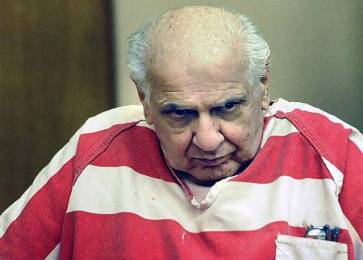
Accused Serial Killer Who Distrusts Government Set to Represent Himself

We’ve all seen an episode of our favorite television crime drama during which the accused criminal becomes frustrated with his attorney and decides to represent himself in court.  Perhaps to add to the theatrics of the small screen, sometimes the villain reveals a surprising grasp of the law and courtroom procedures.  However, the reality is that choosing to act as your own counsel is usually not a recommended move.  This is not stopping Joseph Naso from taking on his own case, even if it could result in his death.

Naso is accused of murdering four women in Northern California, all of whom had first and last names that started with the same letter.  He is believed to have strangled the women and then dumped their bodies in rural areas.  And, authorities are not discounting the possibility that he may be the same man who is responsible for a series of cold cases in New York dating back to the 1970s, in which three girls who also had the same letter for both names were murdered.

It appears that Naso’s refusal to accept assigned counsel is based in his distrust of the government.  He has long fought with local authorities over the care of his disabled son, who was determined by a mental health agency in Nevada to be better off in a group home.  At the federal level, he has engaged in an ongoing battle with the Social Security Administration over his son’s benefits.  He also was found with copies of a newspaper published by an anti-government militia.

If Naso is found guilty of the murders, he faces the death penalty.  But, with his obvious distrust of any representative of the government, it appears he will not be convinced to accept the help of counsel.  We will see how Naso plans to defend himself at a plea hearing scheduled for Friday.

Posted in crime, Serial Killers | Tagged , , , , | Leave a comment

Psychological Impact of the “Broken Windows” Theory

My academic background has helped me to explore and understand some of the complicated aspects of the criminal justice system when addressing crime, criminals, profiling, and crime scene investigation.  This is one of main reasons that I chose this field because of its diversity and challenges.  I find this field fascinating and thought-provoking on so many levels. 

There are so many facets to crime and that is the main reason why there isn’t just one easy answer to solve the growing problem.  Experts, academics, law enforcement personnel, and politicians all seem to disagree on the solutions to curb and combat crime.

What are the psychological aspects of crime and how does it affect individuals and communities?

James Q. Wilson, a political scientist at Harvard, and George L. Kelling, a criminologist, first addressed their findings of the broken windows theory in an Atlantic article back in 1982.  In simplest terms, this theory suggests that run-down neighborhoods and disorderly community environments send a strong message that no on cares and there isn’t anyone in charge.  This in turn creates fear, weakening of community control, and can breed all types of criminal behavior.       

This broken windows theory has been widely and hotly debated since its conception.

Social psychologists along with police officers generally agree that if a window is broken in a building and it doesn’t get fixed, then the rest of the windows will soon be broken.  It shows that no one cares and the morale of the community soon declines as a result. 

Think about it… people then become fearful that they will become a crime victim and don’t want to get involved when there is a crime witnessed.  This is a deterioration of a community as the crime increases.  It’s an actual breeding ground for crime that takes on a life of its own.

I find the broken windows theory to be insightful and provocative in the understanding of crime hot spots.  This theory was addressed more than twenty-five years ago and still has an important lesson for today’s crime deterrent applications across the nation. 

In 2009, The Boston Globe published an article that there was a breakthrough in “broken windows” through the Lowell Experiment.  Basically, 34 crime hot spots were identified and the authorities cleared trash from sidewalks, fixed broken streetlights, and disbanded loiterers.  Abandoned buildings were secured and businesses were forced to comply with codes, more arrests were made for misdemeanor violations, and more referrals were made for mental health and homeless services.  The result was a 20 percent decrease in calls to these areas that needed more law enforcement attention previously.  The article further stated, “The debated “broken windows” theory really works – that disorderly conditions breed bad behavior, and that fixing them can help prevent crime”.          

I find the broken windows theory to be a solid theory that should be implemented in more communities in need of help.  It’s a place to start and should be a part of all law enforcement protocol.

What do you think?  Would this theory applied today work?

Do you know of any community that would benefit from the application of the broken windows theory?  Do you think that by cleaning up a neighborhood that it helps the community psychologically?

I would love to hear from you and welcome your thoughts and comments.

Jennifer Chase
Award Winning Author & Criminologist


Blog: www.authorjenniferchase.com/
Website: www.jenniferchase.vpweb.com/
Book & Crime Talk: www.blogtalkradio.com/jennifer-chase/
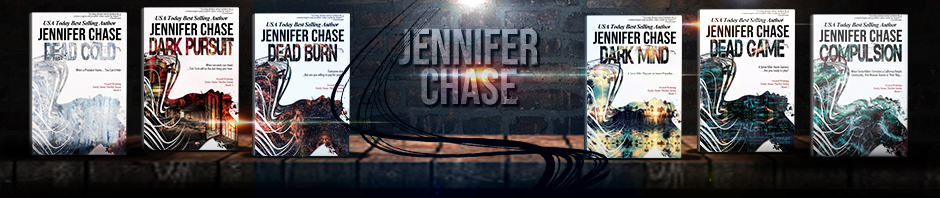
Books: Compulsion = Dead Game = Silent Partner = Screenwriting

Posted in crime, Criminology | Tagged , , , , , | Leave a comment

Boosting Creativity for Writing Crime Fiction

Writing is tough work, but at the same time it’s a bug that I can’t seem to shake.  I can’t imagine my life without it even with all of its challenges.  I budget my time for writing projects, promotion, clients, and studying crime trends.  Sometimes it’s a difficult life to balance and I find that I need to have some other creative outlets to calm and balance my mind.  

I haven’t experienced the infamous and sometimes taboo condition of “writer’s block”, but I have experienced difficulty writing high tension scenes (usually involving serial killers) and the feeling of burn out or exhaustion seems to accompany it. 

I’ve managed to put together a list of 5 tasks that help to keep my writing balanced and it actually helps to boost my creativity.  When I return to my writing, I find that I feel refreshed and energized.  My perception has shifted and I begin to see things more objectively.

Here is my list of creative mind boosters:

1.                  Take a walk. 

It’s simple.  Easy.  Even if you’ve walked your neighborhood a million times and you think that it’s boring or uneventful.  This time, really look at every detail that surrounds you.  Every plant.  Look at the architecture of your neighbor’s houses: windows, doors, fences, porches, and garages.  Look at the sidewalk or road.  What’s changed?  How does it look at this particular time of day?  Imagine how the road was constructed and who might have worked on the construction.  Run a story through your mind.

2.                  Check out your thesaurus.

For me, I find that I like to use similar words when I describe action in my books.  Jot down 10-20 action words that you like to use and then look them up in the thesaurus and make a list of alternative words.  Apply these new versions of your favorite action words into sentences and keep as a handy reference for your projects.

3.                  Write down a recent event or dream.

Write freestyle.  Don’t’ worry about grammar or spelling, just go for it.  Write about your trip to the grocery store or friend’s house in as much detail as possible.  Or, write about a dream that seems to stay with you.  Have some fun with this writing task.  Elaborate on your story and use the full extent of your imagination in the process.

4.                  Read a book in a completely different genre.

Pick up a book that’s in a genre that you never read.  If you like mysteries and thrillers, pick up a historical romance, fantasy, or sci-fi book.  Or, if you only read poetry or memoirs, pick up a high-action thriller.  You can always learn something from every book you read and by reading a genre outside your comfort zone you will find some interesting details in the plot and character development.

5.                  Apply your creativity to another hobby.

Spend some time doing another creative outlet, such as drawing, painting, crafting, or needlework.  My favorite creative outlet is photography and I love to create my own story through pictures of places that I like to frequent. 

I found that I took frequent breaks to go on walks and take photos to ease my writing stress when I’m working on my Emily Stone Series.

The next time that you feel like you need a break from writing try one of these fun outlets to settle your mind and calm your inner writer demon. 

Jennifer Chase
Award Winning Author & Criminologist

Blog: www.authorjenniferchase.com/
Website: www.jenniferchase.vpweb.com/
Book & Crime Talk: www.blogtalkradio.com/jennifer-chase/
Books: Compulsion = Dead Game = Silent Partner = Screenwriting

Posted in Compulsion, Dead Game, Writing | Tagged , , , , | 1 Comment

Photography Sunday — 2 Day Getaway


I was able to take a couple of days to get away from the routine earlier this week.  My husband and I escaped to the beach — even though it was windy and there was a little bit of a storm — I enjoyed it immensely.

I didn’t have my polarizing lens available and the sand was blasting my face… but I still wanted to capture that beautiful sunset.

Have a wonderful weekend!

Thanks for stopping by!

Posted in Photography | Tagged , , , | Leave a comment

Exploring the Psychological Autopsy

One of the most interesting aspects of studying criminal behavior and criminology is finding out why and how criminals commit a specific crime.  It’s really the complicated task of finding out what makes an individual tick and hopefully learning more about their criminal pattern of behavior in the process. 

Victimology is a common information gathering tool that investigators use to help them to link a perpetrator to a victim that could ultimately solve the crime.  Victimology refers to the analysis of the victim’s characteristics, such as, how they lived, who they were, how they spent their time, and then the determination of their risk assessment.  Answers to these questions can lead investigators and profilers to determine the offender’s motive and MO of why and how they chose this particular victim. 

I found the term psychological autopsy to be intriguing and it’s the extension to victimology used by investigators and profilers.  A psychological autopsy is another information gathering technique that entails the review of the psychosocial aspects of a victim’s life.  It reconstructs the deceased victim’s psychological state leading up to and at the time of their death.  It includes the emotions, relationships, behaviors, and thoughts of the victim.  The most common source collected is the interview data obtained from the family and friends of the deceased.

There are two basic types of psychological autopsies that are performed: the suicide psychological autopsy (SPA) and equivocal death psychological autopsy (EDPA).  The SPA is performed to understand which psychosocial factors contributed to the suicide.  The EDPA is performed when a particular death is not immediately known. 

The term “psychological autopsy” was originally coined in 1958 by psychiatrist Edwin Shneidman from the Los Angeles Suicide Center as a means to refer to a procedure that was initially designed to assist the medical examiner in clarifying deaths that were uncertain or ambiguous.  It has been estimated that up to 20% of death cases have appeared to be unclear that have been presented to the medical examiner which can’t address whether the death was the result of natural causes, accident, suicide, or murder.

Generally, those who conduct SPAs are psychologists, psychiatrists, and mental health professionals who have expertise in suicide.  Psychologists and psychiatrists with a background and training in forensic pathology and death investigation usually conduct EDPAs.

I feel that it’s important not only to look at the crime scene forensics, but also to look into the victim’s background to better understand how and why they were targeted by the perpetrator.  There are valuable insights that shouldn’t be overlooked in any death case through the eyes and thoughts of the deceased.

For more information on the procedure of psychological autopsy as well as an interesting read, check out the book Autopsy of a Suicidal Mind by Edwin S. Shneidman.

Jennifer Chase
Award Winning Author & Criminologist

Blog: www.authorjenniferchase.com/
Website: www.jenniferchase.vpweb.com/
Book & Crime Talk: www.blogtalkradio.com/jennifer-chase/
Books: Compulsion = Dead Game = Silent Partner = Screenwriting

Posted in Criminology | Tagged , , , , , | 1 Comment

Studying the Darker Side of Humanity

There are literally tons of books written about serial killers.  You can get somewhat of a hideous picture in your mind of these dark, disturbed individuals written about in books (fiction/nonfiction) and in the movies.  We shudder to think about a serial killer that is out there right now stalking, hunting for their next victim.  Make no mistake, they are out there lurking, just hidden from our view.  At this very moment in the U.S., there are dozens of serial killers looking for their next victims.  

Since my experience up close and too personal with an individual who was a violent psychopath that threatened my life for more than two years, I’ve spent a fair amount of my time studying the darker side of humanity.  Why you ask?  Well… the criminal mind is interesting and how the brain functions under these conditions.  I’ve always found myself asking questions to a specific subject as my curiosity takes over. There have been many studies that have been trying to answer the basic question of serial killers.  Why are they like this? 

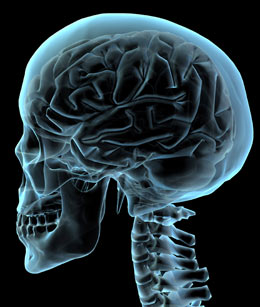
I came across an interesting study that revealed that many serial killers have evidenced disorders of the hypothalamus, which is the portion of the brain that contains a number of small nuclei with a variety of functions. One of the most important functions of the hypothalamus is to link the nervous system to the endocrine system via the pituitary gland.  This can lead to disruptions of distorted sleep patterns to critical hormone imbalances. 

The study went on to explain that there is a triad of key factors to the organic dysfunctions and psychopathological behavior.  Disorders of the hypothalamus, temporal lobe (key to long term memory, speech, vision), or the limbic brain (emotion, behavior) have been at the crux of the symptoms.  This seems to fit with many serial killers suffering some type of brain injury through abuse or an accident.  For example, Carton Gary, Bobby Joe Long, and Leonard Lake all suffered extreme head traumas in their lives.  Some were repeated abuses growing up and others were head injuries sustained along with heavy alcohol and drug abuse.  

Of course, there isn’t a definite psychological analysis of a serial killer that can be compared straight across the board, but important insights into the working brain and disorders can help to lead to a better understanding.  Psychological, chemical (such as alcohol and drug abuse), environmental, and social aspects play an important role as well.  This is why it’s so difficult to predict serial killer behaviors.  This will be a subject that will continue to pique the interests of psychologists, sociologists, forensic personnel, and law enforcement for generations to come.

Posted in Serial Killers | Tagged , , , , | Leave a comment

Here’s What Readers are Saying… about My Latest Thriller Silent Partner

I’ve been ecstatic about the “thumbs up” I’ve been receiving from dog handlers and K9 officers about Silent Partner.  Thank you!  It means a lot to me because I wanted to do the K9 units justice by portraying them in a one of my stories. 

 Here are some comments by readers…

John Walker

5 out of 5 stars

Jennifer Chase’s third novel, Silent Partner, moves from the jungle of Vietnam to the streets of California, in a fast, suspenseful and slick cop thriller with a twist. The plot also focuses and pays tribute to the extraordinary bond that develops between dog and handler, making their partnership as close and important as people share on the force and in the military.”

Sarah

5 out of 5 stars

“Silent Partner forms a definite break with the previous offerings by Jennifer Chase in both its style and perspective. Two constants in all of Chase’s work, though, are the quality of the story development and the rich psychological insight. When you add a spotlight to members of our law enforcement who often go unheralded, the trained dogs, Silent Partner is another wonderful product. Whether you already count yourself among Jennifer Chase’s followers and were waiting for the release of this new book or you are discovering this author for the first time, Silent Partner is a compelling read”.

Fran Lewis

5 out of 5 stars

Action packed, fast paced this novel (Silent Partner) is so engaging once you pick it up you won’t be able to put it down until you read the last sentence on the last page. An ending that will not only surprise but shock the reader, author Jennifer Chase should definitely bring back Jack, his fellow officers, Emily and Rick again in a sequel that will include what does happen next. No loose ends but one that remains to be seen. This is definitely a must read and an outstanding novel right up there with both Clancy and Baldacci”.

Lynn

5 out of 5 stars 

Silent Partner is a fast paced thriller that will keep the reader on the edge of their seat till they reach the amazing conclusion of the book… If you like to read a good mystery that leads you to think you know who did , but then find your wrong then you won’t want to miss reading Jennifer Chase’s newest book “Silent Partner”. Recommended.”

Shannon

4 out of 5 stars

Loved this book! It was a police drama with a serial killer mystery. It was intense right from the beginning. Sucked you in and didn’t let go to the end. So many twist and turns! I read it so fast I wish now it wasn’t over!! Very good edge of your seat suspense/thriller!”

Midwest Book Review

5 out of 5 stars

“It’s deadly when you’re a cop and you fall for your suspect. “Silent Partner” is a riveting crime drama as K9 cop Jack Davis finds a dead woman, and her sister is the prime suspect. With lots of red tape, Jack finds himself finding Megan, the suspect, to be more than a hardened criminal and with a deeper, darker secret. When someone seems to be pulling the strings behind it all, finding the truth will prove quite difficult. “Silent Partner” is highly riveting and full of nonstop action.”


Thank you everyone for such wonderful reviews. 

Check out Silent Partner:

Paperback

Kindle

Posted in Silent Partner | Tagged , , , , , | Leave a comment