Inspiration for Writing a Crucial Scene in Silent Partner

In creating my newest novel Silent Partner, I found that there are times some of the smallest things help to inspire a specific scene. Originally, this story was a screenplay that I wrote several years ago.  There’s a big difference between a screenplay and a novel.  A screenplay is written in a lean manner with action and dialogue to drive the story; whereas, a novel has more description and detail.  A novel can be written in third or fist person and you can literally get inside a character’s head.   

This lonely, creepy warehouse plays a pivotal location that takes place in Silent Partner.  As the book begins in chapter one…

“It was dark.  It was cold.  It was completely quiet.  There were no windows or doors.  Escape was futile.  There was a distinct smell of disinfectant along with a hint of mold that attacked the senses.  It made it difficult to breathe and air seemed to get trapped in the lungs without anywhere else to go.  The waiting game was only putting off the inevitable.  Death.” 

Again, later in the book this particular warehouse is visited again…

“Emily flipped on her small flashlight and aimed it into the warehouse from one side to the other and then across the floor.  It was perfect because it cast just enough light and wouldn’t attract any suspicious eyes needlessly.  The huge building was in complete disarray.  There were large crates, boxes of supplies, scaffoldings, lumber, and some miscellaneous tools.  Not to mention, it was thick with dirt and full of heavy cobwebs around every corner, wall, and window.  It was doubtful that this renovation project was ever going anywhere.”

Another character perspective…

“Inside the dark warehouse, Jack clicked on his flashlight and proceeded with caution.  He had his gun drawn, targeted, and could feel goose bumps form on his arms and the back of his neck. The building was heavily encrusted with dust and cobwebs.  The air was thick and had an old moldy smell to it.  There was an old rickety scaffolding, unused lumber, plastic utility buckets, paint cans, and two large storage containers.  Everything had been dumped and just left were the last workers had left them.  It was a strange feeling to see that a construction job was abandoned and no one had bothered to come back and pick up the supplies.”   

I find it interesting how the look of a particular location can lead to feelings of uneasiness.  This photograph conjured up many ideas.  Why would there be someone here?  What’s so creepy about it?  Does it play upon our fears?  What if you can’t escape?  Will anyone find you?

I delved into these questions and answered them in Silent Partner

Jennifer Chase
Award Winning Author & Criminologist
 
Posted in Silent Partner | Tagged , , , , , , | Leave a comment

What Bite Mark Evidence Leaves Behind at a Crime Scene

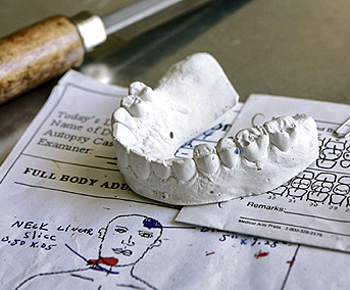
There has been a considerable amount of controversy surrounding criminal cases with bite mark evidence.  It is true that it isn’t an “exact” science, but it can be helpful in to exclude or include a suspect who could have inflicted the bite.

Investigators should be vigilant if they see anything that resembles a bite mark on a victim, especially in a rape or homicide.  Human bite marks are used as a weapon of anger, passion, control and destruction on a victim.  Even if the bite mark can’t be identified, it still holds value to the behavioral pattern of the perpetrator.  This could hold the key to unlocking the case and shouldn’t be underestimated. 

For example, one of the most famous cases was for Ted Bundy.  This key piece of evidence led to the conviction based on the bite marks left on Lisa Levy who he had attacked at the sorority house at Florida State University.  Bundy’s teeth marks were very distinct in their imprint.

This type of impression evidence can be left in the skin of a victim, but also can be in food, chewing gum, and other miscellaneous items, such as pens and pencils. There are distinct features and characteristics in the dental structure, such as distance and angles between teeth, missing teeth, fillings, dental work, and unique wear.

There are limitations because skin is elastic and easily distortable.  Time, movement, and pressure can affect the results of bite mark evidence.  There are many changing natures to the body and many times forensic dentists wait until the lividity stage (pooling of blood) allowing for the details to become more visible for photographs and documentation.  The evidence left by a biter is based on pressure that caused the distinct wound.  It is divided into three basic categories: clear, obvious, and noticeable.

There are seven types of forensic terms used to describe the type of bite mark left on a victim:

Abrasion – a scrape on the skin.

Artifact – when a piece of body part is removed through biting.

Avulsion – removing of skin through biting.

Contusion – a bruise.

Hemorrhage – a profusely bleeding bite wound.

Incision – a clean, neat wound.

Laceration – a puncture wound.

 
Jennifer Chase
Award Winning Author & Criminologist
 
Posted in Forensic | Tagged , , , , | Leave a comment

Is it a Homicide or a Staged Suicide?

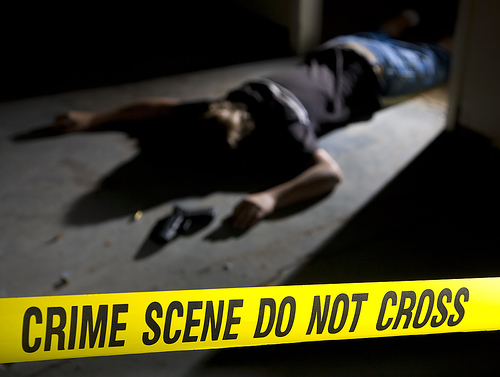
It has been stated that simulating a crime to cover up another crime is somewhat rare.  However, there have been many documented cases where a murder has been covered up with arson, supposed self-inflicted gunshot wounds, and automotive accidents.

More disturbing, it has been estimated that there are a significant number of homicides simulated as a suicide based on a “suspicious death” crime scene.  Every investigator must keep I mind that the guilty party may use props (written notes, plastic bag over deceased head) to stage a homicide to look like a suicide.

There have been outlined eight checkpoints to help differentiate a criminal homicide from a “final exit” suicide.

1.      Is the suicide or “final exit” at the scene?

2.      What are (if any) written entries, underlying, or other types of markings at the scene?  Was there a specific book highlighted or underlined?   

3.      Are there any other types of evidence that the deceased might have left behind?  Written note, Power of Attorney, or Living Will?

4.      Carefully handle any evidence and treat like a homicide investigation.  Assess any fingerprints or palm prints that might have been left by the last person to see the victim alive.

5.      If there was a plastic bag over the deceased head, have it examined and processed for fingerprints.

6.      If there was a note left, is it written in the literacy level of the deceased?

7.      If the note was handwritten, is it written in the deceased handwriting?

8.      All medicine containers in the home must be gathered – including the empty bottles.  All medicines should be analyzed and verified including the quantity dispensed to determine of a lethal dose was taken.

Other pertinent questions should be asked if it’s likely that it was homicide instead of suicide.  The investigator needs to reconstruct what exactly happened.

Who is the deceased?

What was the motive?

Is there any associated evidence present at the scene?

Jennifer Chase
Award Winning Author & Criminologist
 
Posted in crime, Forensic | Tagged , , , , | Leave a comment

2011 with a New Amazon Kindle

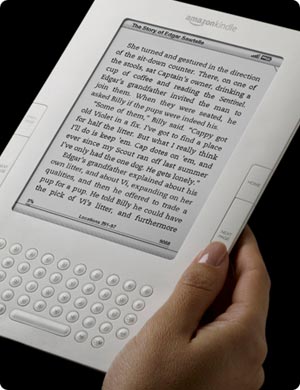
I recently purchased an Amazon Kindle with the basic wi-fi version during the holiday.  I want to make it clear that I’m not a “techie” electronic-oriented person.  I love my physical books and I keep all of my electronic devices very basic on a need to use basis.

I purchased the Kindle out of curiosity and the fact that my own books are on Kindle.  I also have been receiving ebooks via the computer and I don’t like sitting longer at my desk in order to read them.  I knew that I could return it if I didn’t like it, so I jumped into uncertain waters. 

I was surprised.  Let me emphasize, I’m really surprised.  I actually love my Kindle!  I know, I know, for those of you that know me personally are chuckling right now.  I seem to buck the system a little bit when it comes to newest technological gadgets.

I wanted to share some of my thoughts about Kindle.  This isn’t an intentional plug for Amazon, but rather, I wanted to share with you from my limited electronic point of view.

Pros

  • I received my Kindle quickly in two days with free shipping.  Great customer service and excellent packaging.
  • It’s simple to set up, the menus are clear and organized.
  • The font is nice, you can darken or lighten it to preference.  You can change the size of font too. 
  • You can search Google and Amazon.  You can order right from your Kindle (this is very cool).  You can also read magazines, newspapers, and blogs.
  • You can read in bright sunlight and there’s no glare (I tested this out for myself).
  • The text to speech is a nice feature (it isn’t applicable for all books).  Note: it’s a very electronic, computer voice, like what you hear when you call for customer support.
  • Long battery life makes it convenient.
  • This is a great reading device specifically for novels and an efficient way to store favorite titles.

Cons

  • I find that reading magazines, newspapers, and blogs to be annoying.  Remember, it’s a black and white screen and if you want to see photos of interest from various other sources, it’s a bit heavy and difficult to read.
  • For me personally, I would not use a Kindle to read textbooks, photography books, coffee table books, cookbooks, etc.  It’s too cumbersome to read on a Kindle.
  • The tiny keyboard is a little difficult to use, but you would probably wouldn’t use very often.  However, it’s a nice feature to make quick notes especially for book reviewers.

Recommendations

  • I would highly recommend that you purchase a case (I purchased a nice black, leather case).  It will protect it from scratches and everyday bumps and jostles. 
  • “Like” Amazon Kindle on Facebook.  There are some great tips posted.
Posted in Uncategorized | Tagged , , , , , | 1 Comment

Criminology Student Lived the Life of a Serial Killer “Crossbow Cannibal” and Will Die in Prison

“Humanity is not merely a biological condition.  It is also a state of mind.  On that basis, I am a pseudo human at best.  A demon at worst.”

“I’m misanthropic.  I don’t have much time for the human race.”

“I’ve killed loads…”

After claiming to have eaten part of one of his victims, he stated, “That’s part of the magic.”

These were recent quotes by convicted serial killer Stephen Griffiths from Bradford, West Yorkshire who was sentenced to life in prison in December.  He pled guilty to killing three women.  These are interesting insights into the murderous thoughts of one man who was obsessed with serial killers and mass murderers.  No doubt this heinous urge drew him to studying criminology.  He had spent six years working on a postgraduate thesis about serial killers.  He became obsessed with serial killers and mass murderers.  Obviously, his reality became blurred and then he crossed the line of no return.  

Does he actually believe what he is saying or is he merely grabbing the limelight as his center stage to shock the world and make history as a serial killer?  His calm and controlled demeanor in court only accentuated his narcissistic, psychopathic personality.

Griffiths, age 40, pled guilty to killing, dismembering, and eating parts of his three victims that worked as prostitutes in the red light district of Bradford.  He lured them to his apartment where he used knives and power tools to butcher the women in his bathtub.  One body was never found, there was only blood spatter in Griffiths apartment.  One victim was dumped in a nearby river and police recovered 81 pieces, including a broken knife and crossbow embedded in the victim’s decapitated head.  The last victim was only recovered a small fragment of her body. 

Many questions plague the police investigators in England.  Are there more bodies? They have opened old investigations to analyze any evidence or to link cases together if there is any truth to Griffith’s claims.  The unspeakable horror and brutality of these crimes will forever be on the minds of the people of Bradford. 

I find it difficult to believe (with the information given) that these three women were his first victims.  He had a killing plan and executed it well.  He was calm, cool, and collected like a practiced, violent psychopath.      

Griffith has suffered a history of poor mental health and a violent past.  He had been hospitalized for mental disorders in the mid 1990s.  His trouble began early, he was arrested at 17 when he was caught shoplifting and slashed a security guard’s throat with a knife.  He served 3 years in jail.  In 1989, he was prosecuted again for possession with an air pistol.

Posted in Serial Killers | Tagged , , , , , | Leave a comment

Facial Recognition Offers a Valuable Tool for Law Enforcement Agencies

Facial recognition can be used as a valuable identification tool in any type of investigation.  This technique is especially valuable when fingerprint identification is not available or it’s not practicable, depending upon the type of case or circumstances.

Similar to automated fingerprint identification, facial recognition provides law enforcement agencies with multiple public safety applications.  Fingerprints offer a higher rate of accuracy than face recognition, but there are many benefits when fingerprint data is not available.  This type of identity verification assists with field (patrol officers, investigators) and intelligence gathering, crime prevention, and criminal investigations. 

Government agencies and private organizations have kept photo collections of people.  Personal identification documents are compiled from passports and informal membership cards from schools and athletic clubs.  The main problem that has plagued government and law enforcement agencies was the quality of images derived from software programs over the years.  There have been significant steps in the quality and new technology from the late 1980s through 2007.  

Just like fingerprint recognition, facial recognition allows the data to be easily shared between agencies, allows people to be identified without fingerprints for legal or physical reasons, and by using two biometric techniques it allows the workload and verification process to be reduced.  The efficiency and accuracy improves drastically for identification.    

Photo images are often made available from surveillance videos, a witness’ camera, Internet sites (social networks and websites) or copies from identification cards.  The first step in this painstaking process is to extract the facial images from available evidence.  This can take hundreds of painstaking hours of searching for visible facial images, but with various software programs it allows large amounts of data searched. 

Alphonse Bertillon (1853-1914) was the criminologist that developed judicial anthropometry in France.  He developed a face classification in order to recognize individuals who were repeatedly arrested.  His method was to organize portraits that could be sorted by common morphological characteristics or specific shapes of the different parts of the face.  This classification is known as “portrait parle” or spoken portrait.

Posted in Forensic | Tagged , , , , , | Leave a comment

Basic Novel Outline Guidelines

Two of the most popular questions about writing novels I hear… How long does it take to write a novel and do you outline?  Both are great questions, but answers vary from writer to writer.  An average timeframe for writing a novel is about six months to a year.  I think that’s reasonable.  Everyone is different in speed and time they have to write a novel. 

I used to think that it was divided on whether or not to outline or not to outline your book project.  The more writers I talk to, they just dive right in without an outline or with just a basic story idea.  Whatever method works for you and the type of story you’re developing is a personal decision.  For me, I like to immerse myself into an extensive outline that eventually becomes the first choppy draft of my novel.  I don’t like to spend tons of time rewriting, so I find that doing a fairly comprehensive outline eliminates dozens of rewrites. 

I wanted to share some of my outlining tips that will help you to get ready for a book project.  These are my “big three” outline guidelines for beginning a novel. 

  • Brainstorm

Think about every aspect of your story, plot, and characters before you begin writing.  Write ideas down (even if you think you might not use it) and keep brainstorming.   Let your ideas simmer for a while.  You’ll be surprised at what you can come up with when you have some time to really think about your project.  Talk it over with a trusted friend or family member and brainstorm a little more.  It helps to talk about your story out loud. 

  • Preliminary Outline

Use your computer, notebook, index cards, recorder, or whatever feels the most comfortable to you to begin your preliminary outline.  Workout your character profiles, settings, plot sketches, and summary outline of beginning, middle, and end of the story.  Take the time to write everything about your characters: where they live, what they look like, dreams, secrets, etc.  Have fun with this process.  Know absolutely everything about all of your characters (good and bad ones), even their deepest, darkest secrets.  Write out the preliminary summary of the beginning, middle, and end.  You will begin to see a story developing.  This will quite often tell you if you really have a story worth pursuing or not.         

  • Research

This is my favorite part.  Research is very important.  You want to make sure that things make sense or appear logical.  It also helps to give a more richness to the story.  Many times you don’t realize that you need to research things, such as professions, details of actual places (cities or countries), laws, behavioral psychology, etc.  It’s important to research during the outline stage because it may affect your story and better to correct at the early stage.  Workout your facts, interviews you need to do, and crime timeline (for mystery novels).  Use all types of information gathering areas and don’t limit your research to the Internet.  You can use newspapers, magazines, library, actual people and businesses, notes from other novels, etc.   

Now, you’re ready to dig deep into the extensive outline or begin your writing.  Whatever method you choose… Happy writing!

Posted in Writing | Tagged , , , , , | Leave a comment