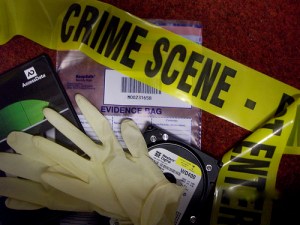
Homeless Man Admits to Murder from More Than Two Decades Later

Sometimes police catch a lead early in a criminal investigation and the perpetrator is behind bars within hours.  In other instances, detectives can comb through clues and re-interview witnesses multiple times over years or decades before that amazing moment when all of the pieces finally come together.  It’s rare, though, that a cold case is solved by the offender simply walking up to an officer and admitting his deed.  This is what happened last week in Montana.

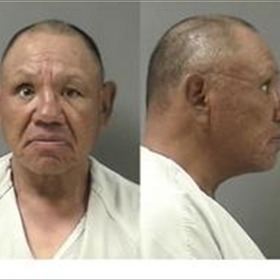
A homeless man residing in Billings, Clifford Eagle, approached a police precinct and announced that he had participated in the murder of Oklahoma County Commissioner Leo Boyd Reasoner back in 1987.  Reasoner’s body was found slumped over in his pickup truck with a single bullet wound in his head.  Until Eagle’s confession, the case had been without closure for nearly twenty-five years.

Eagle shared that he had a partner in his crime, which took place along a rural Oklahoma road.  That man, Vince Allen Johnson, was executed in Oklahoma just over a decade ago as a result of his participation in a murder-for-hire plot.  Now, Eagle sits in a Billings prison and awaits the next step in determining his fate for the life he took so many years ago.

It seems evident that Eagle could have gotten away with his crime, but he chose to confess and relieve his conscience.  While he likely will experience this lightening of his emotional load while serving a lengthy sentence for first degree murder, more importantly the family of Mr. Reasoner now can get a sense of peace that they have been lacking for so long.

What do you think of this story? 

Does Mr. Eagle deserve some leniency for admitting to a murder that  may have forever remained unsolved without his unexpected confession? 

* * *

Author Blog: https://authorjenniferchase.com/
Crime Watch Blog: http://emilystonecrimewatch.wordpress.com/
Book & Crime Talk:  http://blogtalkradio.com/jennifer-chase
Books: Compulsion  Dead Game  Dark Mind  Silent Partner  Screenwriting
Posted in crime, Criminology | Tagged , , , , , , | 5 Comments

Psychological Impact of the “Broken Windows” Theory

My academic background has helped me to explore and understand some of the complicated aspects of the criminal justice system when addressing crime, criminals, profiling, and crime scene investigation.  This is one of main reasons that I chose this field because of its diversity and challenges.

There are so many facets to crime and that is the main reason why there isn’t just one easy answer to solve the growing problem.  Experts, academics, law enforcement personnel, and politicians all seem to disagree on the solutions to help curb and combat crime.

What are the psychological aspects of crime and how does it affect individuals and communities?

James Q. Wilson, a political scientist at Harvard, and George L. Kelling, a criminologist, first addressed their findings of the broken windows theory in an Atlantic article back in 1982.  In simplest terms, this theory suggests that run-down neighborhoods and disorderly community environments send a strong message that no one cares and there isn’t anyone in charge.  This in turn creates fear, weakening of community control, and can breed all types of criminal behavior.

This broken windows theory has been widely and hotly debated since its conception.

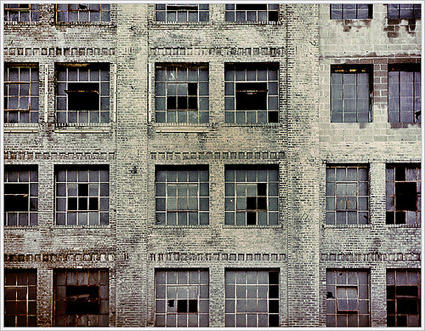
Social psychologists along with police officers generally agree that if a window is broken in a building and it doesn’t get fixed, then the rest of the windows will soon be broken.  It shows that no one cares and the morale of the community soon declines as a result.

Think about it… people then become fearful that they will become a crime victim and don’t want to get involved when there is a crime witnessed.  This is a deterioration of a community as the crime increases.  It’s an actual breeding ground for crime that takes on a life of its own.

I find the broken windows theory to be insightful and provocative in the understanding of crime hot spots.  This theory was addressed thirty years ago and still has an important lesson for today’s crime deterrent applications across the nation.

In 2009, The Boston Globe published an article that there was a breakthrough in “broken windows” through the Lowell Experiment.

Basically, 34 crime hot spots were identified and the authorities cleared trash from sidewalks, fixed broken streetlights, and disbanded loiterers.  Abandoned buildings were secured and businesses were forced to comply with codes, more arrests were made for misdemeanor violations, and more referrals were made for mental health and homeless services.

The result was a 20 percent decrease in calls to these areas that needed more law enforcement attention previously.  The article further stated, “The debated “broken windows” theory really works – that disorderly conditions breed bad behavior, and that fixing them can help prevent crime”.

I find the broken windows theory to be a solid theory that should be implemented in more communities in need of help.  It’s a place to start and should be a part of all law enforcement protocol.

Now more than ever, we need to work together in a collaborative effort with law enforcement to combat crime in our communities.

What do you think? 

Do you think by cleaning up a neighborhood that it helps the community psychologically and helps to deter crime?

* * *

Author Blog: https://authorjenniferchase.com/
Crime Watch Blog: http://emilystonecrimewatch.wordpress.com/
Book & Crime Talk:  http://blogtalkradio.com/jennifer-chase
Books: Compulsion  Dead Game  Dark Mind  Silent Partner  Screenwriting
Posted in Criminology | Tagged , , , , , , , , , | 6 Comments

Photography Sunday — Spring Mixed Bag

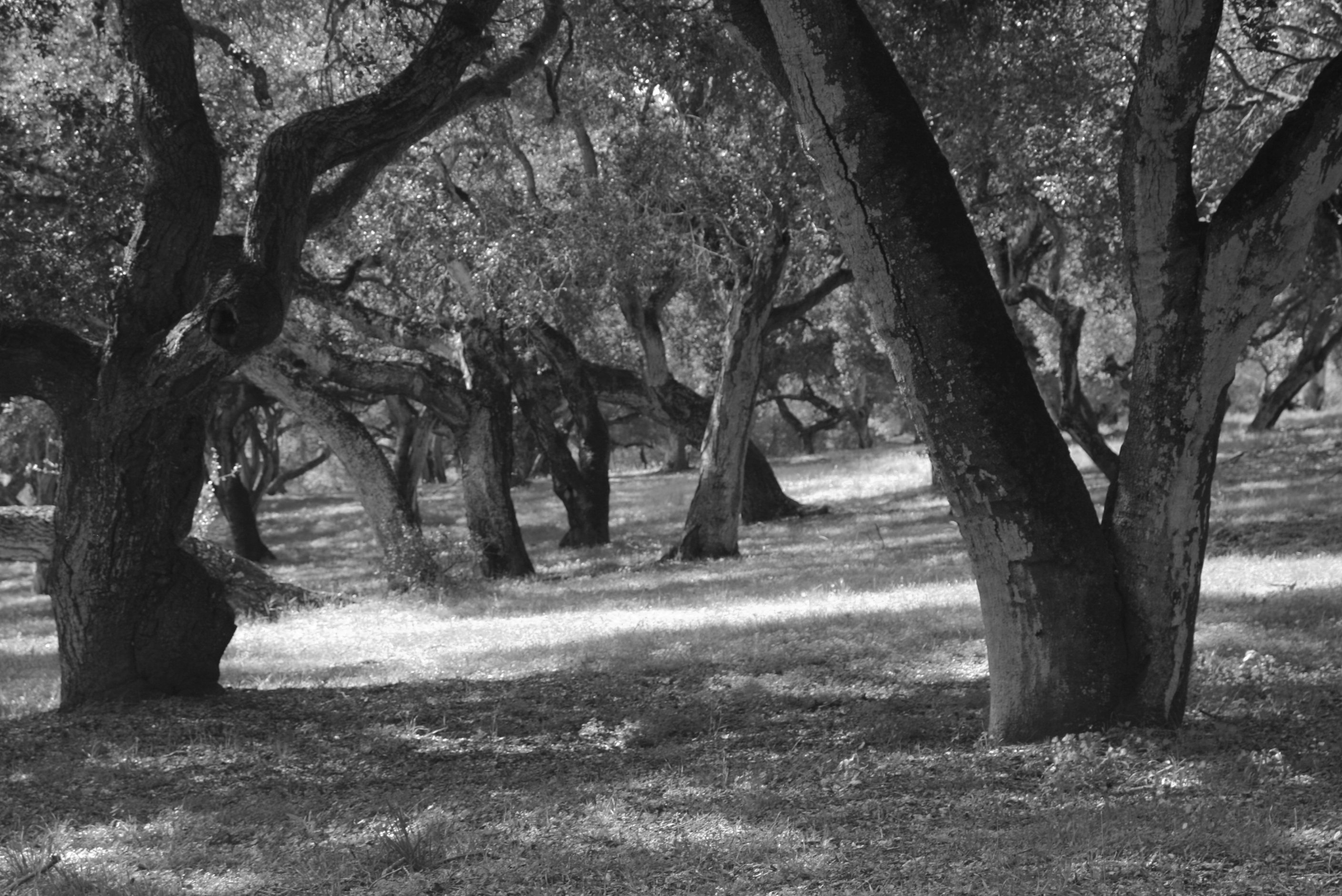
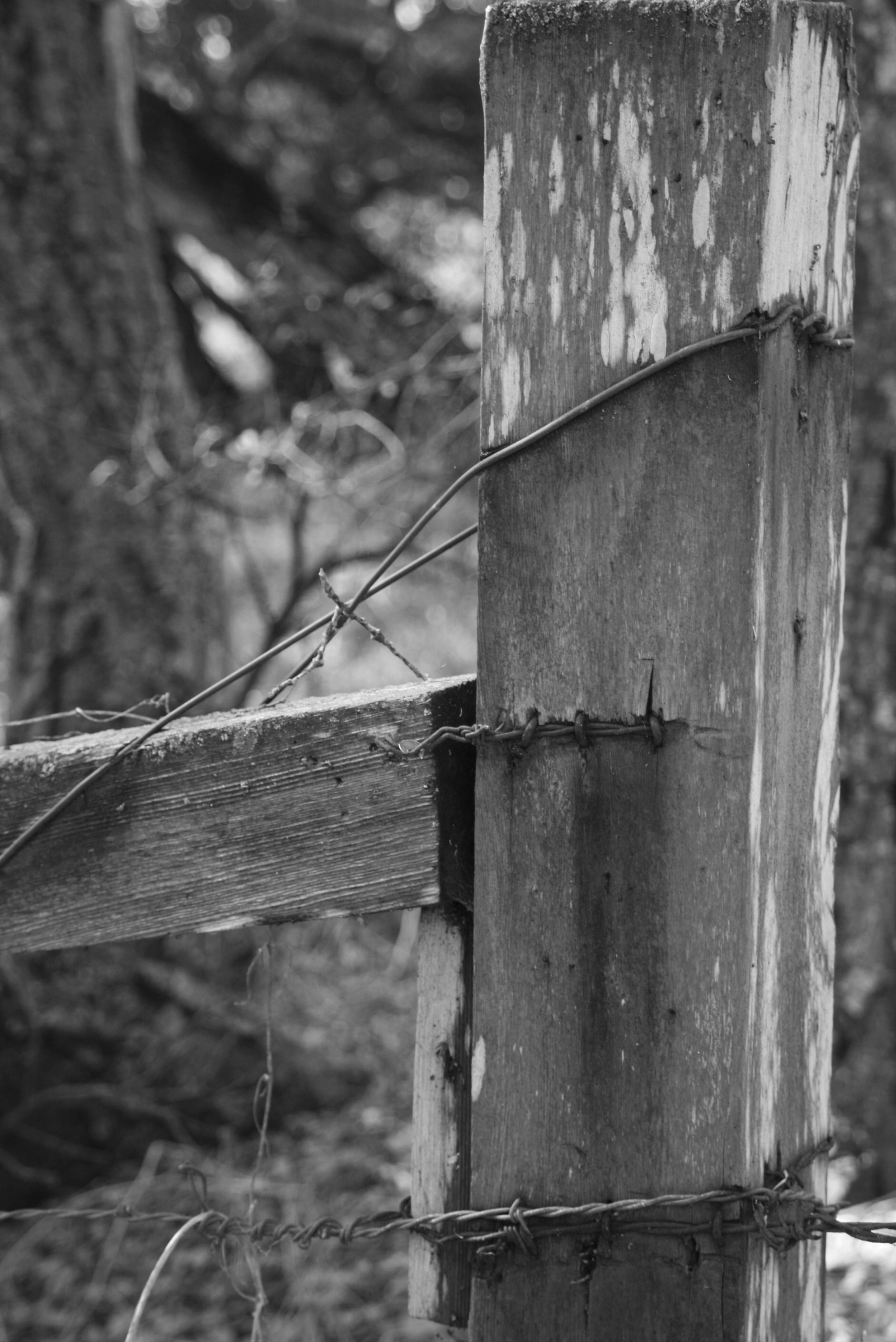
I love springtime and I look for any opportunity to grab my camera and head outdoors.  Here are a few photographs from a recent nature excursion.

I get some of my best story ideas when I’m on a nature walk.  Settings… the type of people who enjoy nature… crime activities… and I think to myself, “What if?” as it pertains to crime thrillers.

The rest I’ll leave up to your imaginations…

Celebrating Earth Day!

What outdoor settings inspire you?

* * *

Author Blog: https://authorjenniferchase.com/
Crime Watch Blog: http://emilystonecrimewatch.wordpress.com/
Book & Crime Talk:  http://blogtalkradio.com/jennifer-chase
Books: Compulsion  Dead Game  Dark Mind  Silent Partner  Screenwriting
Posted in Photography, Writing | Tagged , , , , , , , | 6 Comments

Murder of Teenager in Oregon Shows How Experts Can Crack a Case after a Decade

Of course I am a sucker for any television program that examines the criminal mind, especially when it’s a documentary that allows me to delve into the psychology surrounding the decision to engage in violent activity.  While I never forget that I am watching the story of a real victim who left behind grieving family and friends, and that fact is of primary importance, what we have to learn from killers and their acts is fascinating and critical as well.

I just happened upon a 20/20 episode that was being replayed on TLC recently and that took only seconds to grab my attention.  The story was about Leah Freeman, a fifteen-year-old girl from the small town of Coquille, Oregon who was reported missing in 2000 and found dead a little more than a month later.  After a decade of dead ends and then a quiet suspension of the investigation, a new police chief breathed new life into the search by bringing in a group of forensic specialists known as the Vidocq Society.  This organization, which I have featured on my blog before, consists of former FBI special agents, profilers, and other experts.  Watching them discuss the smallest details of the case and put together the pieces that had eluded others for so many years was fascinating.

With the help of the experts, Freeman’s boyfriend at the time of her death, Nick McGuffin, was given renewed attention as the prime suspect.  A review of his police interview, discussions with friends who shared that he wasn’t exactly grieving upon the disappearance of his girlfriend, and the revelation that Leah was concerned that she may have been pregnant by eighteen-year-old Nick eventually led to his conviction and ten-year sentence on charges of manslaughter.

If you are interested in forensics and criminal psychology, check out the work of the Vidocq Society.  The members of this group have an amazing and enviable calling!

* * *

Author Blog: https://authorjenniferchase.com/
Crime Watch Blog: http://emilystonecrimewatch.wordpress.com/
Book & Crime Talk:  http://blogtalkradio.com/jennifer-chase
Books: Compulsion  Dead Game  Dark Mind  Silent Partner  Screenwriting
Posted in crime, Criminology | Tagged , , , , , , , , | 2 Comments

Would You Trust a Psychopath?

I came across an interesting article explaining that psychopaths may come in two varieties: psychopaths who are incarcerated for criminal acts and psychopaths who may never be incarcerated or caught for their criminal activities.

I thought this was an interesting concept to ponder.

The article was based on the working theory that there is a difference between psychopathic individuals who exhibit these types of behaviors and end up in psychiatric facilities or prison and those who seem to evade the law.

Psychopathic behavior relates to the Axis II Personality Disorders.  Individuals who fit the definition of psychopathy also meet the diagnostic criteria for antisocial personality disorder and commit the majority of violent crimes.  The psychopathic personality disorder is generally associated with crime and violence in addition to having the severe characteristics of superficial charm with the lack of insincerity, truthfulness, and remorse.

Many times we hear about psychopaths and it evokes images of serial killers from major motion pictures like Silence of the Lambs or Zodiac.  But in fact, individuals who exhibit psychopathic behaviors can be anyone in society like a neighbor, boss, politician, or even friend.

I’ve made it no secret that I’ve experienced a violent psychopath up close and personal, which acted as my inspiration for writing my crime fiction series.  Actually, to clarify correctly this person would most likely be considered a sociopath.  Difference? Both a sociopath and psychopath share many similarities, but a sociopath exhibits emotional upheavals than their close lack of remorse brother.

Interestingly, there have been studies from the University of Southern California in Los Angeles that suggests, through stressful tasks, would produce an increase in heart rates in male psychopaths that have eluded criminal prosecution than convicted psychopaths.  It was further suggested that the increased heart rate and heightened physiological reaction to stress might assist in their ability to evaluate risky situations in order to benefit from their criminal activities.

It all seems to boil down to whether or not psychopaths who commit crimes can make the right decision based on their physiological reaction to stressful condition, and whether or not law enforcement will catch them.

The concept of two varieties of psychopaths definitely warrants more study and consideration when approaching crime scenes and conducting investigations in order to learn more about how and why these types of individuals commit specific types of crimes.

Have you ever had any experience with someone with a psychopathic personality?

* * *

Author Blog: https://authorjenniferchase.com/
Crime Watch Blog: http://emilystonecrimewatch.wordpress.com/
Book & Crime Talk:  http://blogtalkradio.com/jennifer-chase
Books: Compulsion  Dead Game  Dark Mind  Silent Partner  Screenwriting
Posted in Criminology | Tagged , , , , , , | 5 Comments

Identify this Tree and WIN a FREE e-Copy of DARK MIND!

I often spend my off time taking photographs around the incredible California outdoors.  Recently, I visited a mission, saw this fantastic tree, and took several photos.  I settled on this image but…

Now, I need your help…

Here is your CSI mission if you choose to accept it:

    1. Identify the California tree (photo above).  Click on photo for a larger image to investigate.
    2. Leave a comment in this post with your answer.  Don’t be shy!
    3. 13 lucky winners will receive a Kindle copy, Smashwords coupon, or pdf file (winner’s choice).
    4. If you’ve already read DARK MIND, then pick your second choice from my other books.
    5. Winners will be announced in a future post!
    6. Good luck!

* * *

Click here to find out what reviewers are saying about Dark Mind: Amazon

* * *

Author Blog: https://authorjenniferchase.com/
Crime Watch Blog: http://emilystonecrimewatch.wordpress.com/
Book & Crime Talk:  http://blogtalkradio.com/jennifer-chase
Books: Compulsion  Dead Game  Dark Mind  Silent Partner  Screenwriting
Posted in Dark Mind | Tagged , , , , , , , | 15 Comments

Forensics – The Past Meets the Present

Here are some fun facts about forensics. It is often thought that police forensics has been a relatively new contribution to interpreting, reconstructing, and solving crimes in our society.  Quite the contrary, police forensics, or more accurately described as forensic science, has been a part of history for more than a hundred years.

What is forensic science? 

The word “forensic” comes from the Latin word “forensis”, which simply means forum.  Today, the area of police forensics is split into two major working categories: criminalistics and forensic science.

Criminalistics is designed to develop and interpret physical evidence; namely, to identify the actual substance, object, or instrument used in the surrounding events of a crime scene.  Fingerprints, impression evidence, and trace evidence all fall into this category of expertise.  While forensic science, also referred to as forensic medicine or medical jurisprudence, encompasses some of the specialized areas such as serology; the study of blood, pathology; the study of the cause of death, and toxicology; the study of poisons.

The need for forensic science professionals has evolved from the key elements of a crime scene, ideally, linking the victim to the perpetrator and exonerating the innocent.  The need for experts to identify and individualize the items of interest from the crime scene is the foundation for solving the crime.

An interesting approach to a crime scene re-enactment is to remember a simple key fact from Nickell and Fisher’s book titled Crime Science, Methods of Forensic Detection, “all objects in the universe are unique”.

Who were our founding fathers of forensic science? 

How have they shaped the job responsibilities of our modern forensic science crime busters?

Frenchman Eugene Francois Vidocq was a criminal that turned police detective in the early 1800s.  He helped to organize the Surete’, the detective bureau of the French police.  Criminal investigation was literally born with his innovative techniques of record keeping, namely a card index system, into a newborn area of criminalistics.  Today, Vidocq is celebrated for his pioneering contribution to crime solving by The Vidocq Society, an organization made up of the top forensic professionals who donate their time to solve “cold case” crimes.

* * *

An Austrian well ahead of his time, Hans Gross, who has been referred to as the father of forensic investigation, wrote Handbuch fur Untersuchungsricter in 1893 when translated became Criminal Investigation.  The term criminalistics was first used by Hans Gross, and then later only used in print as a title of a book in 1948, An Introduction to Criminalistics.  Today, no doubt, the core of our criminal investigation process has advanced due to the groundwork of Hans Gross’ script of criminal investigation.

* * *
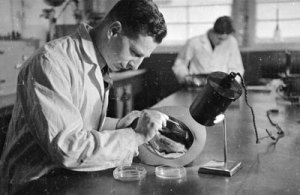
The first established police laboratory designed for the examination of crime scene physical evidence was launched by Edmond Locard (photo above) in 1910 in Lyon, France. In the United States, it was not until 1924 that the installation of the first crime lab was established by August Vollmer in Los Angeles, California.  Vollmer then gave life to the first School of Criminology at University of California at Berkeley.  Today, most law enforcement agencies have a crime lab or access to a facility through a larger or surrounding agency.

* * *

In the United States, Calvin Goddard helps to develop along with others, the comparison microscope.  The comparison microscope has had an impact to the evaluation of such items as firearms examination and bullets, and then later tool marks, fingerprints, and various trace evidence.

It has been recognized that the actual forensic science of crime scene investigation has been well established before the obvious technological advancements of the past ten to twenty years.  It has been the basic building blocks into the investigation of a crime scene and continues to aid criminal investigators in reconstructing the event and answering the questions of who, what, how, when, where, and why.

***

Check out the Award-winning EMILY STONE THRILLER SERIES available at Amazon, Amazon UK, Barnes & Noble, Kobo, Sony, iTunes, Smashwords, and most online and book retailers.

***

Please join me:

Facebook

Twitter
Author Blog: https://authorjenniferchase.com/
Book & Crime Talk:  http://blogtalkradio.com/jennifer-chase
Books: Compulsion  Dead Game  Dark Mind Dead Burn Silent Partner  Screenwriting
Posted in Criminology, Forensic | Tagged , , , , , , , | 4 Comments